Appearance
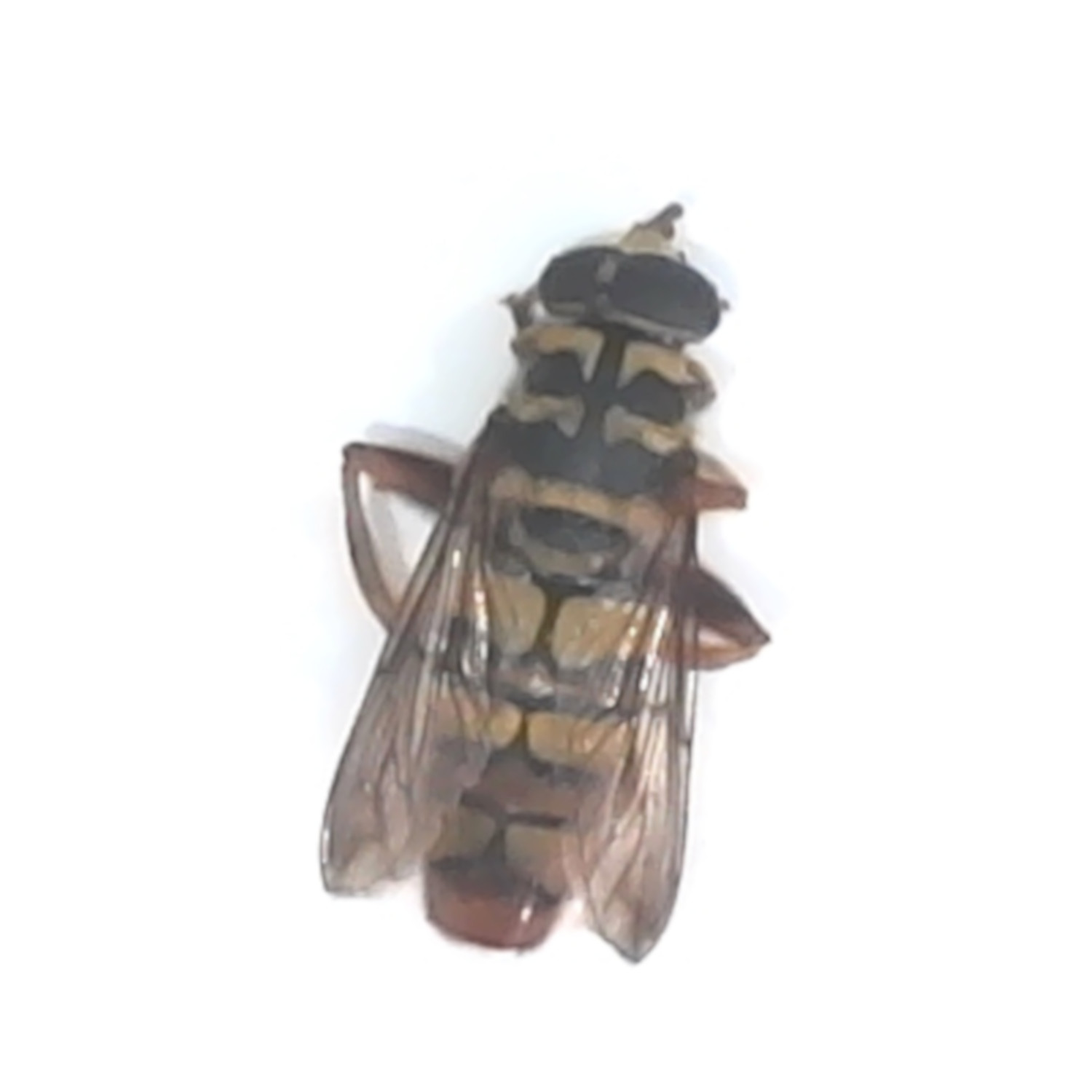
The Yellowjacket Hover Fly reaches 18-21 mm in length. It serves as a large syrphid fly that closely mimics yellowjackets, especially the Southern Yellowjacket. The abdomen features wide dark bands, distinguishing it from related species like M. scutellata. Wings appear much lighter than in true wasps. This Batesian mimicry deters predators through resemblance to stinging insects.
Habitat and Range
This species inhabits forest edges, meadows, and open woodlands. Its range covers eastern North America from Ontario and Minnesota south to Florida and Texas. Adults appear from mid-summer into early fall, with records from May to November in North Carolina and June to August in Oklahoma.
Behavior
Adults fly aggressively with a loud buzz similar to hornets. They often hover in front of people, earning the nickname “good news bee” in southern regions for supposedly “delivering news.” Folklore claims good luck if one perches on a finger, though this proves difficult. As hover flies, they feed on nectar while aiding pollination.
Life Cycle
Larvae develop in rot-holes and decaying wood of deciduous trees, feeding on sap and debris. Adults emerge in warmer months to mate and hover. The cycle aligns with seasonal tree decay and floral resources in temperate zones.
Economic Impact
Beneficial overall, the Yellowjacket Hover Fly poses no harm and contributes to pollination. Larvae help decompose dead wood, supporting forest nutrient cycling. Its mimicry adds educational value without pest concerns.
This preserved specimen highlights the impressive yellowjacket mimicry, ideal for dipteran education and displays. Check it out on BugGuide! https://bugguide.net/node/view/2837

 <—
<—