Short Description
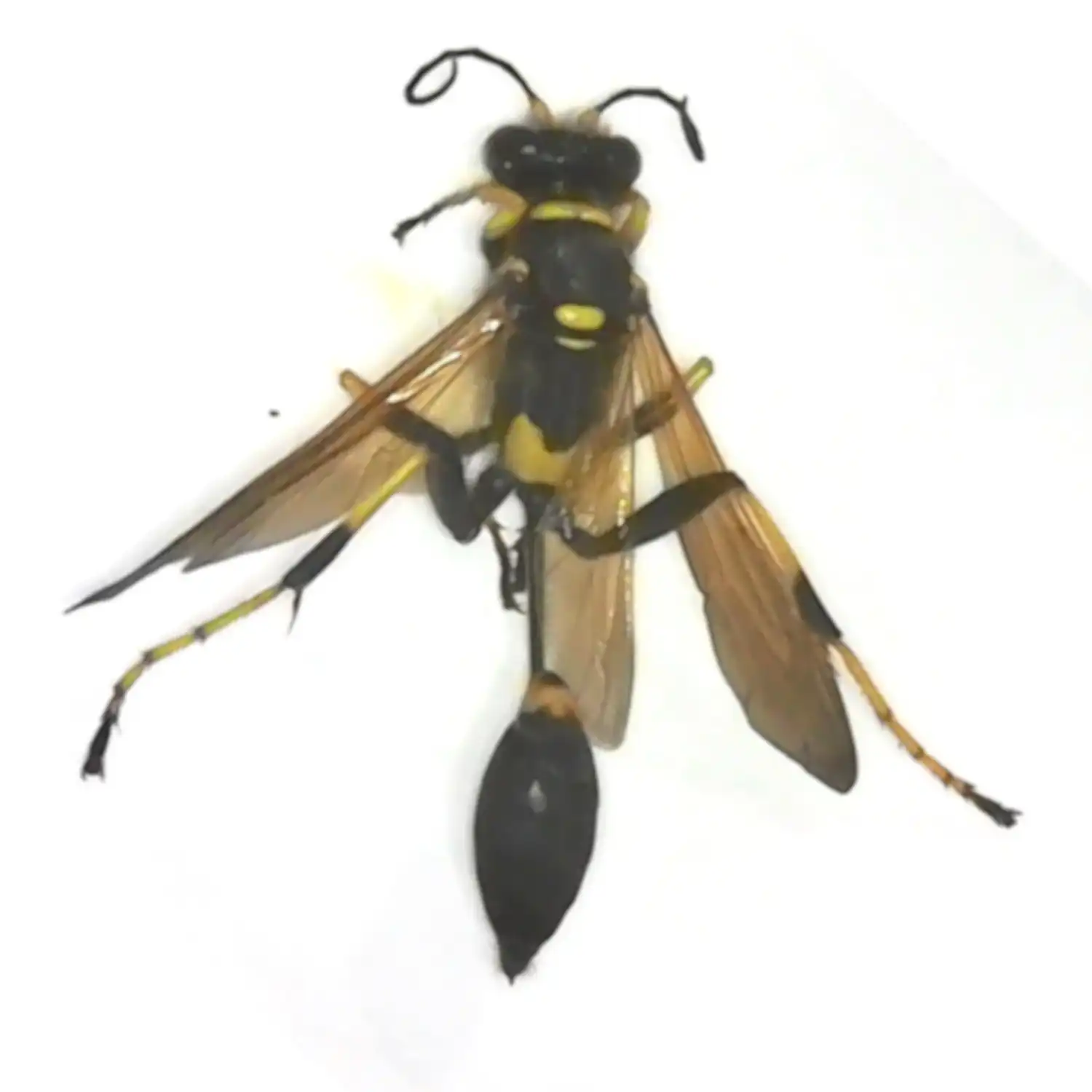
The Yellow-legged Mud-dauber (Sceliphron caementarium) measures 24-28 mm with black body, yellow legs, and narrow waist. Females build mud nests provisioned with paralyzed spiders. Found across North America near mud sources. (28 words) Learn more: https://bugguide.net/node/view/6610
Long Description
Appearance
The Yellow-legged Mud-dauber reaches 24-28 mm in length. It features a black body with yellow markings on legs and sometimes thorax. The petiole forms a long, slender waist. Wings appear smoky with dark veins. This thread-waisted build aids agile flight. Females carry mud pellets for nest construction.
Habitat and Range
This wasp inhabits open areas near water or mud like streams, ponds, and human structures. Nests attach to walls, bridges, or rocks. The range spans most of North America from Canada to Mexico, absent only in extreme deserts or north. It adapts well to urban and rural settings.
Behavior
Females collect mud to build tubular cells, provisioning each with paralyzed spiders, mostly orb-weavers. They sting prey precisely to immobilize without killing. One egg lays per cell before sealing. Adults sip nectar from flowers. Non-aggressive toward humans unless provoked.
Life Cycle
Females construct nests in spring to summer. Eggs hatch into larvae that consume spider provisions over weeks. Pupation occurs in cocoons within cells. Adults emerge next season, overwintering as prepupae in cold areas. One to two generations complete yearly depending on climate.
Economic Impact
Beneficial as predators, these wasps control spider populations, including pest species like black widows in some regions. They pose no harm to structures or crops. Rare stings occur only when handled, supporting natural pest management.
This preserved specimen highlights the elegant thread-waist and mud-nesting skill, ideal for wasp education and displays. Check it out on BugGuide! https://bugguide.net/node/view/6610

 <—
<—