
$3.00

2 in stock
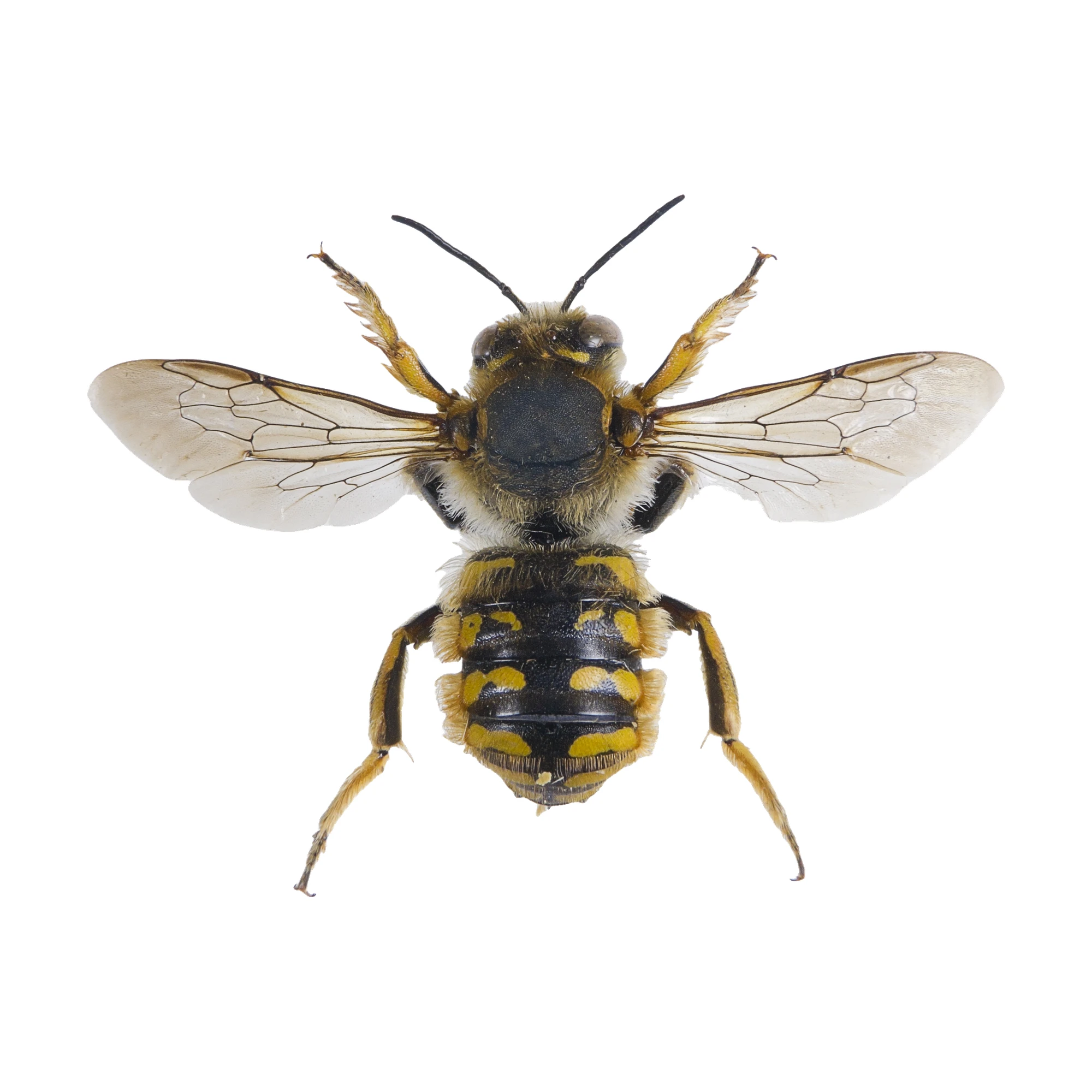
Wool Carder Bees in the genus Anthidium are stout, medium-sized bees, about 8 to 17 mm long. They are black with bold yellow or cream markings on the head, thorax and abdomen, and the body is covered with pale hair. Males of some species are larger than females and have spines at the tip of the abdomen that they use in fights. Unlike honey bees they carry pollen on the underside of the abdomen, not on the hind legs. These are real, US-collected specimens from Hot Springs in Fall River County, South Dakota, and the lot includes both a male and a female.
About 29 species occur in the United States and Canada. Native species live across the West and into the Great Plains, and two European species (Anthidium manicatum and A. oblongatum) are now common in much of the East. Adults favor sunny gardens, roadsides and meadows with plants that have fuzzy leaves, such as lamb’s-ear, yarrow and various mints.
Females scrape soft plant hairs (the “wool”) from fuzzy leaves and use them to line nest cells in existing holes in wood, stems or walls. They visit many kinds of flowers for pollen and nectar. Males of A. manicatum are territorial and chase other bees away from their flower patches. These bees can sting if handled, but they are not aggressive toward people.
Each cell is packed with pollen and nectar, and the female lays one egg on the food. The young go through complete metamorphosis (egg, larva, pupa, adult) inside the wool-lined cell. There is usually one generation a year in cool climates. Adults fly mainly from late spring through summer; a mid-June date in South Dakota fits that season.
Wool Carder Bees are beneficial pollinators of garden and wild plants. The introduced A. manicatum can push other bees off flowers, but the genus as a whole is not a pest of crops or property. They do not dig in lawns or damage sound wood.
This preserved specimen educates on the colorful bees that card plant wool for their nests, suitable for displays or studies. Check it out on BugGuide! https://bugguide.net/node/view/7743