Appearance
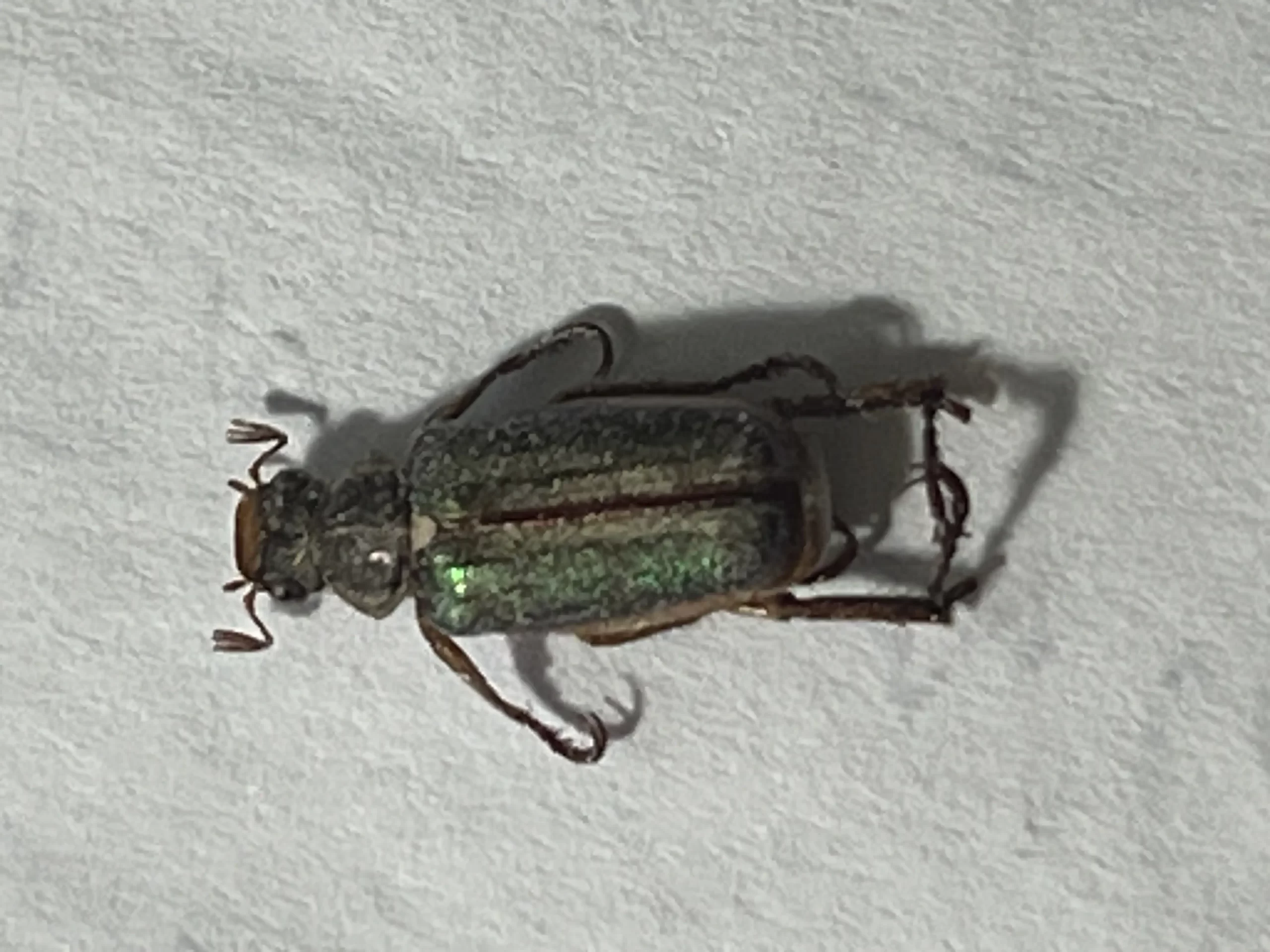
Chafers in genus Dichelonyx are 8-12 mm long with a shiny metallic green to coppery body. They have clubbed antennae and smooth, oval elytra. The legs are adapted for digging. Males and females look similar, though size can vary slightly.
Habitat and Range
This genus inhabits grasslands, meadows, and open woodlands in western North America. Adults are commonly seen on flowers and foliage during the day. Larvae live in the soil feeding on grass roots.
Behavior
Adults feed actively on leaves and flower petals during warm days. They fly well and are often attracted to lights at night. Larvae remain underground, feeding on roots of grasses and other plants.
Life Cycle
Females lay eggs in soil during late spring or early summer. Larvae develop underground through several instars, feeding on roots. Pupation occurs in the soil. Adults emerge the following spring or summer. One generation per year is typical.
Economic Impact
Larvae can act as minor pests by feeding on grass roots in lawns and pastures, causing patchy damage. Adults may chew on ornamental plants but rarely cause serious harm. Overall neutral to minor pest status.
This preserved specimen highlights the shiny metallic body, ideal for scarab beetle education and displays. Check it out on BugGuide! https://bugguide.net/node/view/11454

 <—
<—