
$3.00
 <—
1 in stock
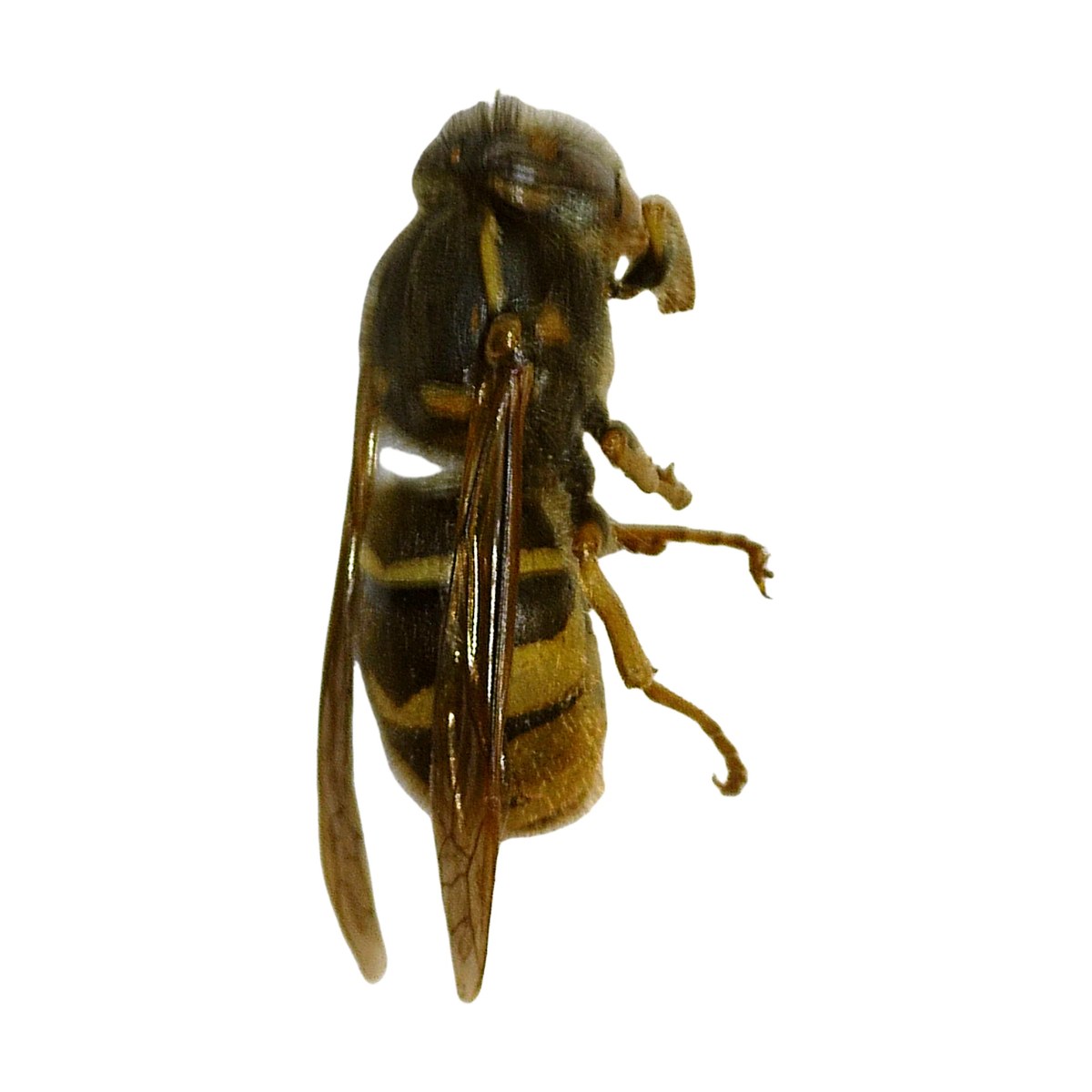
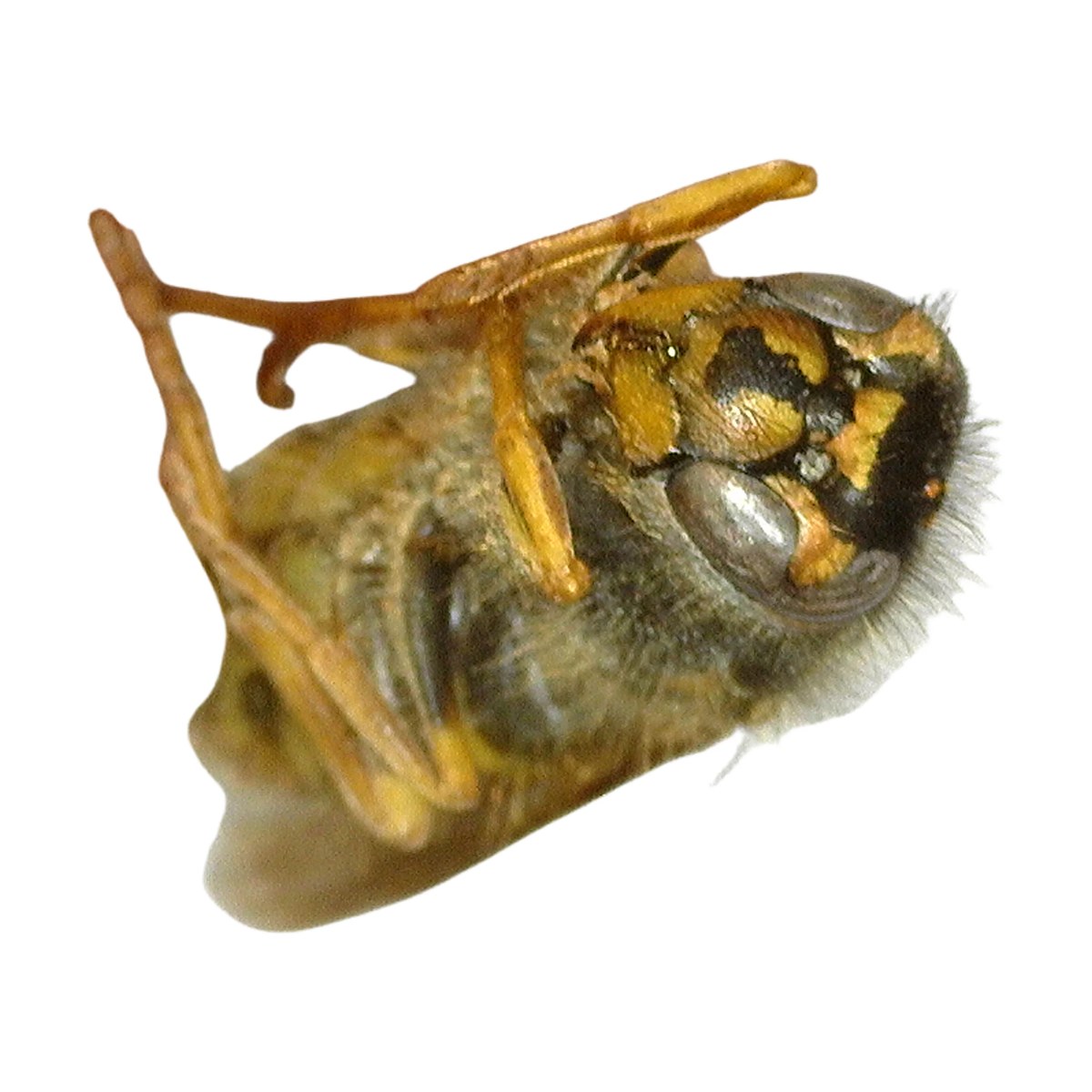
The Western Yellowjacket, Vespula pensylvanica, is a black and yellow social wasp with a smooth, shiny body. Workers, the sterile females that make up most of a colony, have a forewing about 8.5 to 10.5 mm long, while queens and males are larger, with forewings of about 12.5 to 14.5 mm. The specimen we offer is a queen, the largest member of the colony. The abdomen is banded in black and yellow, in a pattern very much like that of the German Yellowjacket, Vespula germanica. The best way to tell them apart is the face: the Western Yellowjacket is the only member of its species group with a complete yellow ring around each eye, which German Yellowjackets lack. Dried specimens often fade, and the yellow can turn tan, orange-brown, or cream.
The Western Yellowjacket lives in western North America, from British Columbia and Alberta south to California and Mexico, and east to Manitoba, Wisconsin, Nebraska, and Texas, although it is scattered east of the Rocky Mountains. It has also been introduced to Hawaii. It nests mostly underground, often in old rodent burrows, and also in other dark cavities such as wall voids and attics. Some of our specimens were collected near Tillamook, Oregon.
This is a social wasp that lives in a colony, and the workers do most of the jobs: building the paper nest from chewed wood fibers, hunting, gathering sugar, feeding the larvae, and defending the nest. Females hunt a wide variety of insects and other arthropods, and they also scavenge carrion, fruit, and sweet foods, including human food and drinks. The queen starts the nest in spring and lays the eggs, and later in the season she stays inside while her workers do the foraging. Like other yellowjackets, the workers defend the nest vigorously when it is disturbed.
The Western Yellowjacket undergoes complete metamorphosis (egg, larva, pupa, adult), and in most places its colonies last only one season. A mated queen spends the winter alone in a sheltered spot, then in spring starts a new nest by herself and raises the first workers. The workers take over the building and foraging while she lays eggs, and the colony grows through the summer. In late summer and fall the nest produces new queens and males, which leave to mate. The old queen, the workers, and the males die with the cold weather, only the mated young queens survive the winter, and the nest is not reused.
The Western Yellowjacket is both beneficial and a nuisance. Its workers kill many caterpillars, flies, and other insects, which is a natural form of pest control. It is also the most important pest yellowjacket in western North America, because it scavenges around picnics, garbage cans, and outdoor events in late summer and fall, and a disturbed nest can deliver many painful stings, which are dangerous to people who are allergic. Nests are best left alone in quiet places and removed only when they are close to doors or busy areas.
This preserved specimen educates on social wasp colonies and the large queen caste, suitable for displays or studies. Check it out on BugGuide! https://www.bugguide.net/node/view/12981