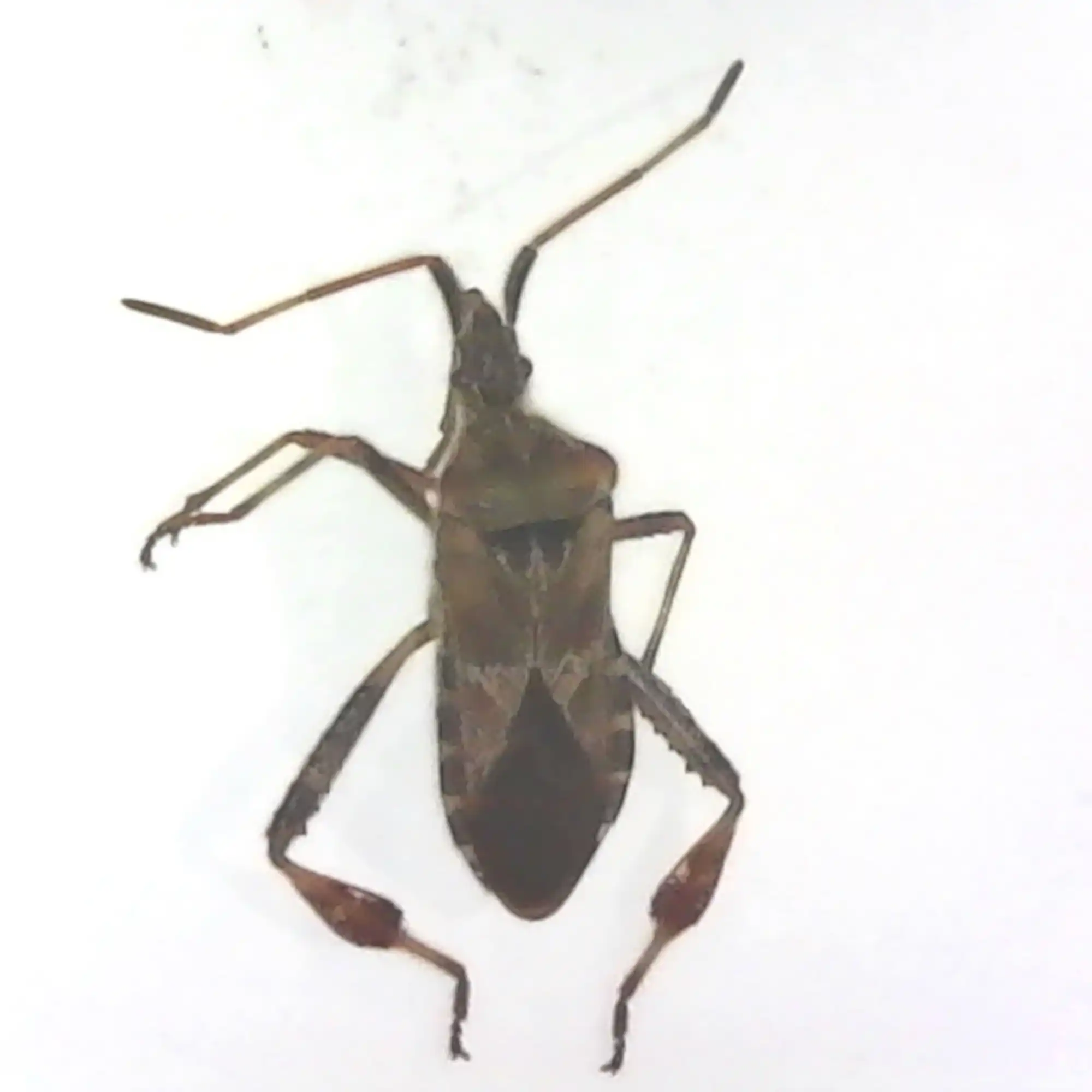
The Western Conifer Seed Bug reaches 16-20 mm in length. It has a narrow reddish-brown body with a distinctive white zigzag band across the hemelytra. Hind tibiae flare out leaf-like in adults. Antennae feature alternating pale and dark bands. Nymphs show bright red abdomens with black spots underneath.
Habitat and Range
This bug inhabits conifer forests and urban areas across North America. Native to western regions from British Columbia to Mexico, it spread eastward since the 1950s, reaching New England by the 1990s. Now invasive in Europe, Asia, and Chile. It favors pines, Douglas fir, and hemlock.
Behavior
Adults and nymphs pierce developing conifer seeds to suck fluids, causing seed abortion. In fall, adults seek overwintering sites, often entering homes through cracks. They emit a pine-like odor when disturbed. Flight aids dispersal; they attract to lights at night.
Life Cycle
Females lay rows of eggs on conifer needles in spring. Nymphs hatch in two weeks, passing five instars while feeding on seeds over summer. Adults emerge by late summer, overwintering in protected spots. One generation per year in most areas.
Economic Impact
As a pest, this bug damages conifer seed production in plantations and nurseries, reducing yields for forestry. Home invasions cause nuisance without health risks. Control focuses on sealing entry points; no major agricultural threat beyond seeds.
This preserved specimen highlights the distinctive leaf-like legs and zigzag pattern, ideal for coreid bug education. Check it out on BugGuide! https://bugguide.net/node/view/3393

 <—
<—