Appearance
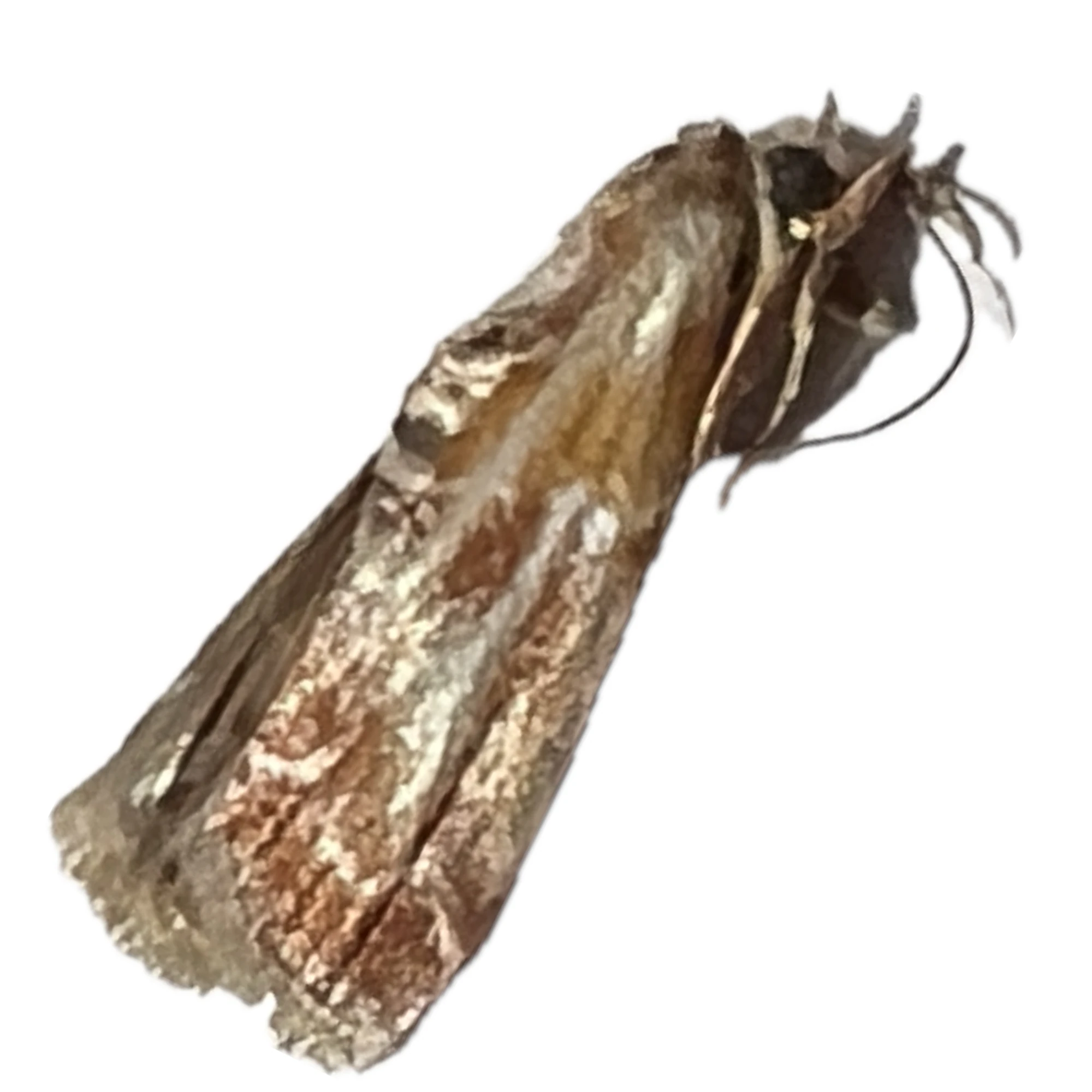
The Webbing Coneworm Moth adult spans 24-29 mm in wingspan. Forewings show yellowish-orange inside the antemedial line, turning darker orange beyond it. Antemedial and postmedial lines appear white and jagged. The median line stays incomplete and faint. Terminal line forms a series of white spots. Basal and median areas may include diffuse white patches. Fringe remains white or pale yellow. Hindwings look pale gray with white fringe. Larvae appear brown with thin black bands across each abdominal segment and a dark brown head.
Habitat and Range
This moth inhabits pine forests and seed orchards. Its range covers New Brunswick to Florida, west to Texas, and north to Manitoba. These areas provide abundant pine hosts for larval development. Adults report most often from April to September in suitable climates.
Behavior
Larvae actively bore into developing pine cones, webbing and damaging them. This feeding disrupts seed production. Adults fly during warmer months, with peak sightings in spring through fall. The species focuses on coniferous environments for all life stages.
Life Cycle
In northern states, first-instar larvae overwinter in hibernaculae under bark scales on branches like red pine. Spring brings feeding on staminate flowers, followed by tunneling into second-year cones. In southwestern areas, partly-grown larvae overwinter in new cones. Pupation happens within damaged cones. One generation completes per year.
Economic Impact
As a common pest, the Webbing Coneworm Moth damages pine seed orchards by larval boring into cones. This reduces seed yields significantly in forestry operations. Control targets affected plantations to minimize losses.
This preserved specimen highlights the distinctive orange forewings with jagged lines, ideal for coneworm pest education. Check it out on BugGuide! https://bugguide.net/node/view/19683

 <—
<—