
$5.95
 <–
1 in stock
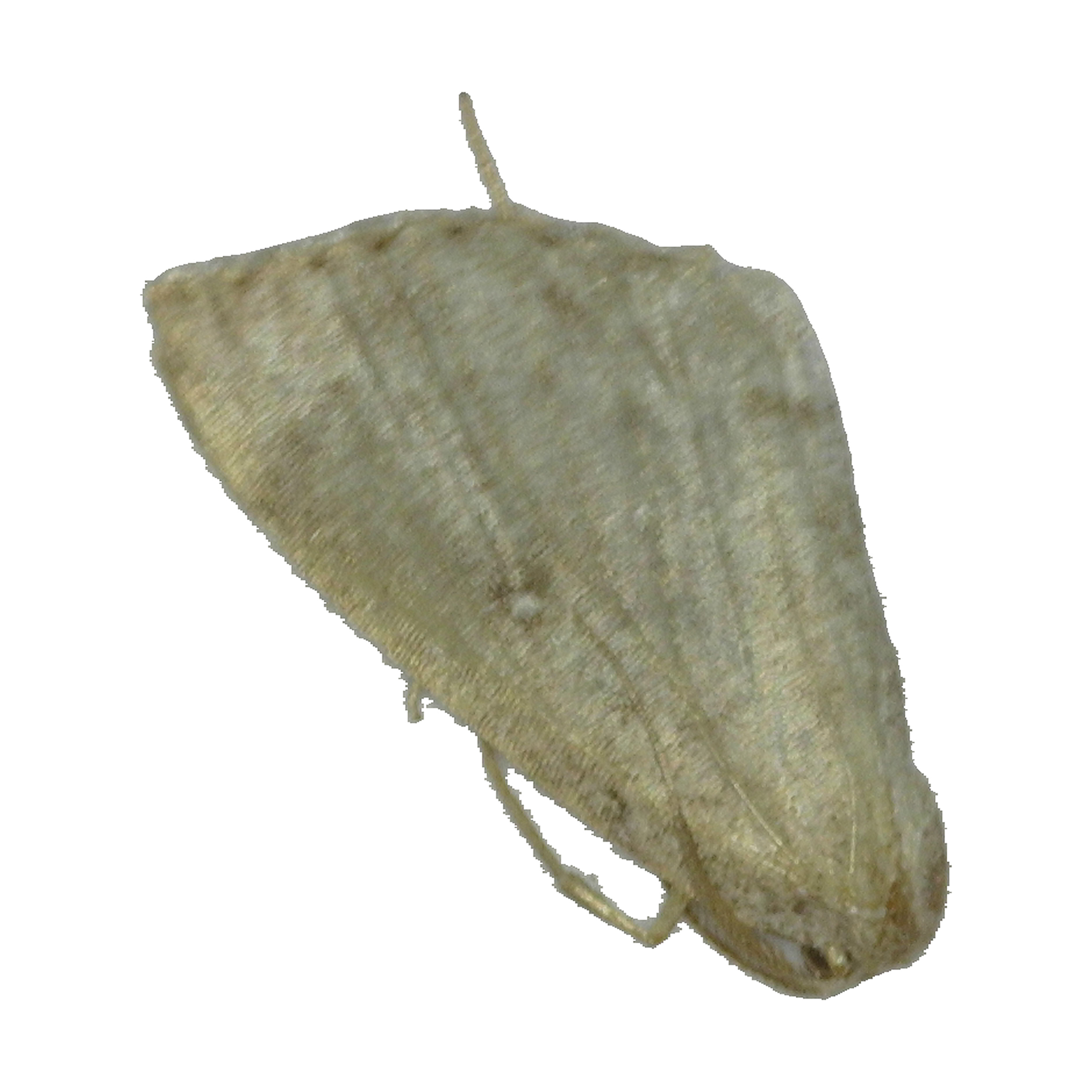
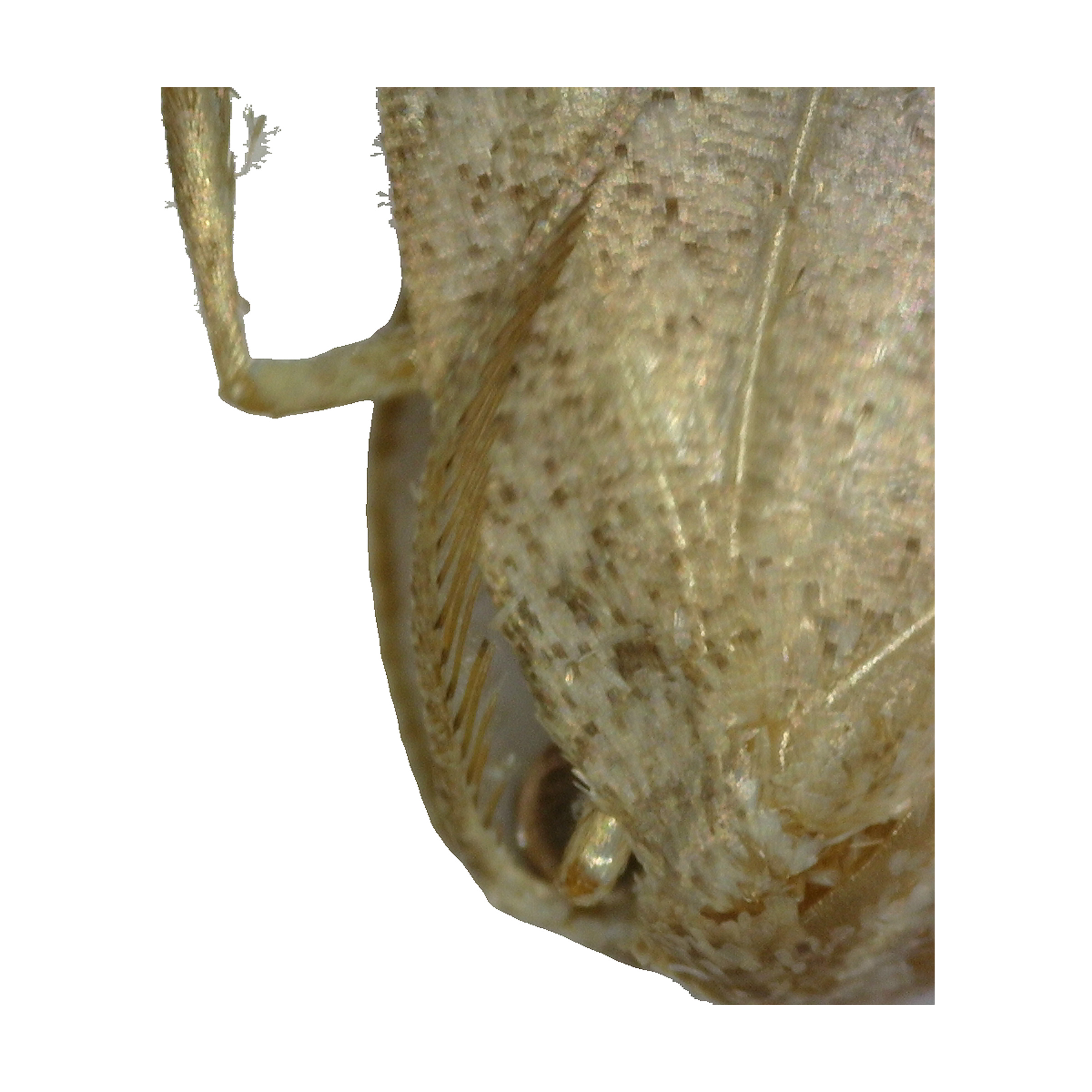
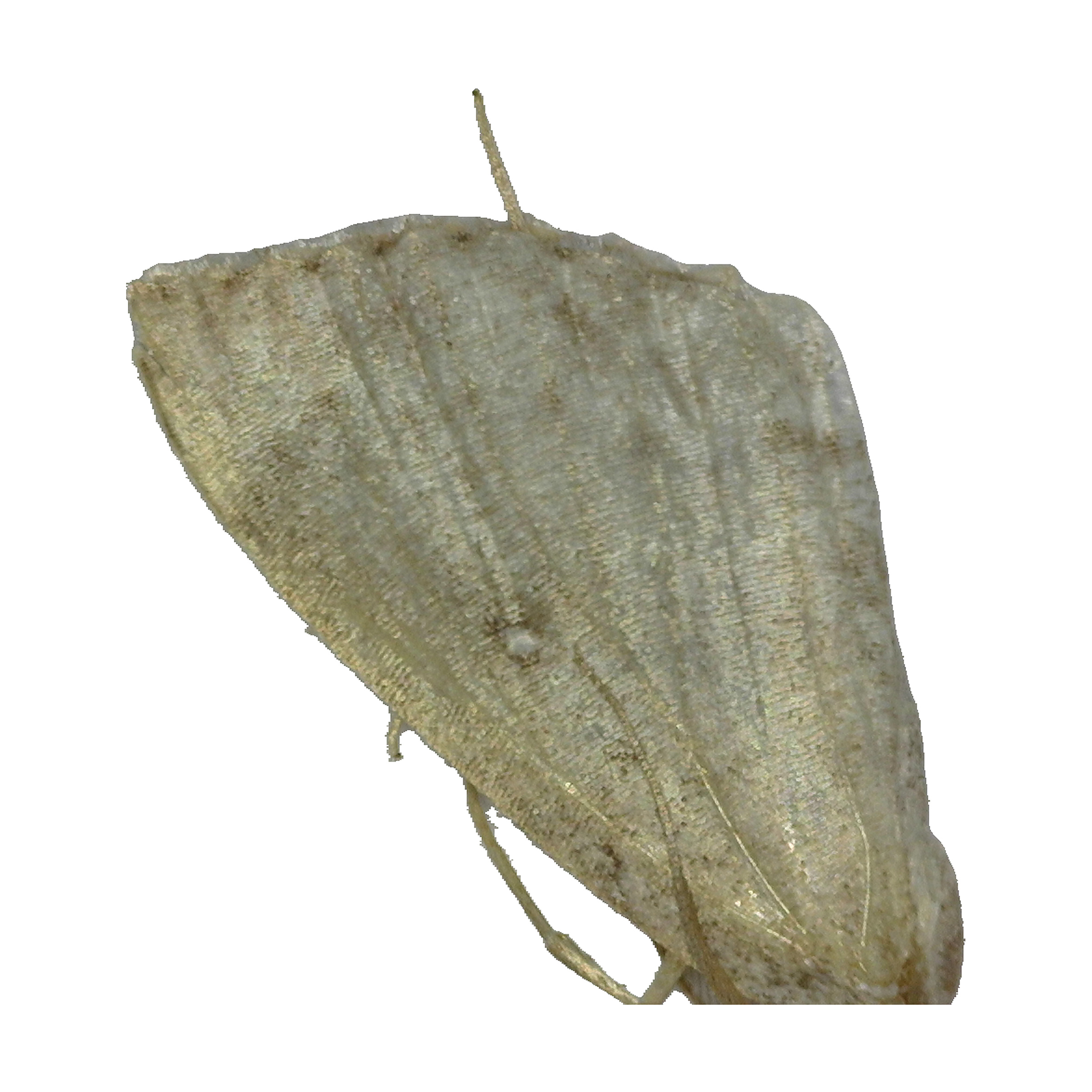
Wave moths in the genus Idaea are small geometrid moths in the subfamily Sterrhinae. The wings are usually pale straw, cream, or whitish, often finely speckled, and they may show faint wavy cross-lines and a small dark discal dot near the center of each wing. At rest the wings are held flat and often form a broad triangle. Males have feathered antennae; females have simple, thread-like antennae. This specimen is a male, and it is about 12 mm long. Adults in the genus are small moths, and many North American species have a wingspan of about 13 to 25 mm.
Idaea is a large, nearly worldwide genus of wave moths. More than 27 species occur in America north of Mexico, and they are found from coast to coast. A few species are also holarctic. They turn up in a wide range of habitats, including woods, fields, gardens, and damp places, depending on the species.
Adults are active at night and often come to lights. By day they rest with the wings spread flat, and their pale, speckled pattern makes them easy to overlook on leaves or pale surfaces. In much of North America the adults fly from spring into fall; some species fly nearly year-round in the South.
Like other geometrid moths, wave moths have complete metamorphosis: egg, larva, pupa, and adult. The larvae are slender inchworms (geometer caterpillars). Many species feed on low plants such as clover and dandelion, and some feed on dead or decaying leaves.
Wave moths in this genus are not agricultural pests. They do not damage crops, timber, or structures, and they are harmless to people. A few species have been found on decaying leaves or stored grain, but they are not a serious economic problem. The preserved specimens are used in teaching and collections.
Idaea Treitschke, 1825 belongs to the family Geometridae (geometrid moths), subfamily Sterrhinae, tribe Sterrhini, in the order Lepidoptera. The common name “wave” refers to the wavy cross-lines found on many species in the subfamily. Species can be hard to separate from a photograph alone, especially when the lines are faint or worn, and a sure identification often requires a closer look at the wings or, in males, the genitalia. This specimen is therefore listed as Idaea sp.
This preserved specimen educates on geometrid moths and the wave moths of the subfamily Sterrhinae, suitable for displays or studies.
Check it out on BugGuide! https://bugguide.net/node/view/9738/bgimage