
$7.95
 <–
3 in stock
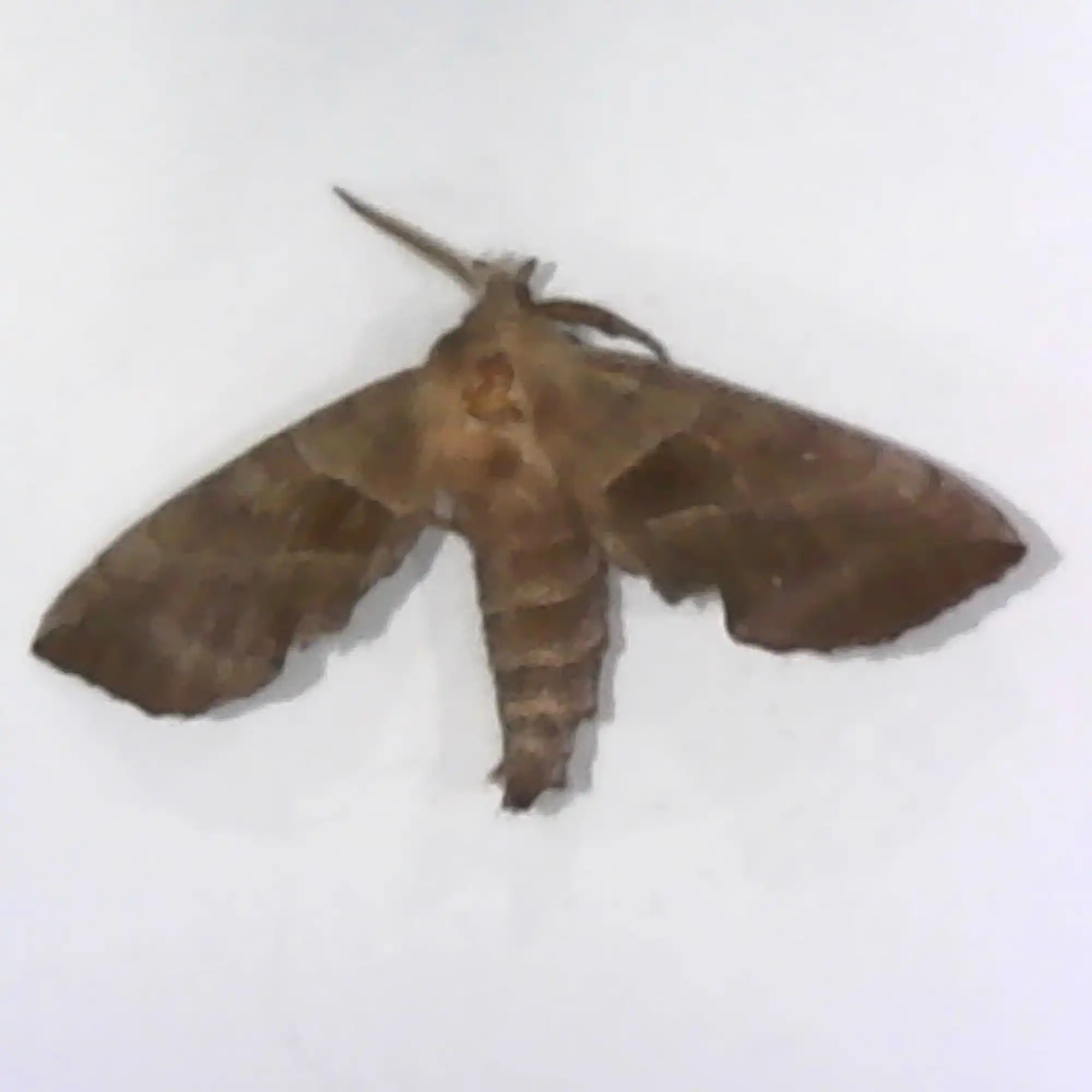
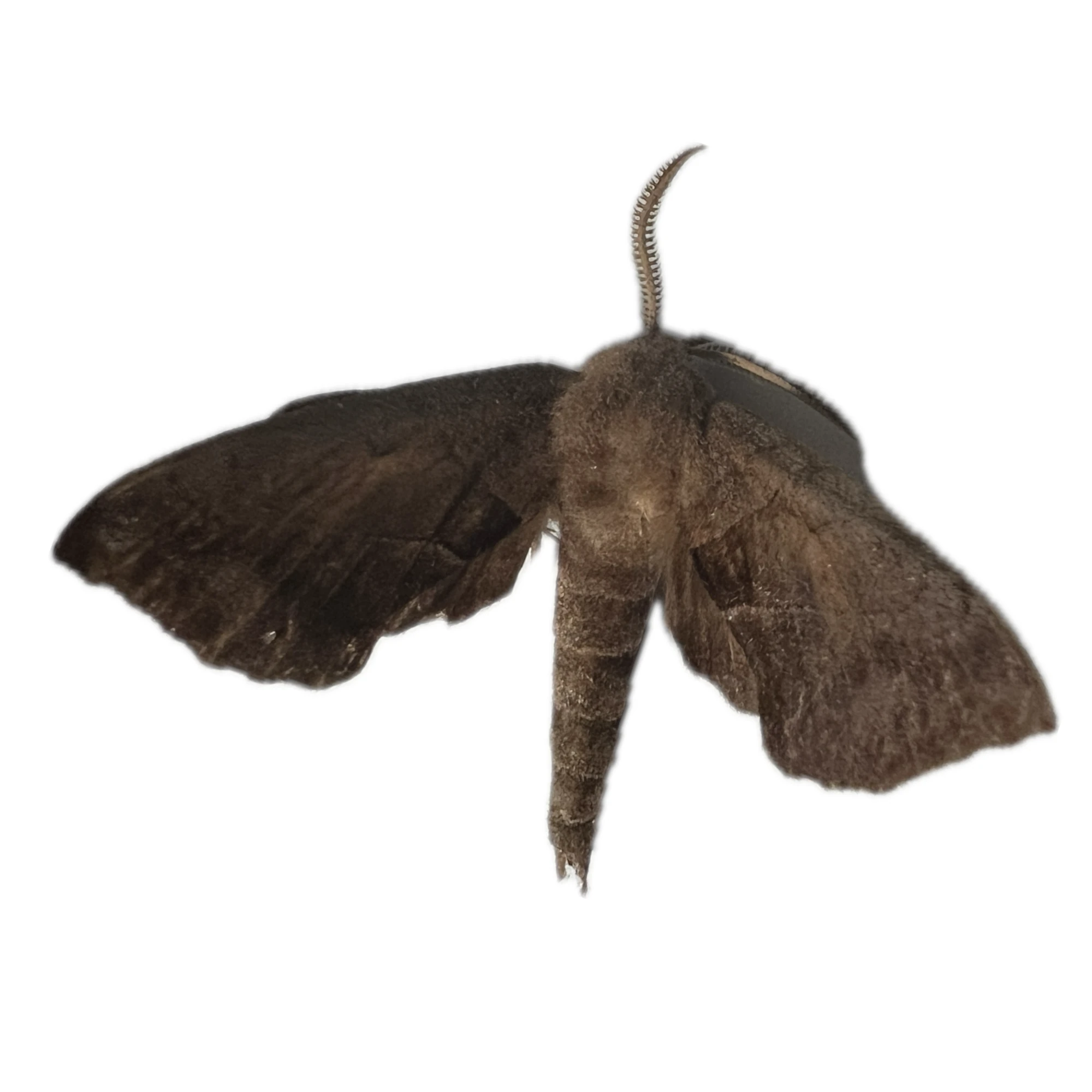
The Walnut Sphinx has a wingspan of 45-75 mm (4.5 to 7.5 cm). Its color is highly variable, from evenly brown to a mix of browns with a whitish, pinkish, or purplish tint, and the pattern can be faint or strongly marked. The outer edges of the wings are scalloped to wavy, and the hindwings lack a bright flash pattern. Males are smaller than females. The tongue is very short.
This species inhabits deciduous forests. It occurs in the eastern United States and southeastern Canada, from Nova Scotia to Florida, west to Texas, and north to Manitoba. Our specimen was collected in Douglas County, Wisconsin.
Adults do not feed. They have a very short tongue and are attracted to lights.
There are one or two generations per year in the north and as many as three or four in the deep south. BugGuide reports adults flying from May to August in the north and from March to October in the deep south, with larvae present from May to October. Caterpillars feed on the leaves of black walnut (Juglans nigra), butternut (Juglans cinerea), hickory (Carya species), hophornbeam (Ostrya virginiana), and also alder, beech, cherry, chestnut, and hazel. When handled, the larvae may make a whistle-like hiss.
Caterpillars feed on walnut, hickory, and related trees, but this species is not generally considered an economically important pest.
Hodges number 7827. Amorpha juglandis (Abbot and Smith, 1797) belongs to the sphinx moth family Sphingidae, subfamily Smerinthinae. It is the only species in this genus in North America. It was formerly listed as Cressonia juglandis and was originally described as Sphinx juglandis. Some dealer lists have used the name Laothoe juglandis, but BugGuide notes that this species has never been formally placed in the genus Laothoe.
Check it out on BugGuide! https://bugguide.net/node/view/4144/bgimage
Only logged in customers who have purchased this product may leave a review.
Reviews
There are no reviews yet.