
$8.95
 <–
25 in stock
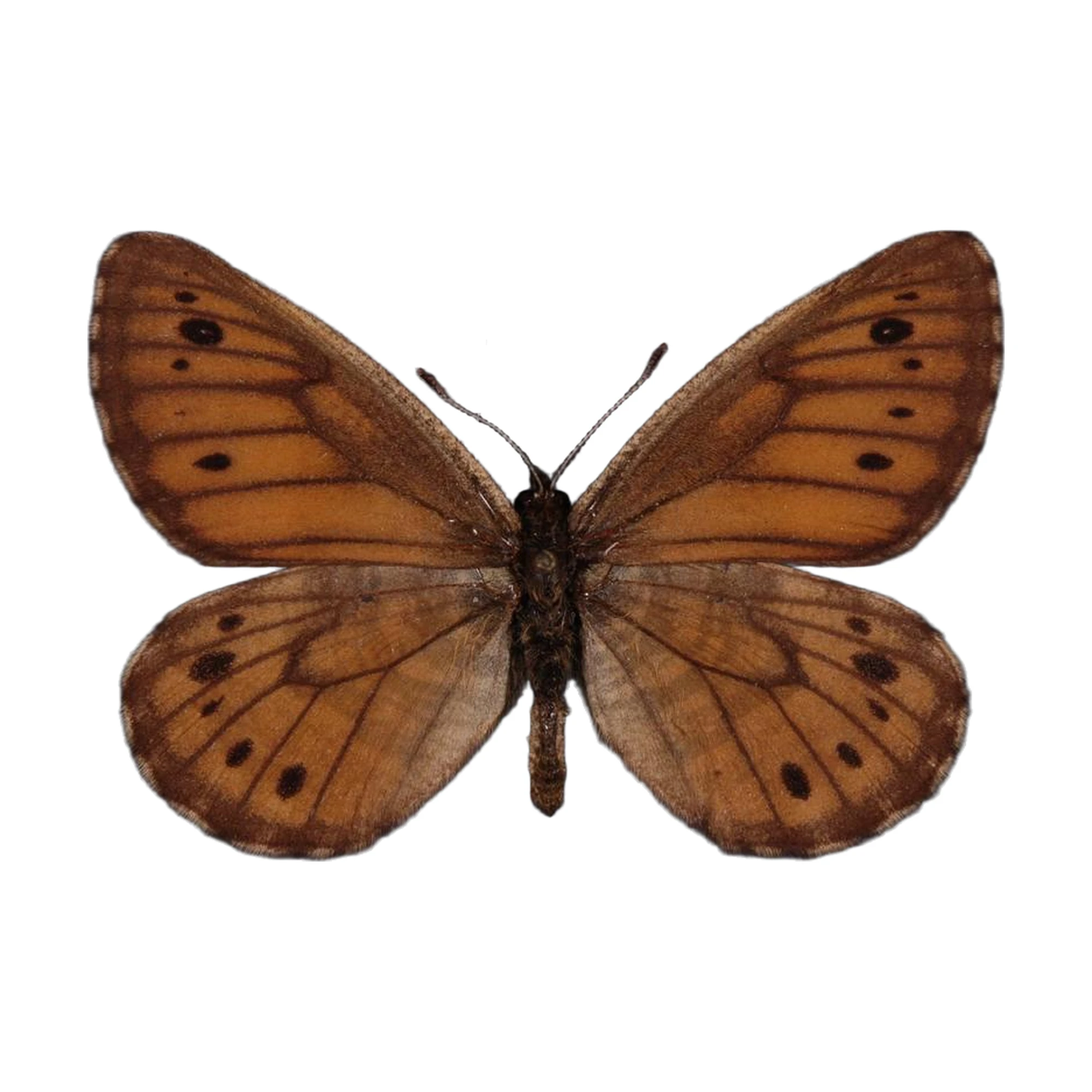
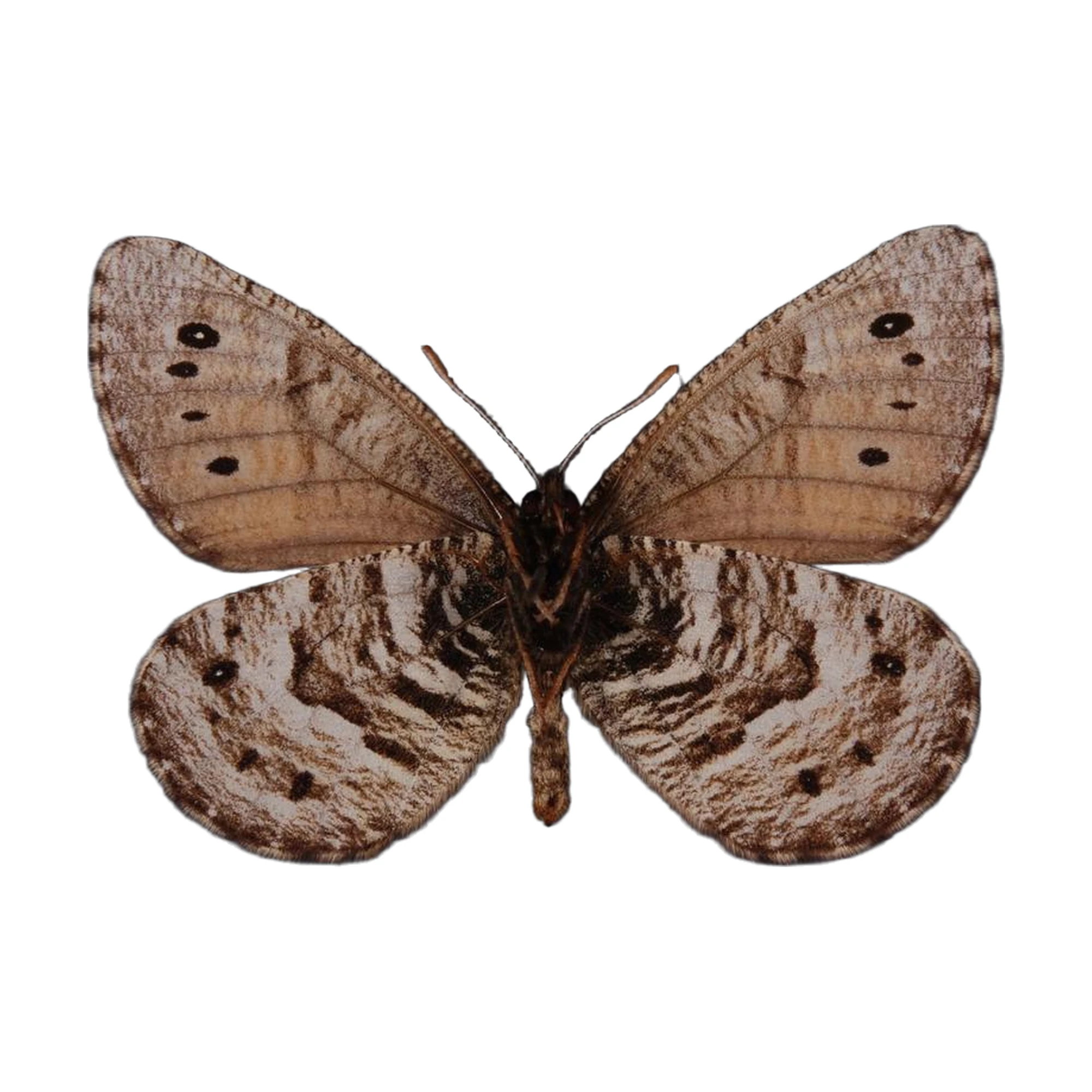
Uhler’s Arctic, Oeneis uhleri, is a small to medium-sized butterfly with a wingspan of 38 to 56 mm (about 1 1/2 to 2 3/16 inches). The dorsal side is dull orange-brown with dark veins and a few dark eyespots near the edge of the wings. The ventral side is pale brown and gray with fine dark streaks, and the hindwing looks like tree bark or frosted grass, with small dark spots along the edge. It looks like the Chryxus Arctic but lacks the dark line across the ventral forewing. Our specimen is the prairie form, Oeneis uhleri varuna. Our photos show spread museum specimens of the same species, dorsal and ventral.
Uhler’s Arctic lives on dry, grassy slopes and hilltops, in open bunchgrass prairie, and in grassy openings in pine forest. Its range runs from Alaska and the Yukon south through the Rocky Mountains to northern New Mexico, and east across the Canadian prairie provinces to the Dakotas, Nebraska, and western Minnesota. The subspecies varuna is the form of the northern plains.
Adults fly in one brood a year, from late May to early July. Males perch on the ground, on logs, or on low plants near the crest of a grassy slope and wait for females, and they sometimes hover in place over one spot. Adults take mud and visit a few flowers for nectar. The butterfly blends in well with dry grass when it lands with its wings closed.
Complete metamorphosis (egg, larva, pupa, adult). Females lay single eggs on grasses and sedges, and the caterpillars feed on grasses such as fescue, junegrass, and bluegrass. The caterpillars spend the winter partly grown, finish feeding in spring, and pupate just under the soil. In some northern areas it may take two years to complete a generation.
Not a pest. The caterpillars feed on wild prairie grasses and cause no known damage to crops or pastures.
Our specimen was collected near Hot Springs, South Dakota.
This preserved specimen shows the orange-brown dorsal wings and the bark-like ventral pattern, ideal for butterfly education and displays. Check it out on BugGuide! https://bugguide.net/node/view/157979/bgimage
Photos: Yale Peabody Museum (YPM ENT 411059), photo by Paul Shamble, CC0, via iDigBio. Cropped, background removed. Photos are representative examples, not the exact insect you will receive.