
$3.00
13 in stock
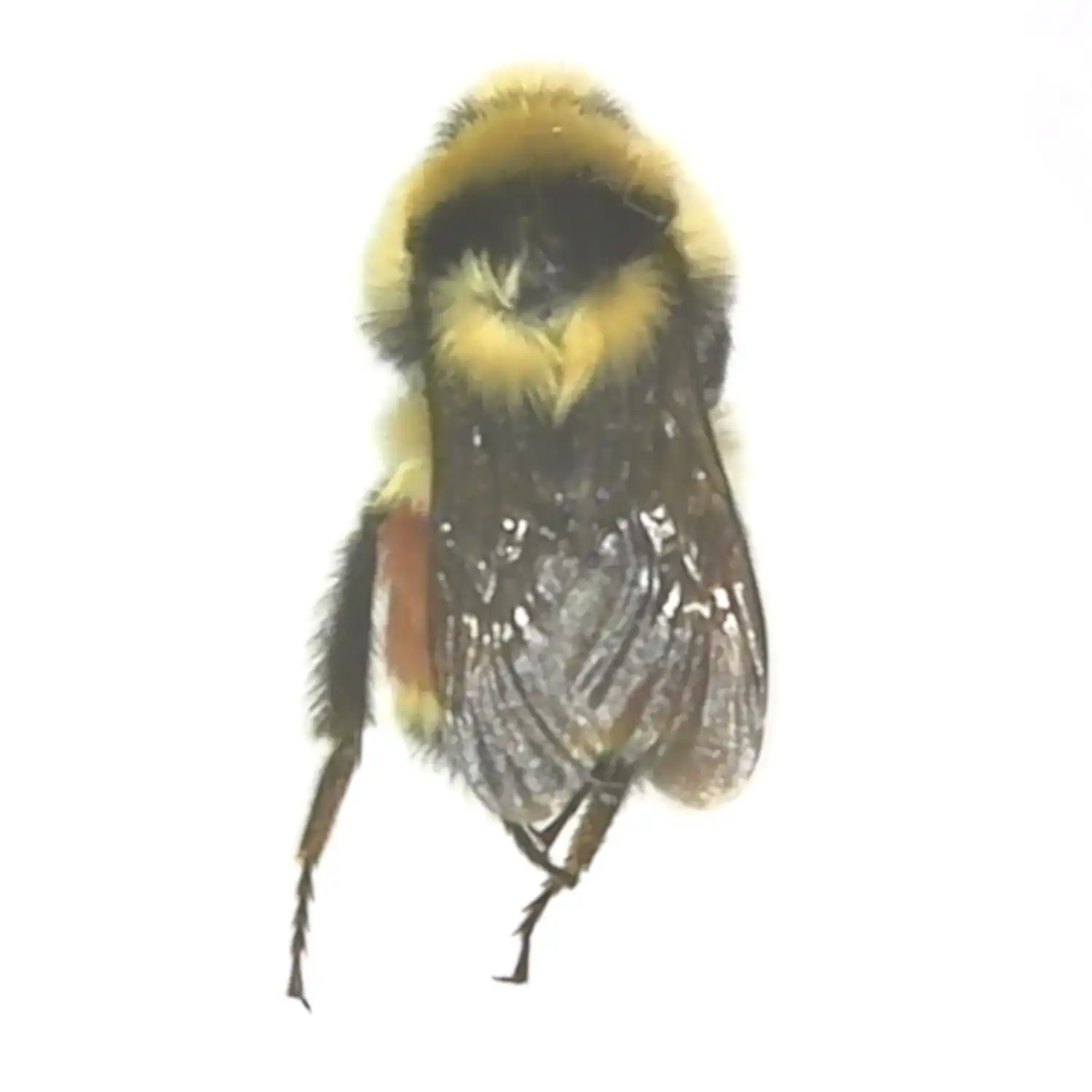
Bombus ternarius is a small bumble bee, about 9 to 17 mm long, named for its three colors. It has yellow hair on the front and back of the thorax with a black band between the wings, two bright orange-red bands across the middle of the abdomen, and a yellow and black tip. That orange band makes it one of the easiest bumble bees to recognize in North America.
It is found across the northern United States and Canada, from Alaska and British Columbia east to the Maritimes and New England, and south through the Great Lakes states and the Appalachians. It lives in open woods, forest edges, meadows, gardens and blueberry fields.
Tricolored bumble bees live in small social colonies with a queen, workers and males. They visit many kinds of flowers, including blueberry, goldenrod, asters, willow and fireweed. Like other bumble bees, they can buzz-pollinate, vibrating their flight muscles to shake pollen loose from flowers. They are gentle and sting only if handled or if their nest is disturbed.
A mated queen comes out of hibernation in early spring and starts a nest, usually underground in an old rodent burrow. She lays eggs on balls of pollen and raises the first workers herself. The larvae go through complete metamorphosis (egg, larva, pupa, adult). The colony grows through summer, then raises new queens and males. Only the new mated queens survive the winter, and the old colony dies off in fall.
Tricolored bumble bees are beneficial pollinators. They are important for lowbush blueberries and cranberries and also pollinate many wildflowers and garden plants. Unlike some declining bumble bees, this species is still common.
This preserved specimen educates on native bumble bees and pollinators, suitable for displays or studies. Check it out on BugGuide! https://www.bugguide.net/node/view/15062
| Weight | 0.01 lbs |
|---|
Only logged in customers who have purchased this product may leave a review.
Reviews
There are no reviews yet.