
$3.00
 <--- See it in BugGuide
201 in stock
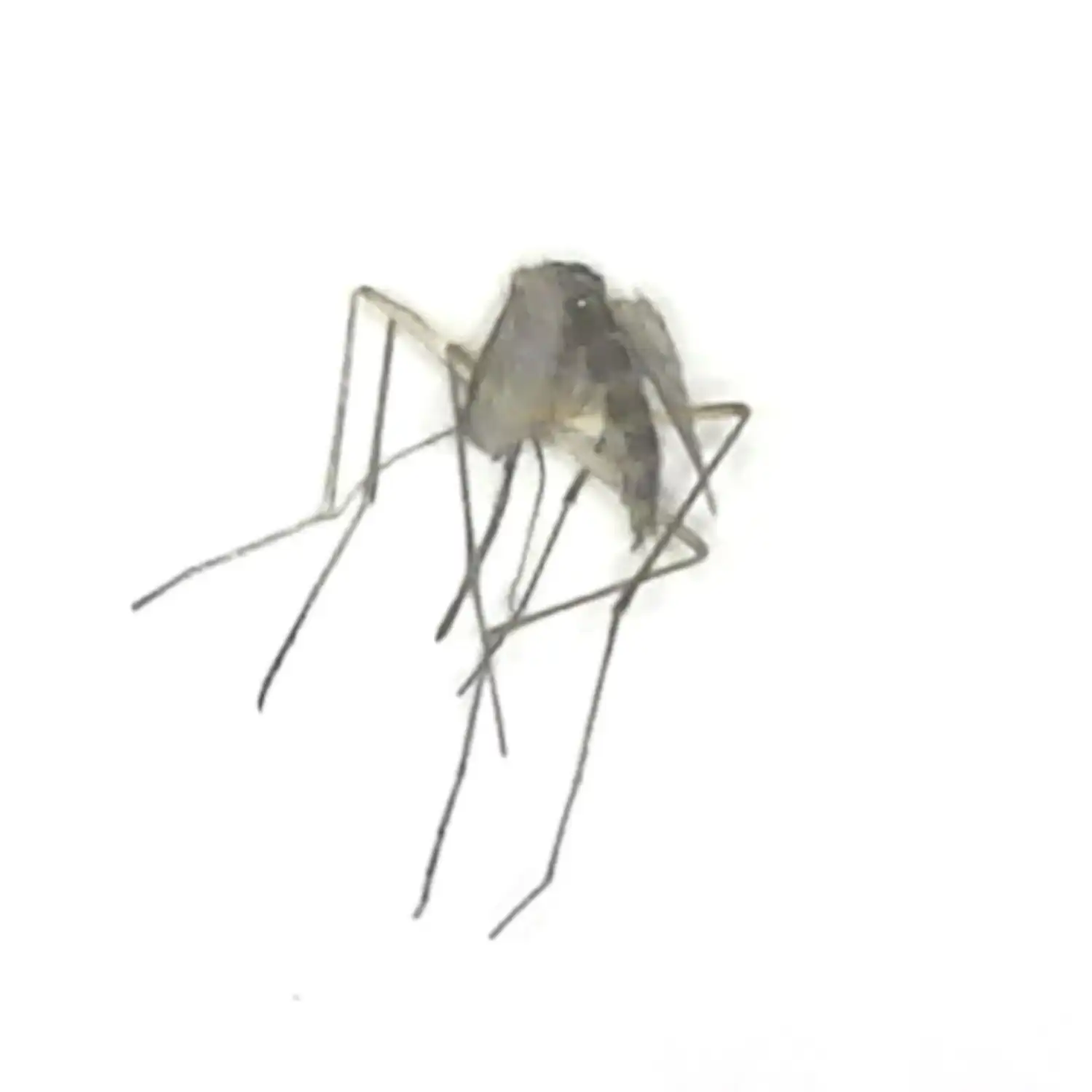
The Eastern Treehole Mosquito, Ochlerotatus triseriatus (also placed in Aedes), is a medium sized mosquito about 5 to 6 mm long. It is mostly dark blackish brown with a distinctive broad stripe of silvery white scales down each side of the thorax, bordering a dark central band. The legs and proboscis are dark without white bands, and the sides of the abdomen carry patches of pale scales.
This species is found across eastern North America, from southern Canada to the Gulf Coast and west to the Great Plains. It lives in shaded deciduous woodland and wooded suburbs, breeding in water filled tree holes and in artificial containers such as discarded tires, buckets, and gutters.
Females bite during the day, especially in shady woods in the morning and late afternoon, and feed on mammals including chipmunks, squirrels, deer, and people. Males do not bite and feed on nectar. Adults usually stay close to the wooded areas where they developed.
Like all mosquitoes, it undergoes complete metamorphosis. Females lay eggs singly on the inside walls of tree holes and containers just above the water line. The eggs can survive drying and winter, then hatch when rain floods them. Larvae filter feed on microorganisms and organic debris, pupate in the water, and adults emerge in about one to two weeks in warm weather. There can be several generations each summer.
The Eastern Treehole Mosquito is a pest and a public health concern. It is the main carrier of La Crosse virus, a leading cause of encephalitis in children in the eastern United States, and its biting is a nuisance in wooded yards and parks. Removing standing water in tires and containers helps control it.
This preserved specimen educates on mosquito biology and disease ecology, suitable for displays or studies. Check it out on BugGuide!
| Weight | 0.01 lbs |
|---|
Only logged in customers who have purchased this product may leave a review.
Reviews
There are no reviews yet.