
$3.00

33 in stock
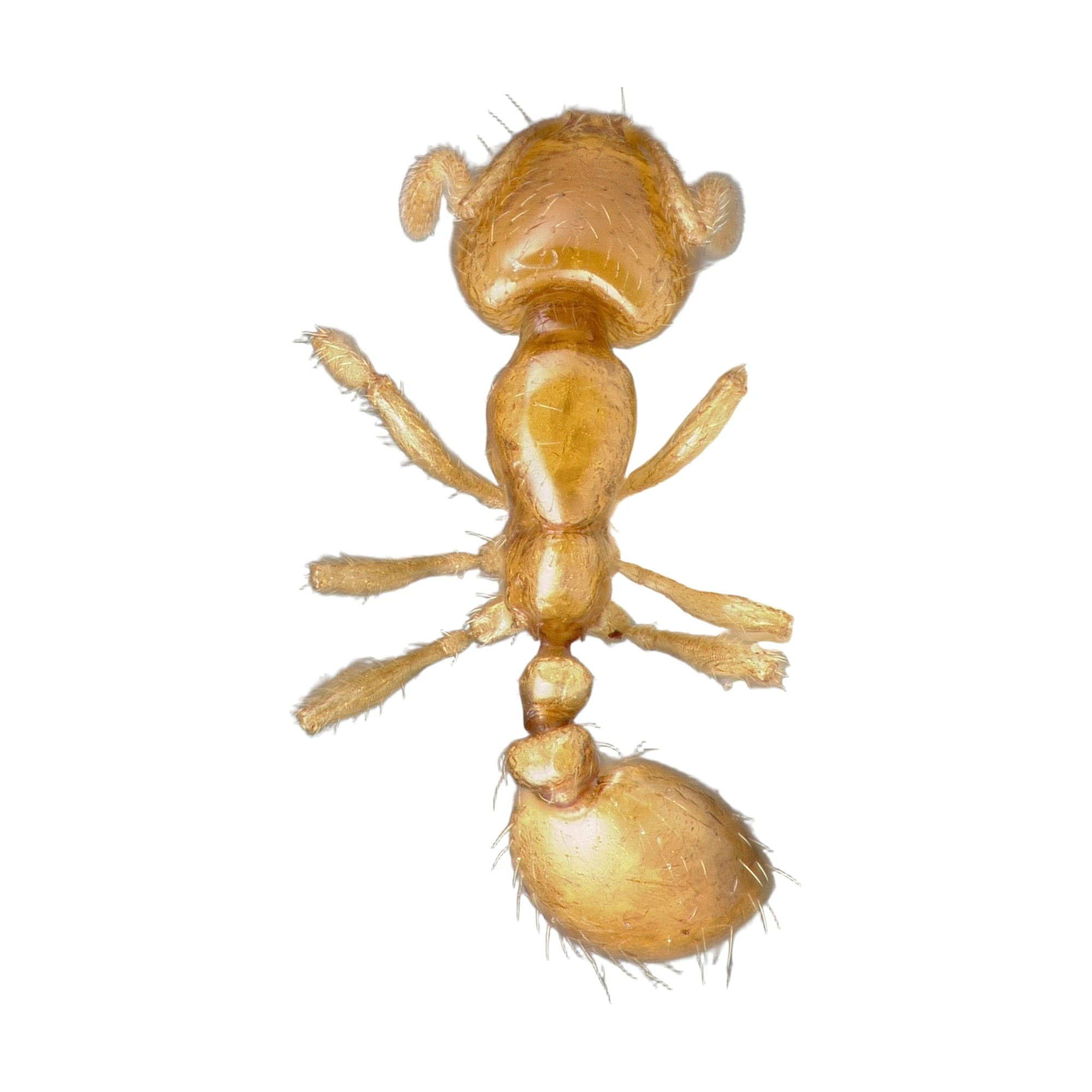
Thief Ant workers are among the tiniest ants in North America, only about 1.5 to 1.8 mm long. They are shiny golden yellow to light brown, with very small eyes and a two-segmented waist (a petiole and a postpetiole). Each antenna has 10 segments ending in a large two-segmented club, and the back of the thorax has no spines. The winged reproductives are much larger than the workers. Males are about 3.5 to 4 mm long and mostly dark brown, with paler legs and clear wings, and queens are about 4 to 5.5 mm long and yellow to light brown. The specimens we sell are real, US-collected winged forms (alates) taken from a mating swarm. They are dark brown, so they look quite different from the golden worker in the photo.
The Thief Ant is native to North America and is found across most of the United States and into southern Canada. It nests in soil, often in sunny spots, and under stones, logs and leaf litter. Colonies are often built right inside or next to the nests of larger ants. Indoors, Thief Ants may nest in wall voids, behind baseboards and in cracks in masonry. These specimens were collected from a swarm in Wilkes County, North Carolina.
Thief Ants get their name from their habit of digging tiny tunnels into the nests of larger ants and raiding them, stealing stored food and feeding on the host colony’s eggs, larvae and pupae. The tunnels are too narrow for the larger host ants to follow. Workers are also general scavengers that are especially attracted to greasy and high-protein foods, such as meats, cheese, nuts and dead insects, and they tend root-feeding aphids and other sap-feeding insects for honeydew. Workers have a stinger, but they are so small that a sting is rarely noticed.
Like all ants, Thief Ants go through complete metamorphosis (egg, larva, pupa, adult), and a worker takes about 52 days to develop from egg to adult. Colonies usually have several queens and a few hundred to a few thousand workers. Winged queens and males leave the nests on mating flights, mostly in the second half of summer and early fall, often on calm, sunny days after rain, and they mate in flight. The males die soon afterward. A mated queen sheds her wings and can start a new colony on her own, and some queens fly with a worker or two clinging to them that help start the new nest.
The Thief Ant is a common household pest. Workers are small enough to slip through tiny cracks and into packaged food, and they are hard to control because their nests are often hidden and they ignore many sweet baits. Outdoors they have been recorded hollowing out planted corn and sorghum seed. They are also a native part of the ecosystem, cleaning up dead insects and preying on the brood of other ants.
This preserved specimen educates on one of the tiniest and most widespread native ants in North America and the winged reproductives that start new colonies, suitable for displays or studies. Check it out on BugGuide! https://bugguide.net/node/view/127388
| Weight | 0.01 lbs |
|---|
Only logged in customers who have purchased this product may leave a review.
Reviews
There are no reviews yet.