Appearance
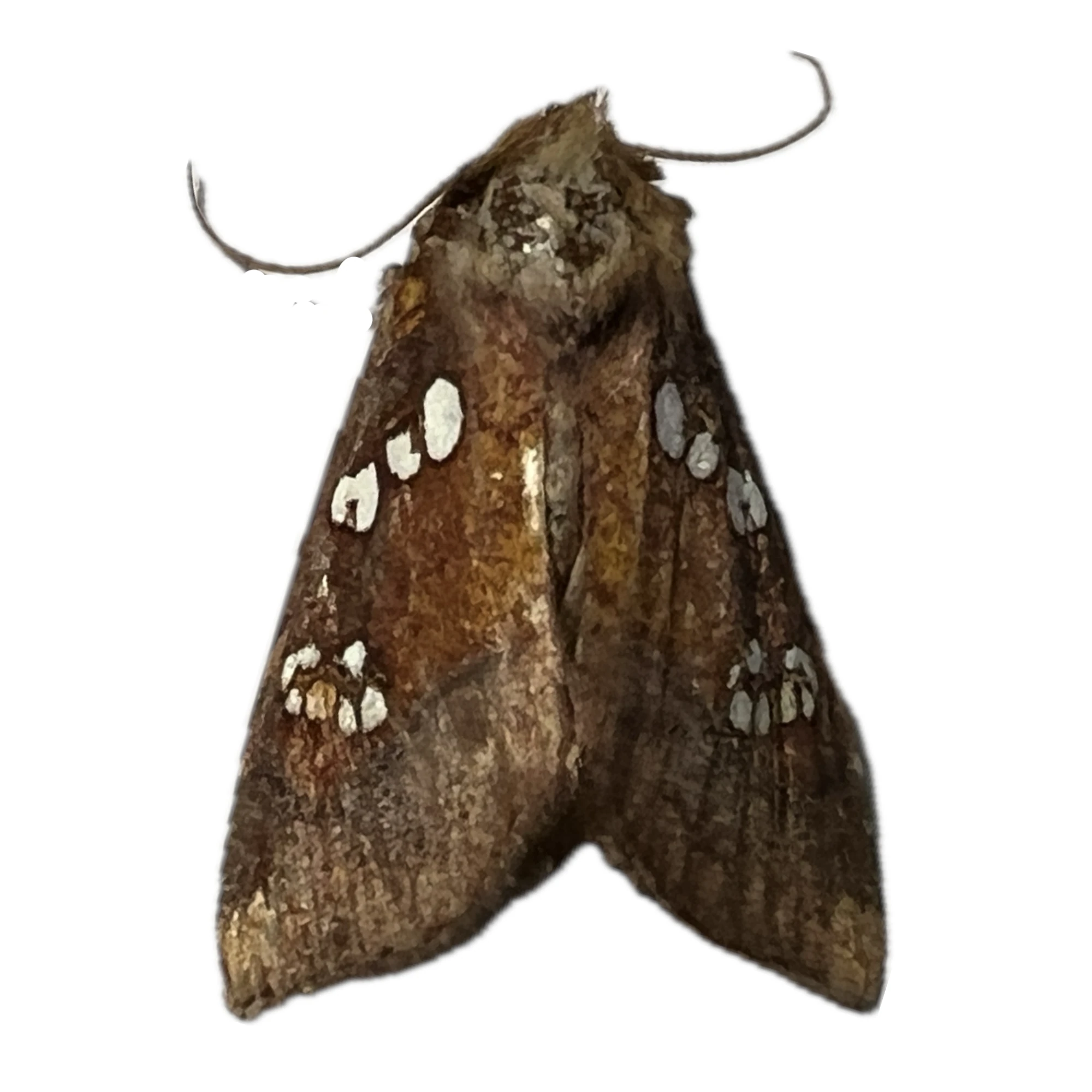
The Stalk Borer adult spans 25-40 mm with dark brown body and wings. White antennae stand out against the muted tones. Larvae reach up to 31.8 mm in length. Eggs measure 0.4-0.6 mm, while pupae span 16-22 mm. Five to six small white spots dot the costa near the wing apex.
Habitat and Range
This moth thrives east of the Rocky Mountains from southern Canada to the Gulf of Mexico. It appears rare in the southeast and inland Canada. Habitats include fields and gardens with large-stemmed plants like corn and milkweed. These areas offer ideal conditions for larval development.
Behavior
Larvae actively bore into plant stems, creating internal cavities as they feed. This tunneling disrupts plant growth and transport. Adults emerge to mate and lay eggs on suitable host plants. The species shows nocturnal activity patterns during its peak season.
Life Cycle
Eggs hatch into larvae that overwinter in plant debris. Larvae develop through spring and summer, boring into stems by mid-season. Pupation occurs in soil or stems, leading to adult emergence. The full cycle concentrates from July to October in most regions.
Economic Impact
As a pest, the Stalk Borer causes significant damage to corn crops by weakening stalks and reducing yields. It affects other large-stemmed plants like sorghum and beans, leading to economic losses in agriculture. Control measures often involve scouting and targeted insecticides.
This preserved specimen highlights the destructive boring habits, ideal for pest education and entomology collections. Check it out on BugGuide! https://bugguide.net/node/view/5404

 <—
<—