
$8.95
 <–
3 in stock
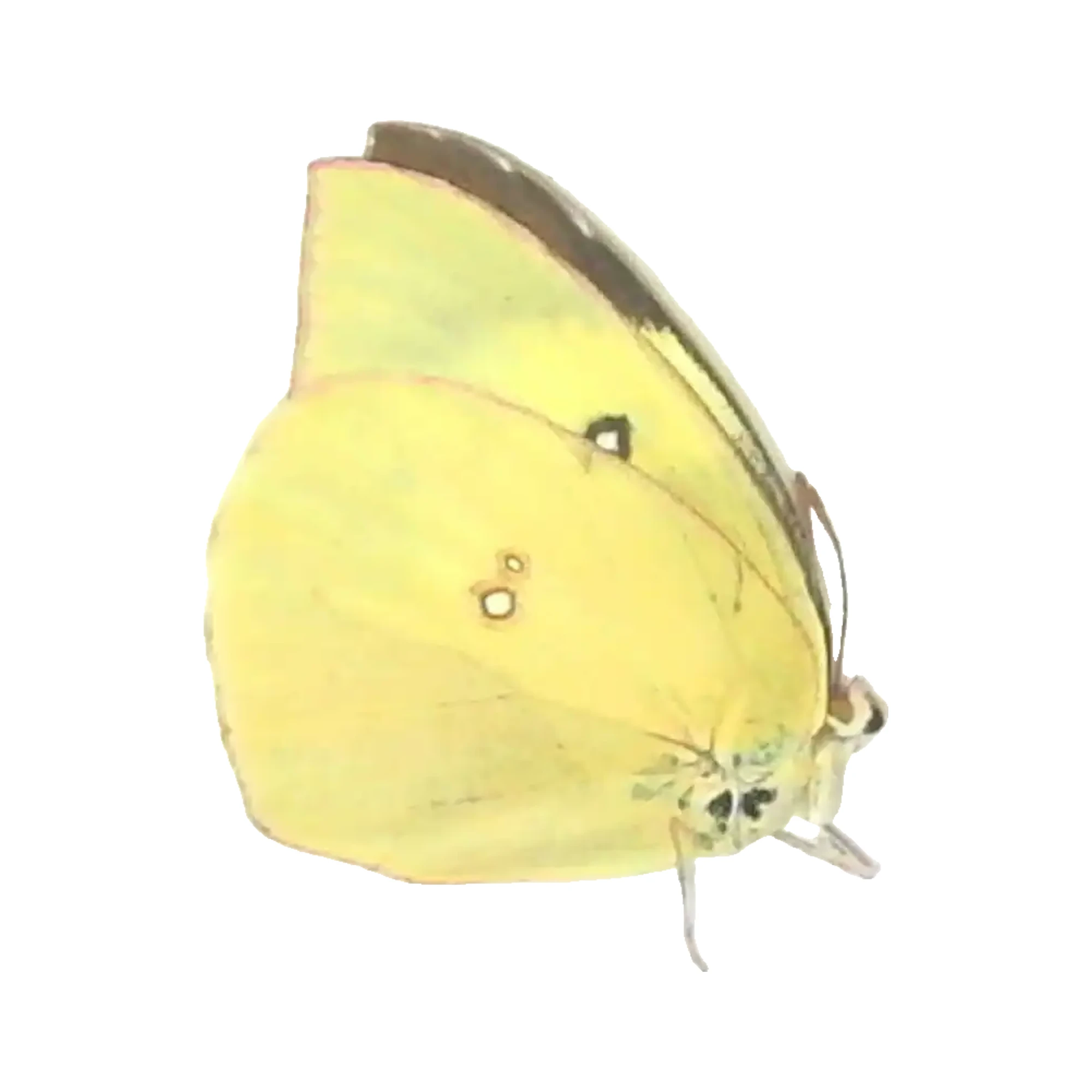
The Southern Dogface is a medium to large sulphur butterfly with a wingspan of about 54 to 76 mm. The feature to look for is the “dog face” on the dorsal side of the forewing: a yellow patch outlined in black that looks like the profile of a dog’s head, with a black spot for the eye. The forewing tip is also slightly pointed and curved outward, which is unusual among sulphurs. The butterfly always rests with its wings closed, so the ventral side is what you usually see. The summer form is bright yellow on the ventral side, with one black spot on the forewing and two small silvery spots on the hindwing. The fall and winter form is flushed with pink. The dog-face pattern shows faintly through the wings even when they are closed.
This butterfly lives in dry, open country such as prairies, pastures, roadsides, overgrown fields, open woodlands, and stream banks. It is a year-round resident from South America north to southern Texas and Florida. Each spring and summer it flies north and repopulates much of the United States, sometimes reaching southern Canada, but it cannot survive freezing winters.
Adults are strong, fast fliers. Males patrol open areas all day looking for females, and they will even perch on a chrysalis that holds a female, waiting for her to emerge. Adults sip nectar from many flowers, such as alfalfa, coreopsis, and verbena, and males gather at wet ground to take up moisture and minerals.
Complete metamorphosis. The female lays single spindle-shaped eggs on the leaves of plants in the pea family (Fabaceae). The caterpillars eat the leaves of plants such as purple and white prairie clover (Dalea), false indigo and indigo bush (Amorpha), clover, alfalfa, and soybean, and then form a green chrysalis. There are up to three generations a year in the South, and one or two in the northern part of the range. In warm areas the fall generation spends the winter as an adult, in a reproductive pause.
Mostly harmless. The caterpillars eat wild legumes such as prairie clover and false indigo, and they are not known as a serious pest of crops, even though alfalfa and soybean are among their host plants. The adults help pollinate the flowers they visit.
This species was long placed in the genus Colias with the other sulphurs and is still listed as Colias cesonia in older books. Today it is placed in the genus Zerene, the dogfaces.
Our specimen was collected in the Santa Catalina Mountains near Tucson, Arizona.
This preserved specimen shows the famous dog-face pattern of this striking sulphur, ideal for butterfly education and displays. Check it out on BugGuide! https://bugguide.net/node/view/28273/bgimage
Photo is a representative example, not the exact insect you will receive.