
$5.95
 <–
1 in stock
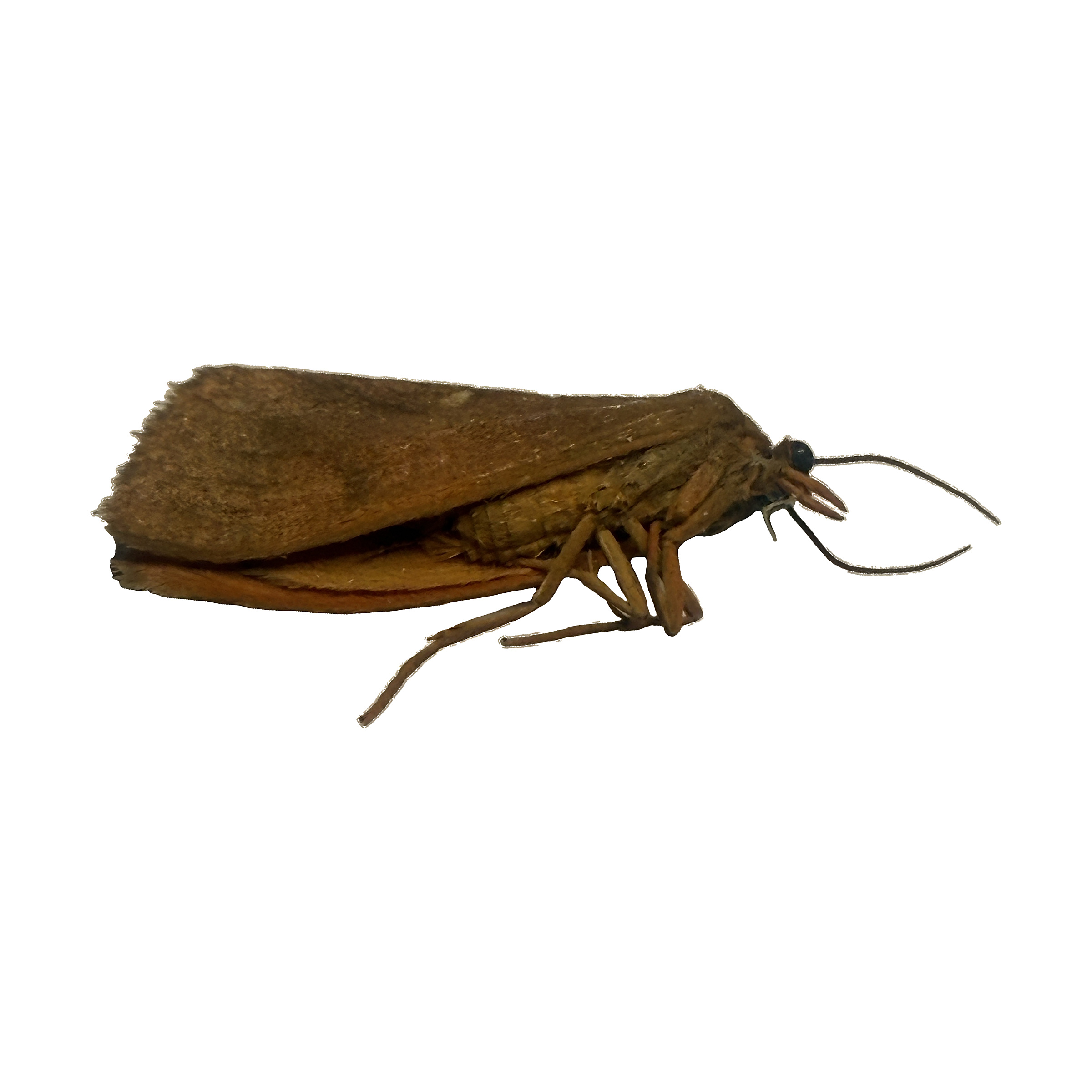
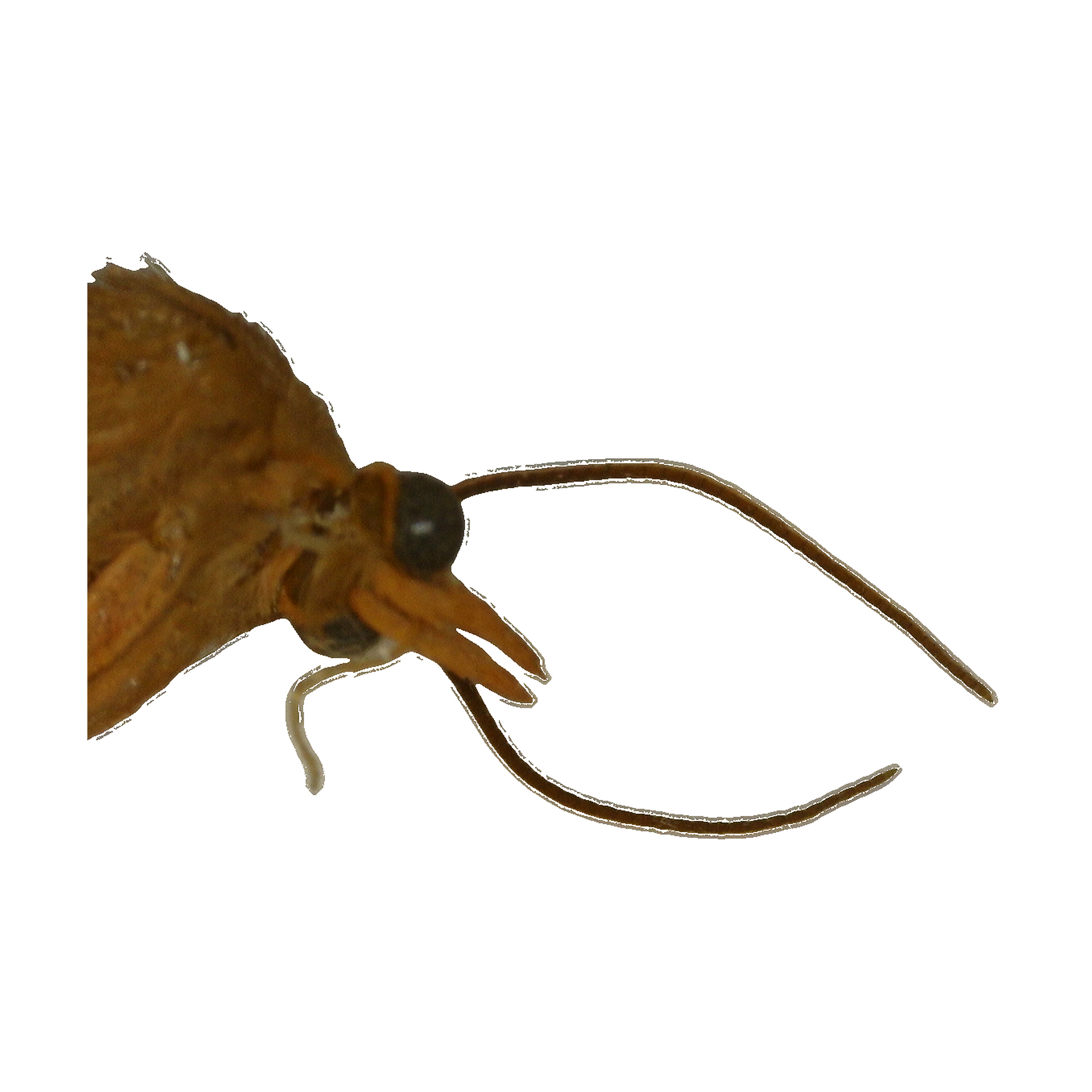
The Snout Moth belongs to the family Pyralidae, the pyralid moths, which are often called snout moths because of the long, beak-like labial palps that stick out in front of the head. At rest the wings are usually held in a tent-like roof over the body. This specimen is about 15 mm long. The forewings are orange-brown, and the hindwings show a rusty orange edge. The antennae are slender and threadlike, and the palps curve forward from the head. Adults in the family vary widely in size. The wingspan is usually about 9 to 37 mm.
Pyralidae is found worldwide, in habitats ranging from woodlands and fields to wetlands and stored-food settings, depending on the species. This specimen was collected in Douglas County, Wisconsin.
Adults are mostly active at night and often come to lights. By day they rest with the wings tented over the body. The long palps give the moth its common name. The larvae of this family have many ways of life. Some roll leaves or bore in stems, seeds, or cones. Others live on dried or stored plant material.
Like other moths, snout moths have complete metamorphosis: egg, larva, pupa, and adult. The female lays eggs on or near the larval food. The larva feeds and then pupates in a cocoon or in the food material. In much of the range, adults may be collected from spring through fall, and some species have more than one generation a year.
A number of pyralid moths are well-known pests of stored food, bee hives, or crops, including the Indian meal moth, the greater wax moth, and several cone-boring moths. Many other species in the family cause little noticeable damage. The moths do not bite or sting and are harmless to people. The preserved specimens are used in teaching and collections.
Pyralidae Latreille, 1809 belongs to the order Lepidoptera and the superfamily Pyraloidea, which it shares with the crambid snout moths (Crambidae). The family is commonly called the pyralid moths or snout moths. In North America it includes hundreds of species in several subfamilies. A side photograph alone is not enough for a sure genus identification of this specimen, so it is listed at the family level as Pyralidae.
This preserved specimen educates on snout moths and the pyralid moth family, suitable for displays or studies.
Check it out on BugGuide! https://bugguide.net/node/view/108/bgimage
| Weight | 0.01 lbs |
|---|