
$5.95
 <–
1 in stock
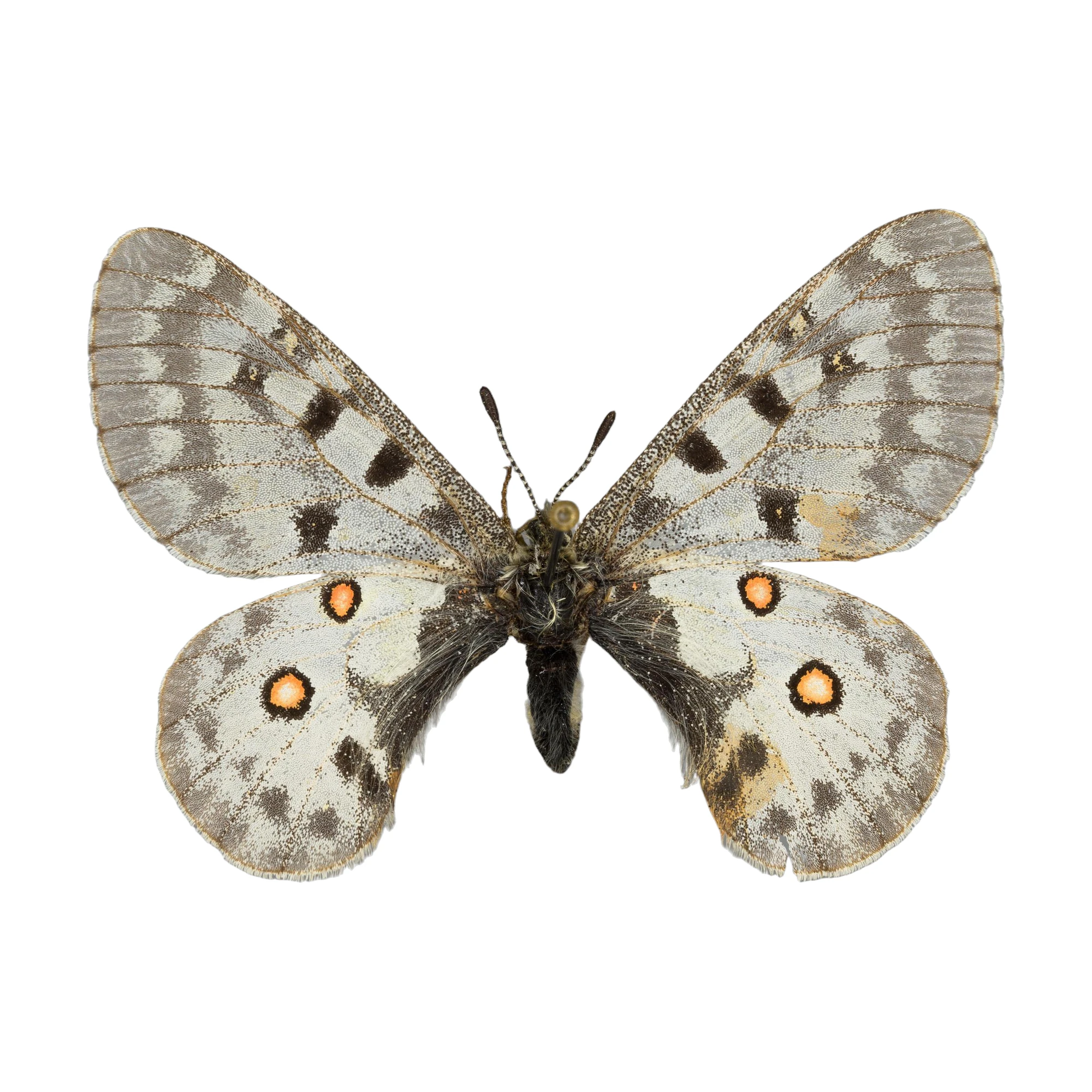
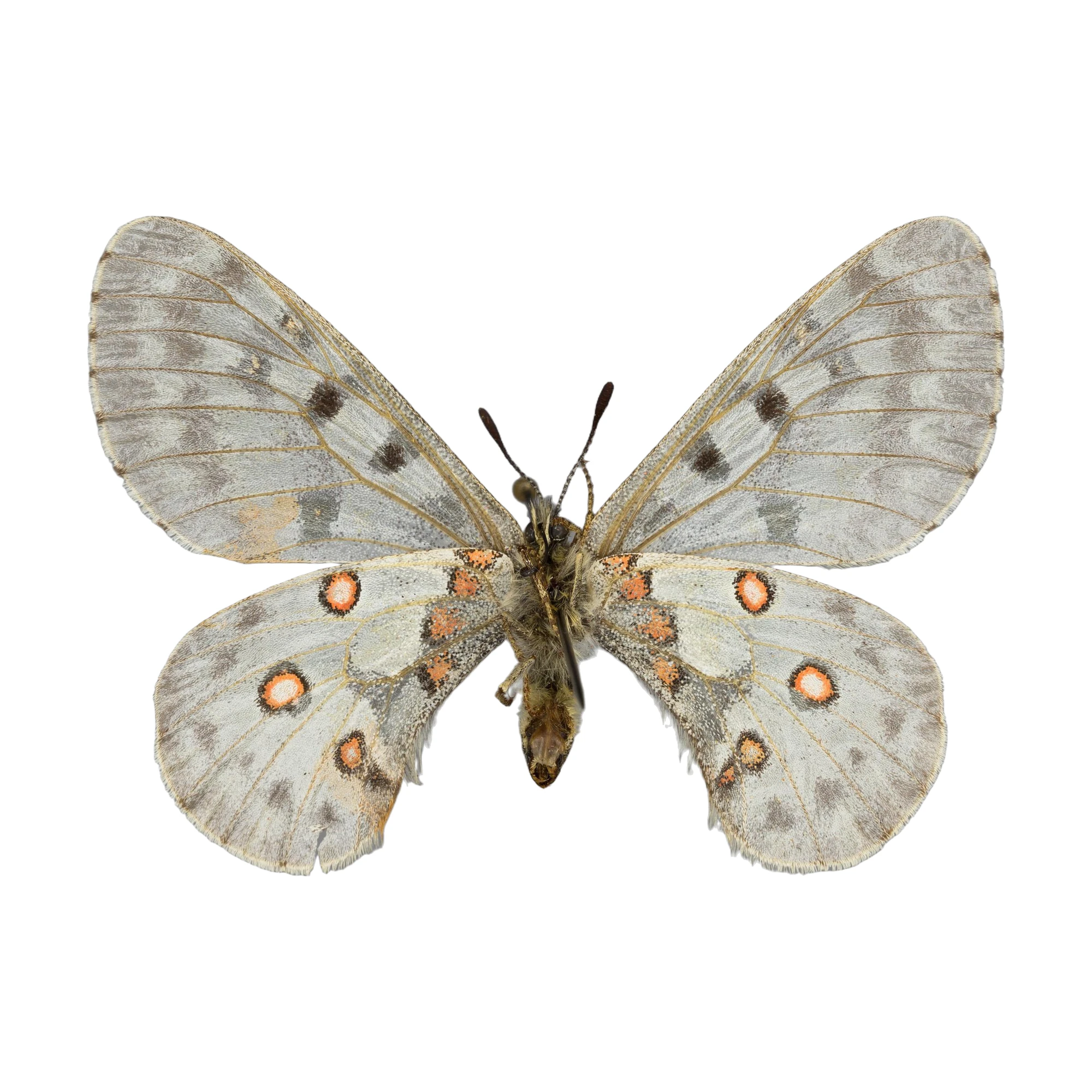
The Small Apollo, Parnassius phoebus, is a medium-sized white mountain butterfly with a wingspan of about 45 to 64 mm (1 3/4 to 2 1/2 inches). In North America, the Rocky Mountain populations are usually treated as a separate species, the Rocky Mountain Parnassian, Parnassius smintheus, and our specimens are of that group. The wings are white to cream and slightly see-through, with black spots and bars on the dorsal forewing, usually two red or yellow spots beyond the cell, and red eyespots ringed in black on the hindwing. The antennae are ringed black and white. The ventral side is similar but paler and grayer, with extra red spots at the base of the hindwing. Our photos show spread museum specimens of the same species, dorsal and ventral.
The Small Apollo lives in open forests, mountain meadows, and grasslands. The Rocky Mountain form ranges through the mountains of the western United States and Canada, from New Mexico and Utah north to the Yukon and Alaska.
Adults fly in a single flight, from June to August. Males patrol close to the ground looking for females, and adults visit flowers for nectar, especially stonecrop and members of the aster family. The butterfly flies low and slowly and is easy to approach when feeding.
Complete metamorphosis (egg, larva, pupa, adult). Females lay single eggs on almost any surface near the host plants, and the eggs overwinter. The caterpillars feed on stonecrops (Sedum), plants that grow in rocky places.
Not a pest. The caterpillars feed on wild stonecrop plants in the mountains and cause no known damage to crops.
Our specimen was collected in Duchesne County, Utah.
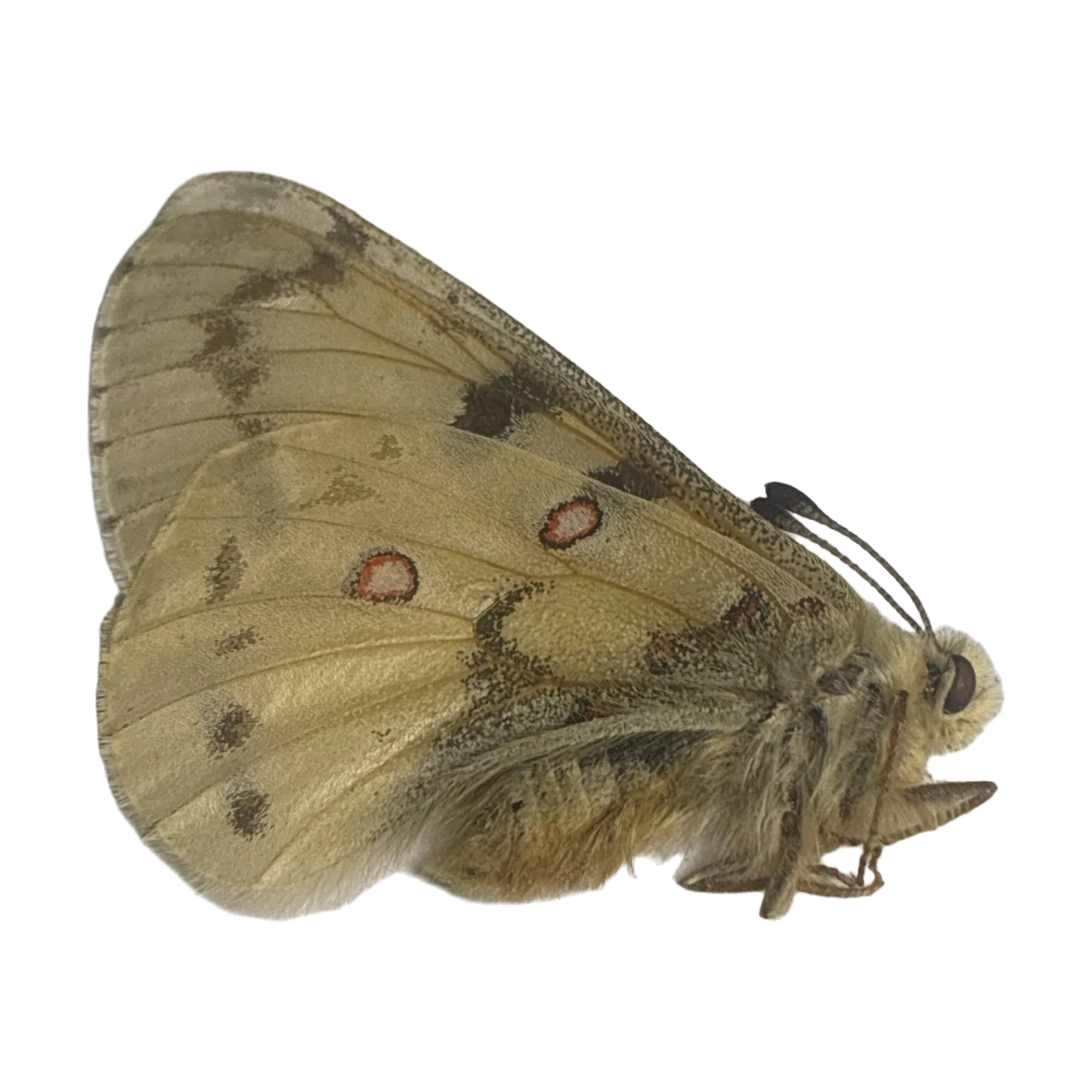
Please note that our specimen is damaged, with wing wear or chips and possibly a missing or bent antenna, which is why it costs less. The photos show undamaged examples.
This preserved specimen shows the white wings, black spots, and red eyespots of this mountain butterfly, ideal for butterfly education and displays. Check it out on BugGuide! https://bugguide.net/node/view/24000/bgimage
Photos: ETH Zurich Entomological Collection (specimen AZ12-1234), CC BY 4.0, via GBIF. Cropped, background removed. Photos are representative examples, not the exact insect you will receive.