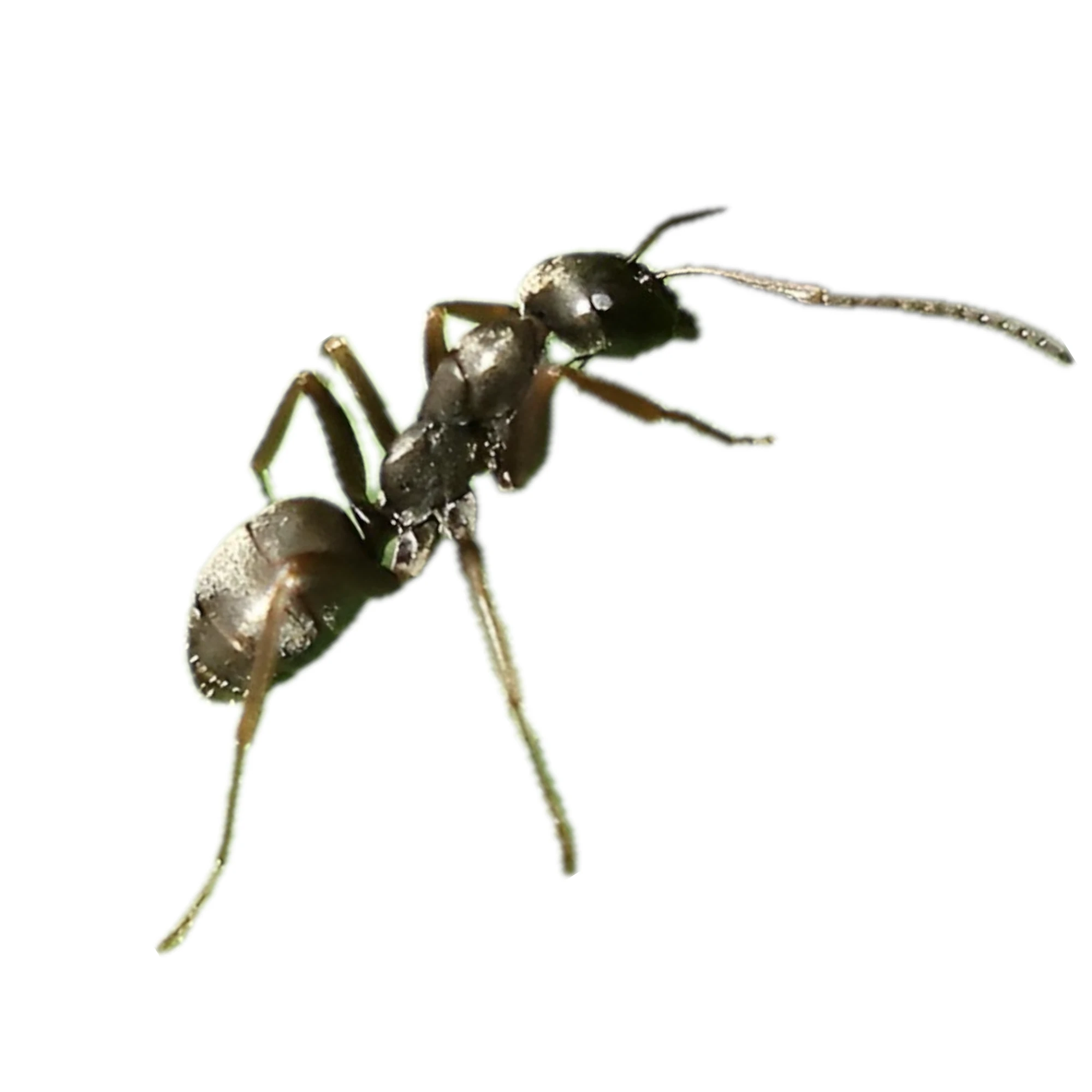
The Silky Field Ant, Formica subsericea, is a fascinating species in the Formica genus, known for its distinctive black coloration and subtle silky sheen on the body, which gives it its name. Workers exhibit polymorphism, varying in size from 4 to 8 mm, allowing for division of labor within the colony. The head features a rounded rear margin, and the antennal scapes can extend to or beyond the head length, a key identifier distinguishing it from similar species like Formica glacialis.
These ants thrive in diverse habitats across eastern North America, east of the Rocky Mountains, where they are one of the most abundant black field ants. They prefer open deciduous forests, old fields, roadsides, lawns, and gardens. Nests are typically built in soil under stones, logs, or in open grassy areas, though they can also utilize dead wood in shadowy grasslands and plains. This adaptability makes them resilient in both sunny and shaded environments.
Behaviorally, Silky Field Ants are aggressive foragers and rapid colony builders, ideal for beginners in ant keeping. Workers handle foraging for food sources like insects and honeydew, brood care, and nest maintenance. Colonies grow quickly, often founded by a single queen who lays eggs in spring. The life cycle follows complete metamorphosis: tiny eggs hatch into legless, worm-like larvae that are fed by workers. Larvae then pupate in cocoons, emerging as adults. Winged reproductives (alates) swarm in summer for mating flights, establishing new colonies. Workers live 1-2 years, contributing to the colony’s expansion.
This preserved specimen offers a close look at this dynamic species, perfect for educational displays or collections. Check it out on BugGuide! https://bugguide.net/node/view/243156

 <—
<—