
$3.00

50 in stock
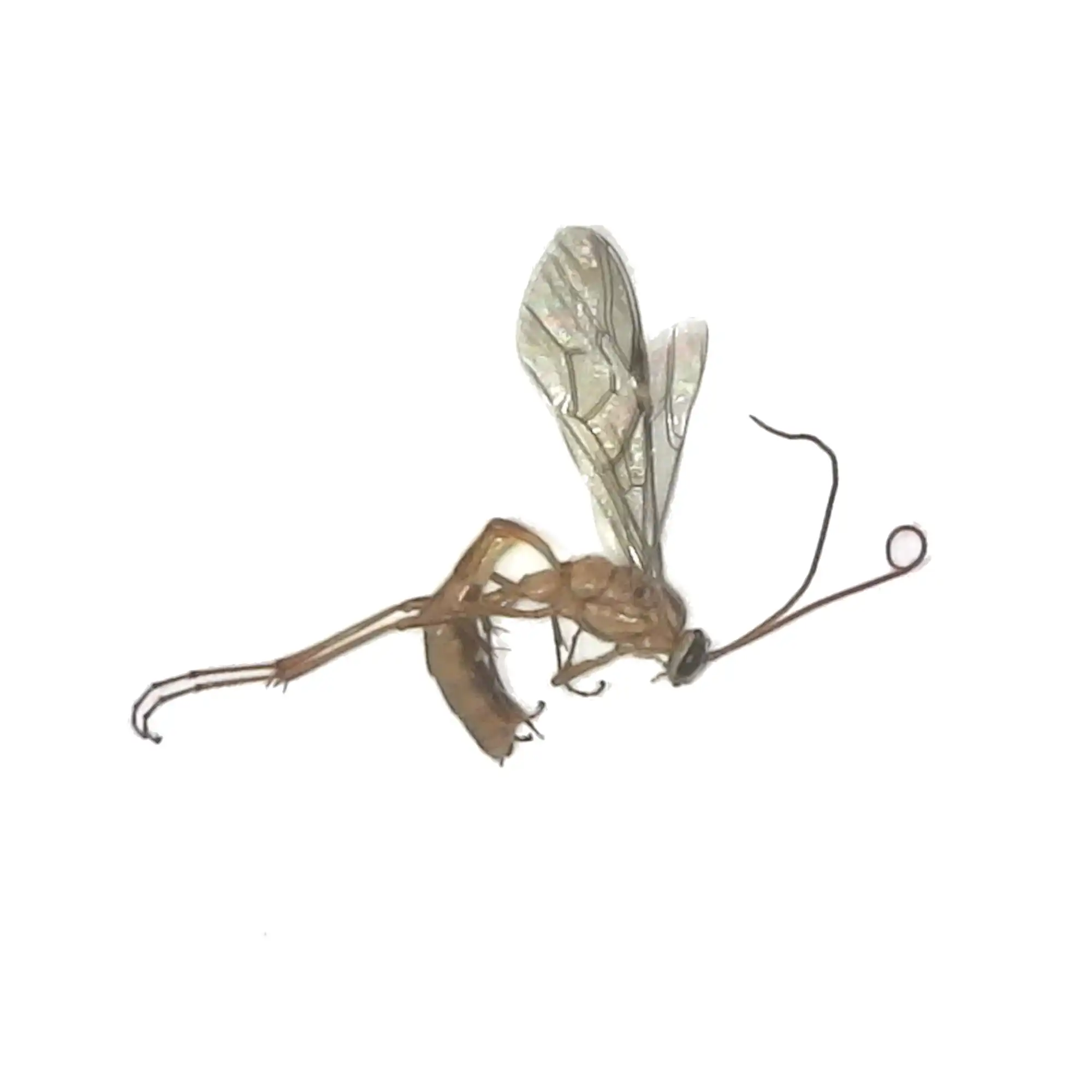
Short-tailed Ichneumon Wasps in the genus Ophion are slender, long-legged parasitoid wasps about 10 to 19 mm long. The body is pale yellow to reddish brown, the antennae and legs are long and pale, and the wings are usually clear. The abdomen is long and flattened from side to side, and the female’s ovipositor is short and barely shows at the tip, which is how the group gets its “short-tailed” name. Large eyes and ocelli help them fly at night. These are real, US-collected specimens from Douglas County, Wisconsin, with a few from Phelps County, Missouri.
Ophion is found across the Holarctic region and is one of the most common ichneumon wasps in the United States. BugGuide lists about 17 described species in North America, with many more thought to be undescribed. They live in forest canopies, woodland edges and shrubby fields, and they are common in Wisconsin and Missouri.
These wasps are mostly active at night and are often attracted to porch lights and light traps. Adults feed on nectar and other sugary liquids. Females search for caterpillars to parasitize. They are not aggressive, but like many ichneumons a female may give a mild jab with her short ovipositor if she is grabbed.
The female lays one egg on or in a host caterpillar. The wasp larva feeds inside the growing caterpillar, which usually survives until it pupates and then dies, while the wasp larva finishes developing and spins its own cocoon. One species, Ophion nigrovarius, attacks May beetle grubs instead. Adults can be seen in many months of the year. Our Wisconsin specimens were taken from April through August, and the Missouri specimens in April.
Short-tailed Ichneumon Wasps are beneficial natural enemies of moth caterpillars, including some crop and forest pests, and they help keep those populations in check. They do not damage plants, homes or stored food.
This preserved specimen educates on parasitoid wasps and their role in controlling caterpillars, suitable for displays or studies. Check it out on BugGuide! https://bugguide.net/node/view/4866
| Weight | 0.01 lbs |
|---|
Only logged in customers who have purchased this product may leave a review.
Reviews
There are no reviews yet.