Appearance
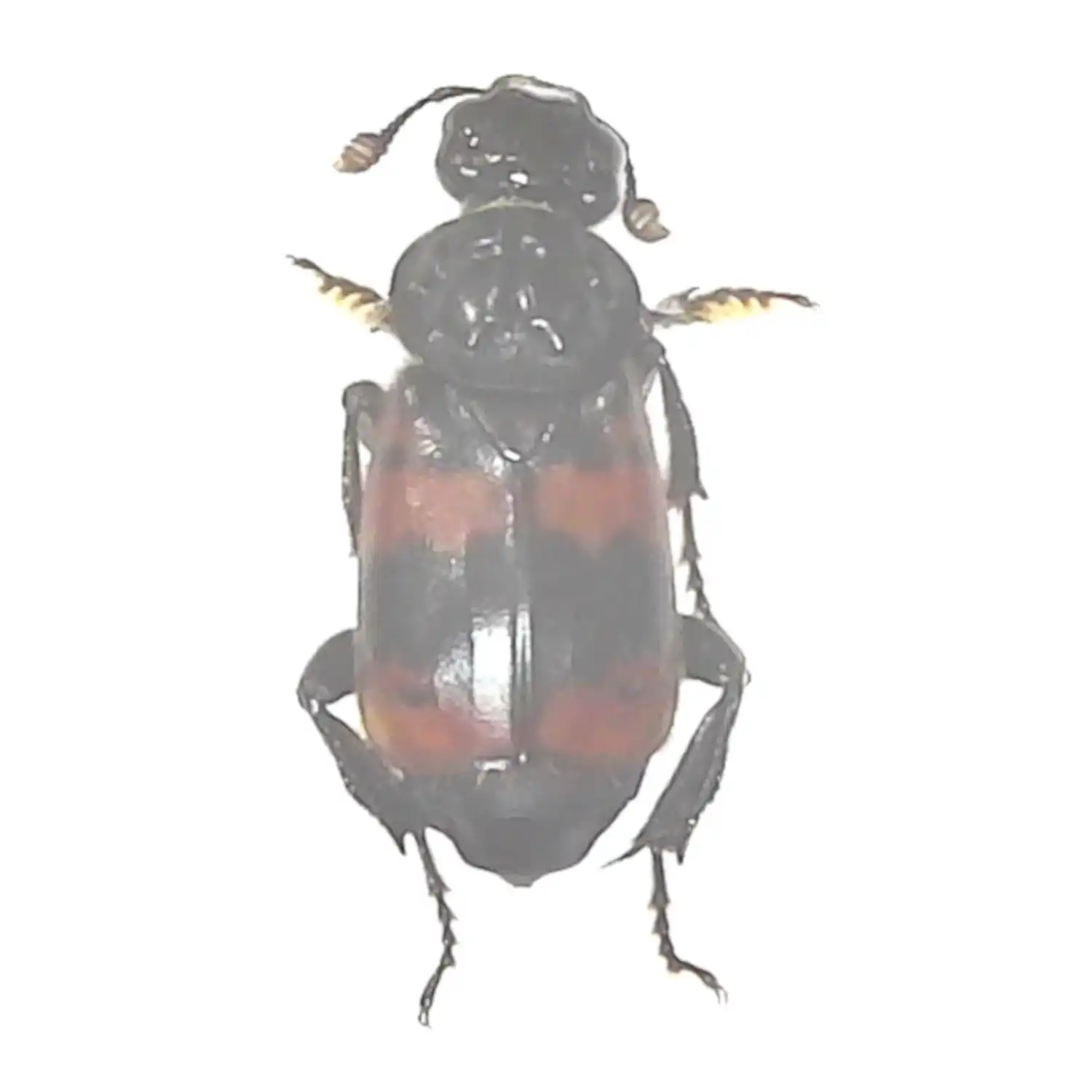
Sexton Beetles in genus Nicrophorus range from 12 to 30 mm in length. They feature a black body with bright orange bands or spots on the elytra. The pronotum is often orange-trimmed. Antennae end in orange clubs. This striking pattern serves as a warning to competitors and predators.
Habitat and Range
These beetles inhabit forests, woodlands, meadows, and areas with small mammal or bird carcasses. The genus occurs across North America from Canada to Mexico. They thrive wherever suitable carrion is available for breeding.
Behavior
Adults locate fresh carcasses quickly using a strong sense of smell. They bury the carcass underground, remove fur or feathers, and apply secretions to preserve it. Both parents care for the larvae by feeding them regurgitated food and defending the site from other insects.
Life Cycle
Pairs work together to bury a carcass and lay eggs nearby. Larvae hatch and move onto the prepared carrion. Parents feed the young until they pupate in the soil. Development completes in one to two weeks. Adults emerge to search for new carcasses. One or two generations per year.
Economic Impact
Beneficial as scavengers, Sexton Beetles recycle nutrients from dead animals and help reduce fly populations around carcasses. They play a key role in natural decomposition without harming crops or livestock.
This preserved specimen highlights the bright orange markings on a black body, ideal for silphid beetle education and displays. Check it out on BugGuide! https://bugguide.net/node/view/4954

 <—
<—