
$3.50
 <---
20 in stock
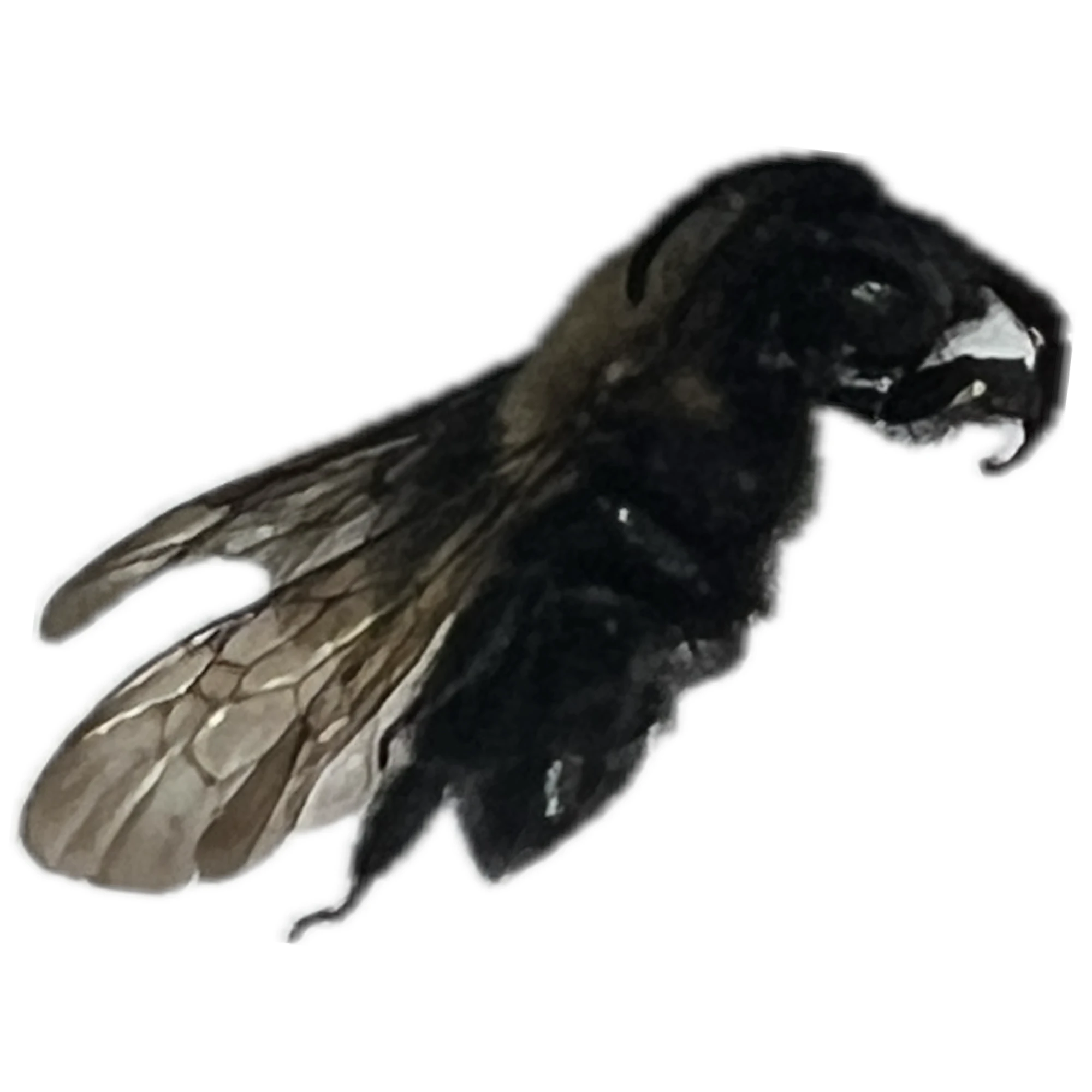
The Rufous-backed Cellophane Bee, Colletes thoracicus, is a solitary bee in the family Colletidae, about the size of a honey bee. Females are about 12 to 14 mm long and males about 10 to 13 mm, so specimens range from about 10 to 14 mm. The thorax is covered in dense, erect, rusty orange (rufous) hair, which gives the species its common name, while the face is mostly dark. The abdomen is smooth, shiny and black, with faint pale bands that are often worn away on older bees. Males have paler cream to orange thoracic hair and a thick “moustache” of hair on the face.
Colletes thoracicus is native to eastern North America. It is found from Texas east to Florida and north through the Atlantic Coast states to New York and Massachusetts. It nests in well drained, often sandy soil in open or disturbed places such as lawns, backyards, parks, cemeteries, forest gaps and stream banks, and it is especially common in suburban areas of the Mid-Atlantic states.
This is a solitary, ground nesting bee. Each female digs her own tunnel in the soil, but many females often nest close together in large aggregations; one suburban lawn in Maryland held more than 104,500 nests. Females line each brood cell with a clear, waterproof, cellophane-like polyester membrane made from a secretion of the Dufour’s gland, which they paint on with their short, forked tongues. Adults fly in spring, from January and February in Florida to March through June farther north. They visit many kinds of spring flowers, especially tulip tree, cherry and holly. Males patrol low over the nesting area looking for females. These bees have no nest to defend and are not aggressive.
Like all bees, Colletes thoracicus goes through complete metamorphosis (egg, larva, pupa, adult). The female stocks each lined cell with a soupy mixture of pollen and nectar, lays a single egg, and seals the cell. The larva feeds on the liquid provisions, grows through several molts and then pupates in the cell, protected from soil moisture by the polyester lining. There is only one generation per year, and new adults emerge from the ground the following spring.
Rufous-backed Cellophane Bees are beneficial native pollinators of spring flowering trees, shrubs and wildflowers. They are harmless to people: they rarely sting, males cannot sting at all, and the nests do little or no damage to lawns. Their spring activity lasts only a few weeks, so extension specialists recommend leaving nesting areas alone rather than treating them.
This preserved specimen educates on solitary ground nesting bees and their unique cellophane-lined nests, suitable for displays or studies. Check it out on BugGuide! https://bugguide.net/node/view/87189
| Weight | 0.01 lbs |
|---|
Only logged in customers who have purchased this product may leave a review.
Reviews
There are no reviews yet.