
$3.00
 <–
3 in stock
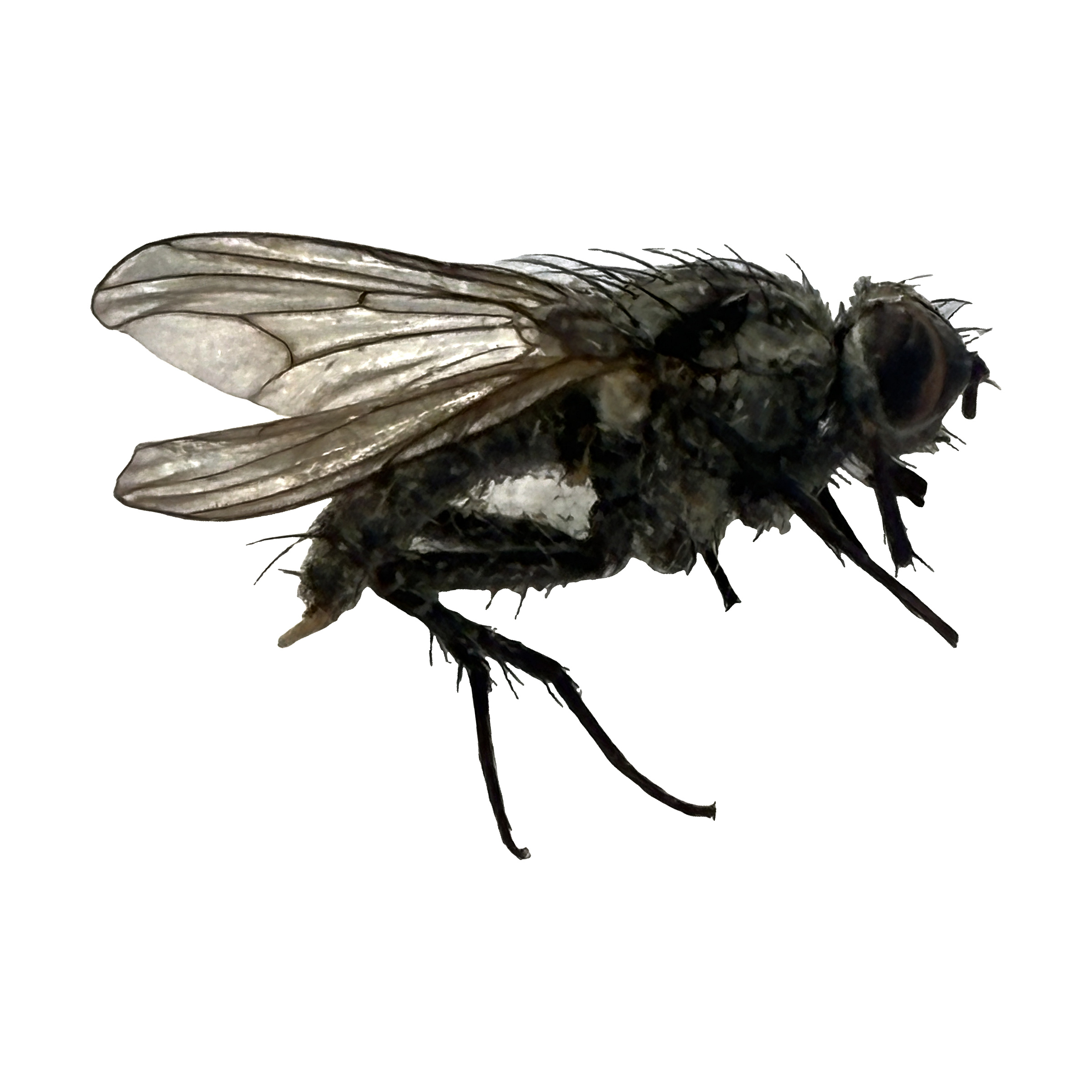
The Root-maggot Fly belongs to the family Anthomyiidae, the root-maggot flies. Adults in this family are usually slender to moderately stout, often bristly, and typically a few to about 12 mm long. Many are gray or brown. The thorax is often marked with dark spots or faint stripes. The wings are clear to slightly smoky, with visible veins. A useful family mark is the middle vein of the wing, vein M, which runs nearly straight out to the wing margin. In the similar house flies (Muscidae), that vein usually bends forward near the tip. The specimens in stock are about 6 to 10 mm long, measured from the head to the tip of the abdomen. They are dark gray and bristly, with dark legs.
Anthomyiidae is found worldwide and throughout North America. Adults are often found on flowers in moist or wooded habitats, and also in fields and other open places. Some of our specimens were collected in Wisconsin.
Most adults feed on nectar. A few visit pollen, and some are predators of other insects. They do not bite people. The larvae have several ways of life. Some feed on roots, leaves, or seeds. Others live in dung, mushrooms, or bird nests, and a few are parasites or kleptoparasites of other insects.
Like other true flies, root-maggot flies have complete metamorphosis: egg, larva, pupa, and adult. The larvae feed in plant tissue, in dung, or in other habitats, then usually pupate in the soil or in the food material. In much of the range, adults may be collected from spring through fall.
A few species are crop pests. Their larvae, often called root maggots, can damage onions, cabbage and other cole crops, and some seed or root crops. Many other species in the family are not pests and have little economic effect. The adults do not bite or sting. The preserved specimens are used in teaching and collections.
Anthomyiidae Robineau-Desvoidy, 1830 belongs to the order Diptera (true flies) and the superfamily Muscoidea. There are about 640 species in about 40 genera in North America, and close to 2,000 species in about 53 genera worldwide. The family is close to Muscidae, the house flies, and the two can look alike. Besides the straight middle wing vein, many anthomyiids have small hairs under the tip of the scutellum, which Muscidae lack. A sure genus or species identification often requires several close views of the bristles, so these specimens are listed at the family level as Anthomyiidae.
This preserved specimen educates on root-maggot flies and the family Anthomyiidae, suitable for displays or studies.
Check it out on BugGuide! https://bugguide.net/node/view/8083/bgimage