
$3.00
 <---
1 in stock
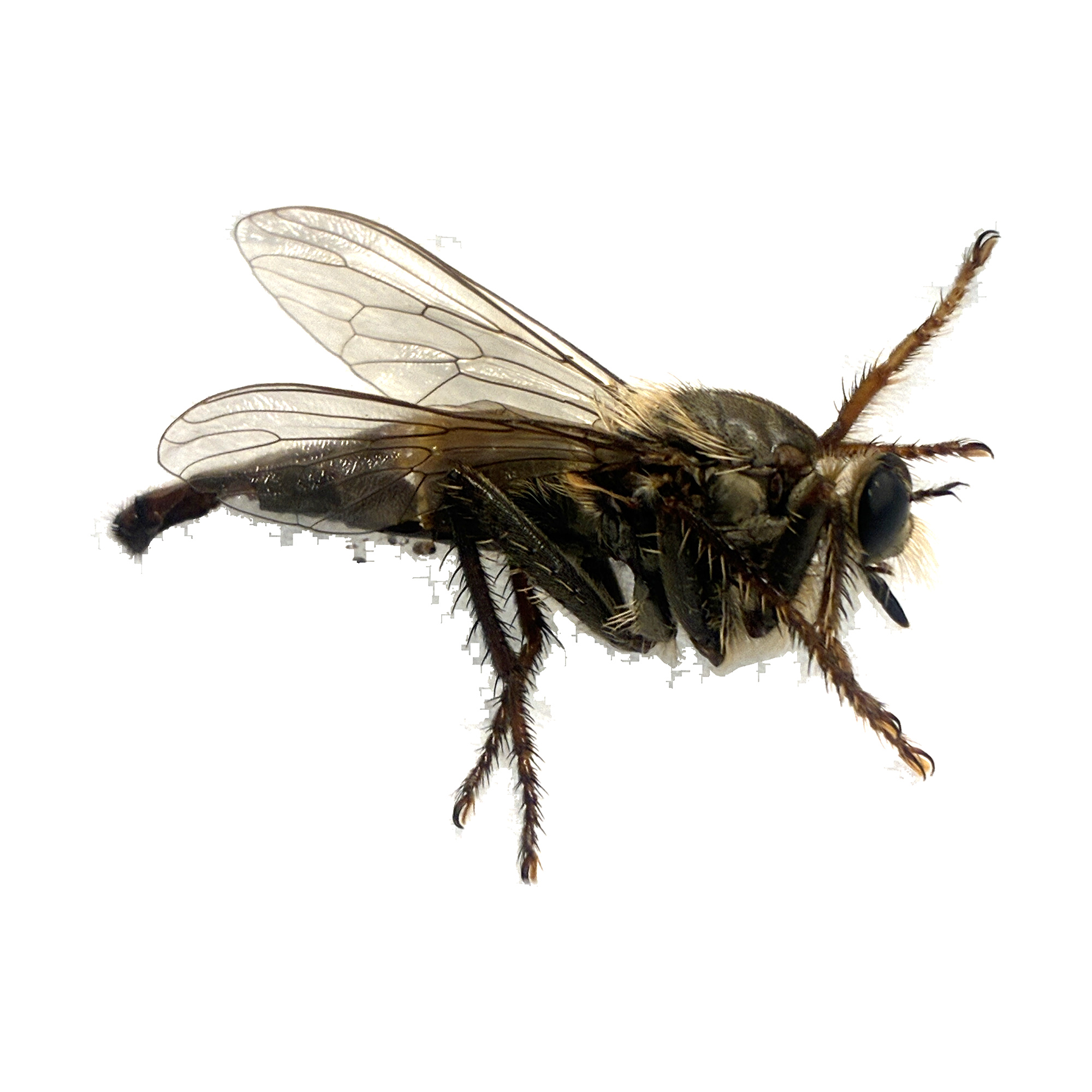
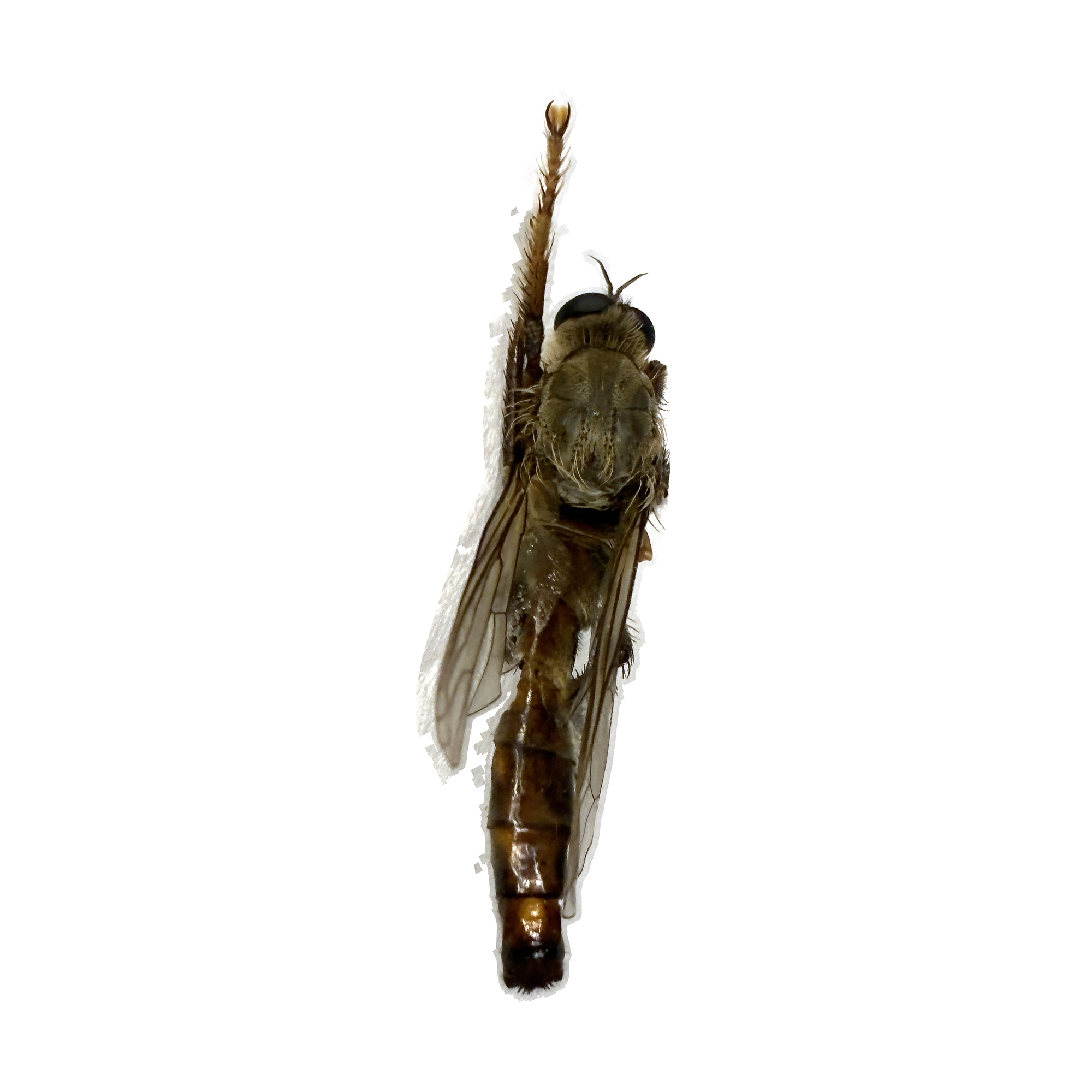
The Robber Fly, Diogmites sp., is a slender, medium to large robber fly in the family Asilidae, about 15 to 48 mm long. Species in this genus, also called hanging thieves, are often golden brown, reddish brown, or darker brown. The body is relatively sparsely haired compared with many other robber flies. The face has a modest beard of pale hairs, called a mystax, and a stout piercing beak. The abdomen is long and tapering, and many species have darker bands or spots on the segments. The legs are often orange or reddish brown. The wings are narrow and clear or lightly tinted. Because the exact species may vary, the specimen you receive may differ slightly from the photo.
Hanging thieves in the genus Diogmites live in woodlands and in open, sunny places, including prairies, grasslands, and pastures. The genus occurs from the United States south to northern Argentina. About 25 species are found in North America, some east of the Mississippi River and others across the central and western United States. Some of our specimens were collected in Fall River County, South Dakota.
Adults are predators of other insects. After they catch prey, hanging thieves often hang from grass or other vegetation by one or two legs while they eat. They are strong fliers and catch other insects in the air, including bees, wasps, flies, and grasshoppers. The beak is used to pierce prey and feed on its fluids. They do not sting.
Like other true flies, hanging thieves have complete metamorphosis: egg, larva, pupa, and adult. Females lay eggs in the soil. The larvae live underground and prey on other soil insects. There is typically one generation a year. Adults are usually on the wing in summer, most often from July to September, though the season can be longer in the southern part of the range.
These flies are beneficial. The adults prey on other insects, including some pests of fields and pastures, and the larvae feed on insects in the soil. They are not pests of crops or households. Live robber flies can bite if handled, because of the piercing beak, but they do not seek out people. The preserved specimens are used in teaching and collections, and they are a good example of hanging thieves in the family Asilidae.
This preserved specimen educates on robber flies in the genus Diogmites and the family Asilidae, suitable for displays or studies.
Check it out on BugGuide! https://bugguide.net/node/view/4600
Only logged in customers who have purchased this product may leave a review.
Reviews
There are no reviews yet.