Appearance
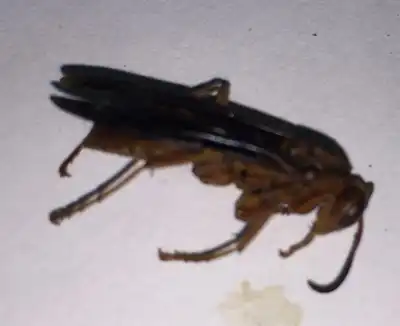
The Red Wasp, Polistes carolina, earns its name from its predominantly red body, measuring 15 to 20 mm in length across castes. Males feature an almost entirely red scutum without black markings, a key distinguisher from similar species. Females appear entirely or nearly red, occasionally with yellow markings like a ring on the first abdominal segment; black accents limit to sutures, around ocelli, or a faint scutum line. Workers mirror this red-dominant scheme with minimal black. This coloration may serve as mimicry to deter predators. Regional variations occur: females in P. carolina lean more yellow than the blacker P. rubiginosus. Identification hinges on bare malar space and genae with scattered macrosetae in females, plus absent or fine propodeal ridges for a smooth look.
Habitat and Range
This species inhabits the eastern United States, favoring open areas for nesting. Common sites include building eaves, shrubs, and exposed branches where shelter meets accessibility. Its range supports temperate to subtropical climates, aligning with paper wasp preferences for mild weather.
Behavior
As eusocial insects, Red Wasps form colonies with a dominant queen and sterile workers. Queens initiate nests in spring, while workers forage for nectar and caterpillars to feed larvae. Unlike enclosed nesters, P. carolina prefers open structures, differing from P. rubiginosus trends. Defense relies on aggressive stinging, with venom causing pain and swelling. Foraging peaks in warmer months, aiding pollination incidentally. Social hierarchy reduces conflicts through visual cues in facial patterns.
Life Cycle
The annual cycle mirrors typical paper wasps. Fertilized queens overwinter in protected spots, emerging in spring to chew wood into pulp for initial nest cells. They lay eggs that hatch into larvae, provisioned with masticated insects. Larvae pupate in cells, eclosing as workers to expand the colony. By late summer, new queens and males develop for mating flights; fertilized queens hibernate, as the old colony declines. Development from egg to adult takes weeks, with colonies reaching 20-100 individuals.
This preserved specimen captures the vivid red allure of this vespid, ideal for collections or educational displays. Check it out on BugGuide! https://bugguide.net/node/view/252342

 <—
<—