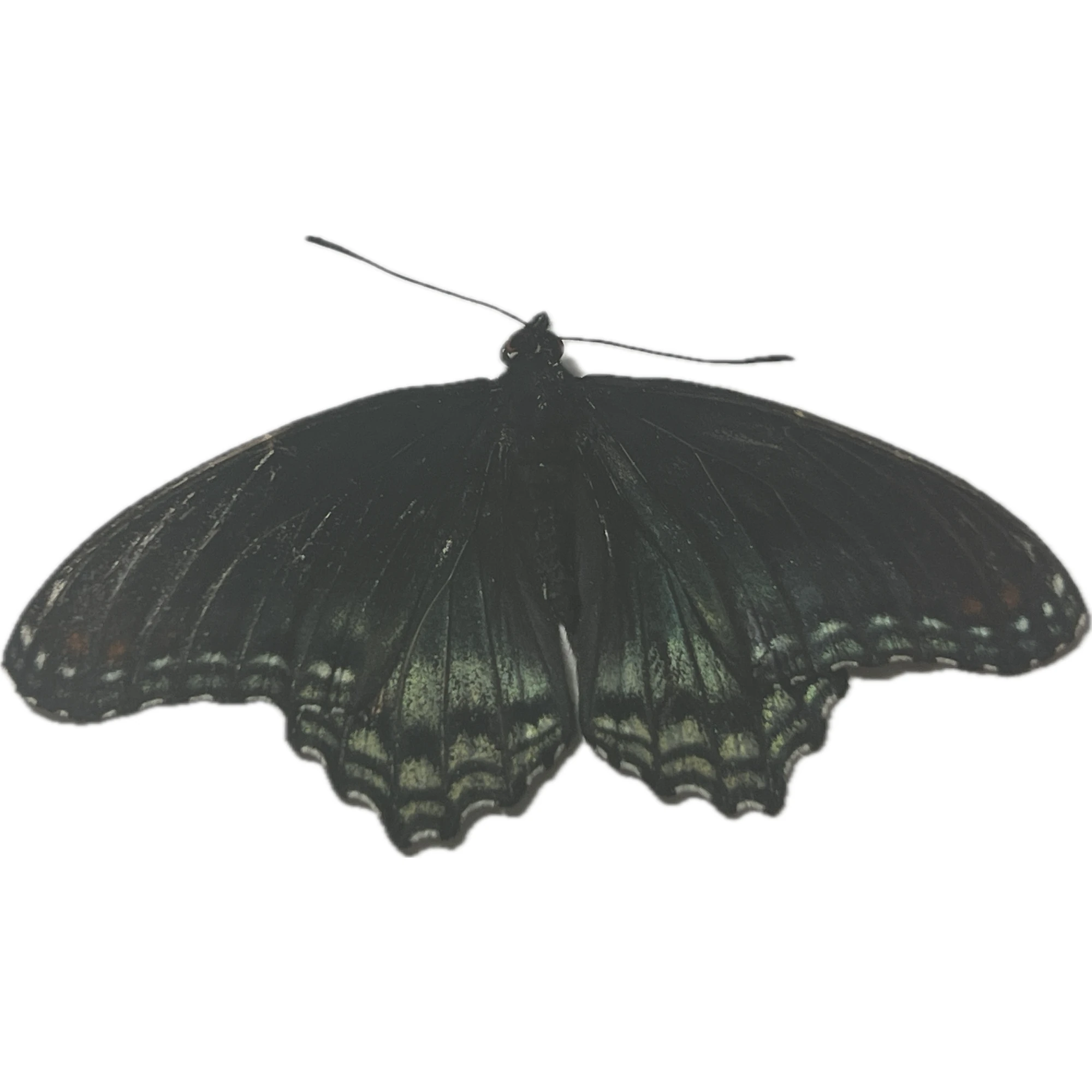
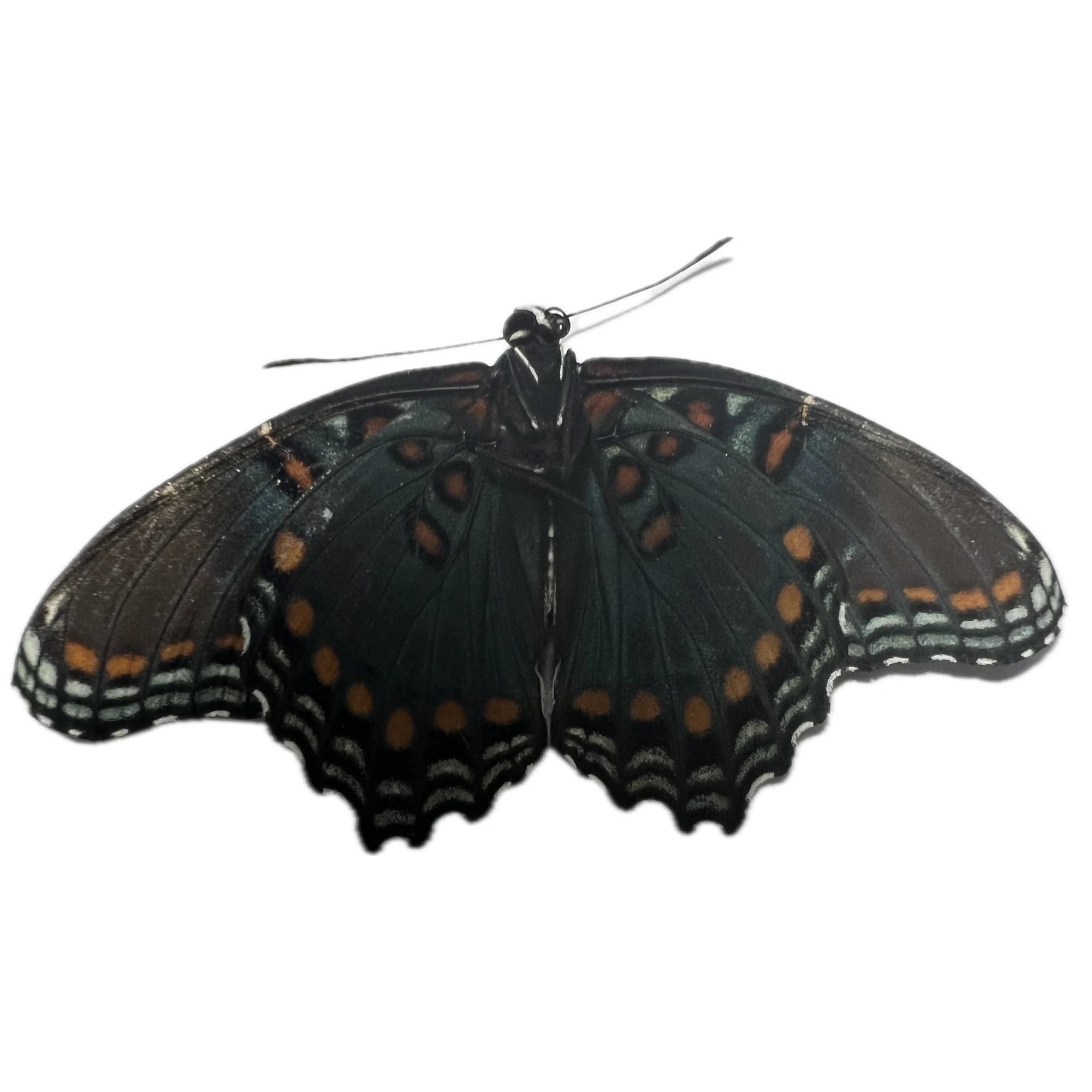
The Red-spotted Purple adult boasts a wingspan of 65-90 mm. Wings appear dark blue-black with iridescent blue on the upper side, lacking tails unlike swallowtails. Red spots mark the undersides of hindwings, with submarginal orange spots on both sides. White bands edge the wings. This form mimics the toxic pipevine swallowtail for protection. Larvae show mottled brown with forked spines, resembling bird droppings.
Habitat and Range
This subspecies inhabits deciduous woodlands, streamsides, parks, and suburbs across eastern North America. The range extends from southern Canada south to Florida, west to Texas and Montana. It overlaps with white admiral forms in hybrid zones. Adults favor moist areas with host trees like willows, cherries, poplars, and serviceberries.
Behavior
Adults sip sap, rotting fruit, carrion, or dung rather than nectar often. They glide smoothly in territories, perching with wings closed to flash blue. Males patrol for females. Larvae overwinter in hibernacula of rolled leaves. This mimicry deters predators effectively in open habitats.
Life Cycle
Females lay single eggs on host leaf tips in summer. Larvae feed nocturnally, tying leaves for shelter. They overwinter as third instars in hibernacula. Pupae hang as chrysalises mimicking leaves. Two to three broods occur yearly southward, one northward. Adults emerge spring to fall.
Economic Impact
Neutral economically, the Red-spotted Purple larvae feed on wild trees without crop damage. Adults aid pollination minimally. No pest status exists; they enhance biodiversity in natural and landscaped areas.
This preserved specimen highlights the stunning iridescent mimicry, ideal for butterfly education and displays. Check it out on BugGuide! https://bugguide.net/node/view/38193

 <—
<—