
$16.95
 <–
31 in stock
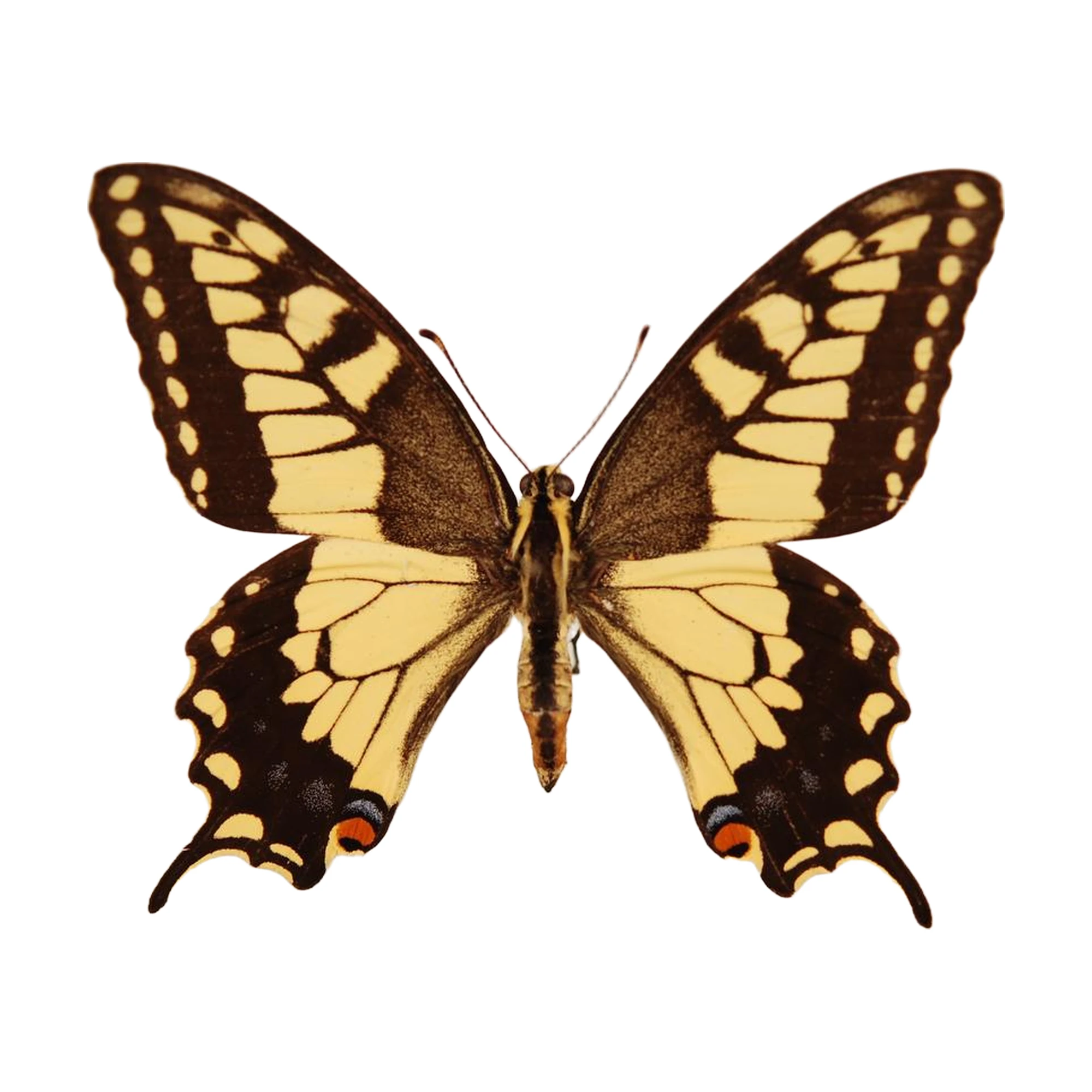
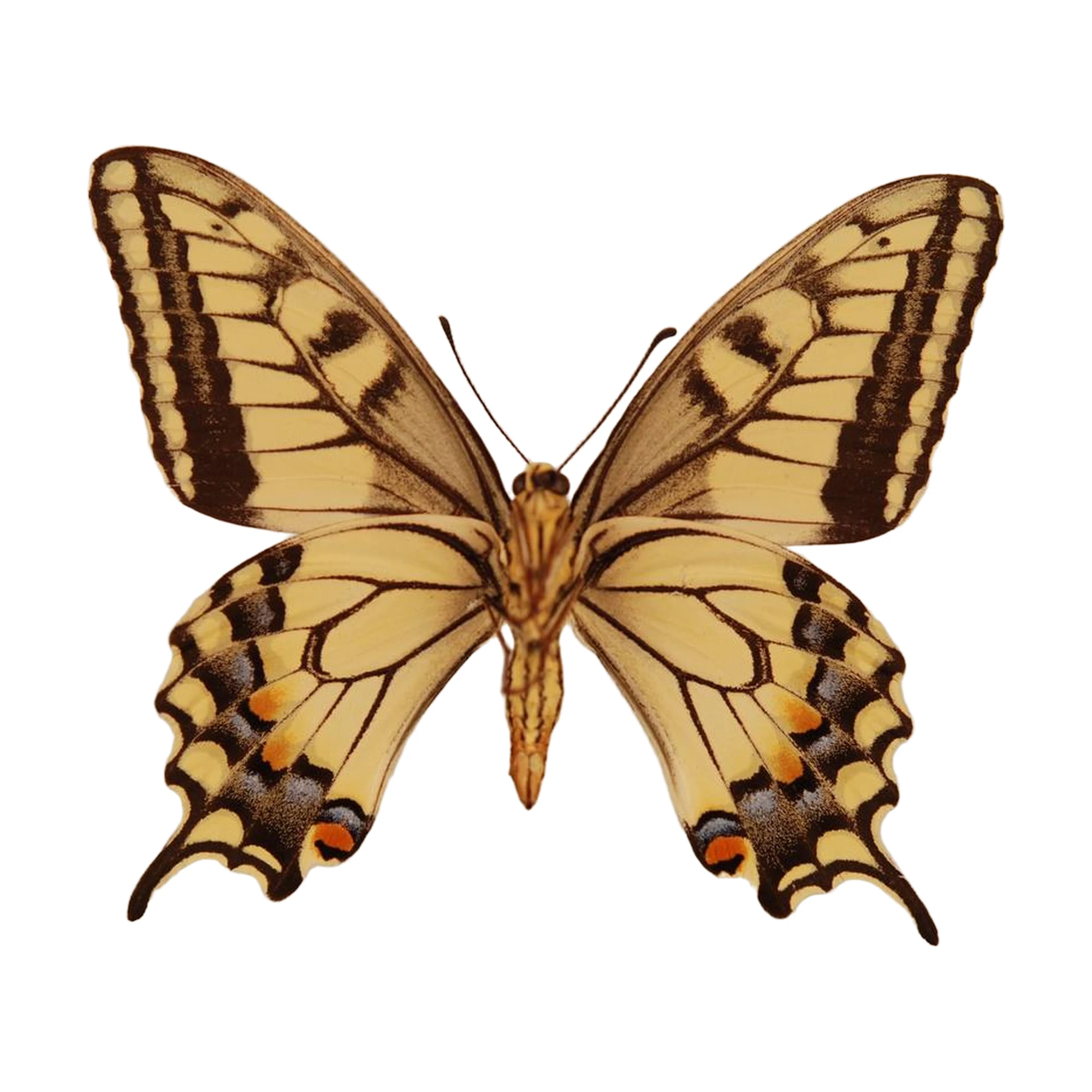
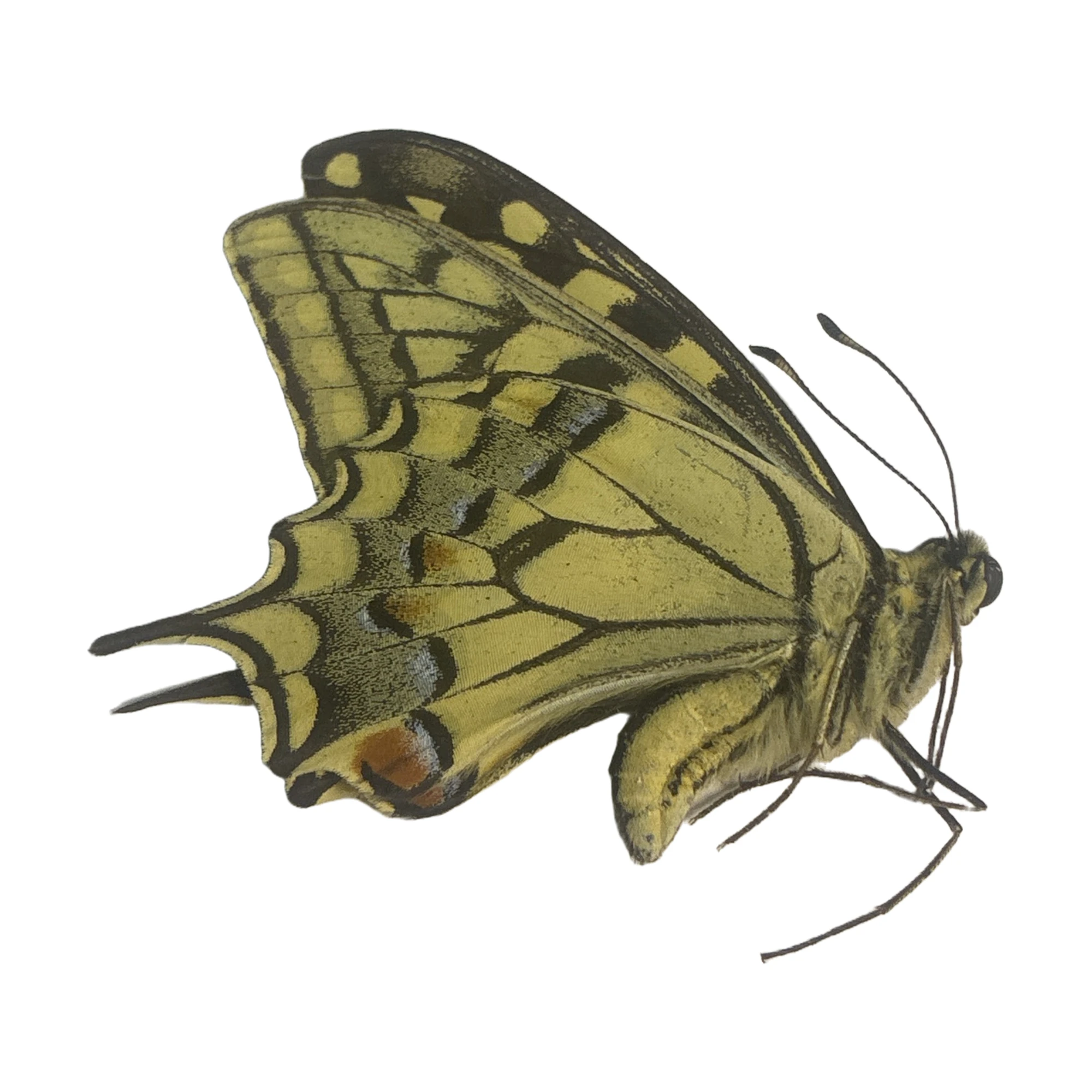
The Old World Swallowtail, Papilio machaon, is a large, bright yellow and black swallowtail with a wingspan of about 65 to 90 mm (2 1/2 to 3 1/2 inches). The dorsal side is yellow with a broad black border on each wing and black veins. The border on the dorsal forewing is dusted with yellow spots, and the dorsal hindwing has a band of blue scales and a red-orange eyespot near the base of each tail. The ventral side is paler yellow, and the hindwing shows blue and orange markings along the edge. The abdomen is yellow in the yellow form. The western and plains populations are treated by some authors as a separate species, Baird’s Swallowtail (Papilio bairdii), but BugGuide lists them all as Papilio machaon. Our photos show spread museum specimens of the same species, dorsal and ventral.
This swallowtail lives in open country, such as dry grassy hills, canyons, mountain meadows, sagebrush slopes, and river valleys. It is found across much of the world in Europe and Asia, and in North America from Alaska and Canada south through the western mountains and plains to New Mexico and Arizona.
Males fly to hilltops and ridge crests, where they patrol and perch to wait for females. Adults feed on flower nectar and are strong fliers. In the north there is one flight a year, mostly from late May to July. Farther south there are two, with the first flight in spring.
Complete metamorphosis (egg, larva, pupa, adult). The female lays single eggs on the host plant. In western North America the caterpillars feed mainly on wild tarragon and other sagebrushes (Artemisia), and sometimes on plants in the parsley family. The caterpillar is green with black bands and orange spots. The chrysalis passes the winter.
Not a significant pest. The caterpillars feed on wild sagebrush and are rarely found on garden herbs such as dill or fennel, where they cause only minor damage.
Our specimen was collected near Broadus, Powder River County, Montana.
This preserved specimen shows the yellow and black dorsal wings with their tails and eyespots, and the ventral pattern, ideal for butterfly education and displays. Check it out on BugGuide! https://bugguide.net/node/view/71381/bgimage
Photos: Yale Peabody Museum (YPM ENT 718674), photo by Aimee Burg, CC0, via iDigBio. Cropped, background removed. Photos are representative examples, not the exact insect you will receive.