Appearance
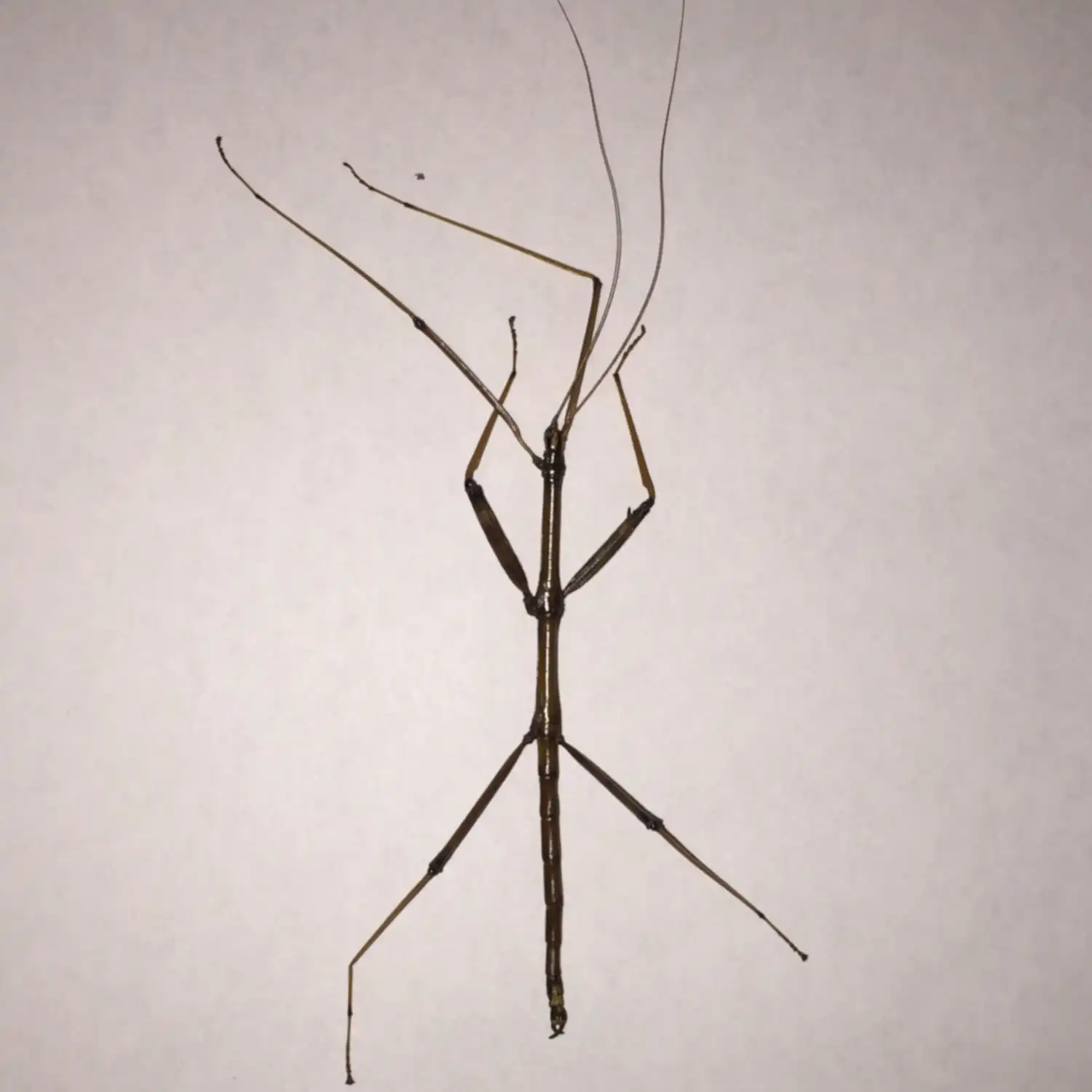
The Northern Walkingstick, Diapheromera femorata, is a wingless phasmid in the family Diapheromeridae. Males measure 75 mm long with a uniform brown color that mimics tree bark. Females reach 95 mm and show a greenish-brown shade for leaf camouflage. Both have elongated bodies and antennae about two-thirds body length. Cerci at the abdomen tip consist of one segment, often looking like sensory palps. These features make it North America’s most common walkingstick.
Habitat and Range
This species inhabits deciduous woods and forests across a wide area. Its range covers the Atlantic coast to northern Florida. It extends west to New Mexico and north to Alberta in Canada. Populations favor sites with dense tree cover and leaf litter for egg protection.
Behavior
Northern Walkingsticks rely on crypsis for defense, blending seamlessly with branches to evade predators. Adults and older nymphs chew foliage from deciduous trees and shrubs. They prefer oaks and hazelnuts for nutrition. Younger nymphs feed on low plants like sweet fern, blueberry, strawberry, and juneberry before climbing higher. In outbreak years, dense groups can defoliate entire trees, acting as occasional pests. Females lay eggs singly on the forest floor without parental care. The eggs’ tough shells ensure overwintering survival.
Life Cycle
The cycle lasts one to two years, adapting to climate. Eggs enter diapause in leaf litter through winter. They hatch in spring as soil warms. Southern eggs emerge the next year, while northern ones wait for a second thaw. Nymphs undergo incomplete metamorphosis, molting through instars while feeding and growing. They mature into adults by summer or fall, mate briefly, and lay eggs before dying. This rhythm sustains populations in temperate regions.
This preserved dead insect specimen showcases phasmid mimicry, perfect for entomology collections or education. Check it out on BugGuide! https://bugguide.net/node/view/34736

 <—
<—