Short Description
The Northern Paper Wasp nest (Polistes fuscatus) is an open, umbrella-shaped structure made of gray paper from chewed wood fibers. It measures up to 15 cm across and hosts colonies in sheltered spots like eaves or woodlands. https://bugguide.net/node/view/14227
Appearance
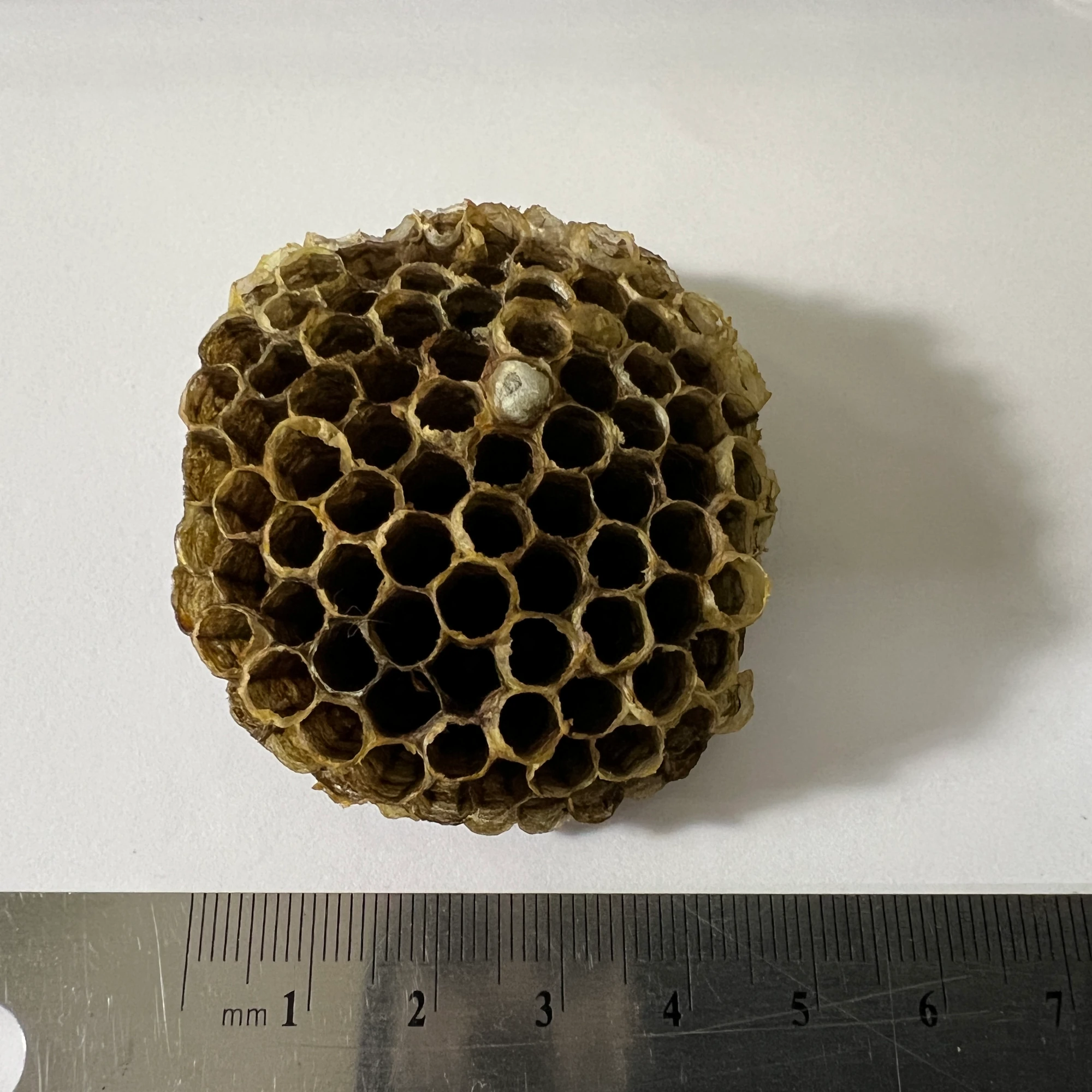
The Northern Paper Wasp nest, built by Polistes fuscatus, resembles a gray, open umbrella with a single comb of hexagonal cells. Constructed from weathered wood fibers mixed with saliva, it starts small in spring and expands to 10-15 cm in diameter by summer. Cells face downward for protection. The wasps themselves are 15-21 mm long, with hypervariable colors: northern forms mostly black with optional yellow markings, while southern ones add rusty-red on head and body, mimicking species like P. metricus.
Habitat and Range
Nests form in temperate regions from Nova Scotia south to Texas and Florida, including Bermuda and introduced areas like Cape Verde. Preferred sites include woodlands, savannas, and human structures with shelter, such as under eaves, in attics, or on branches. Aerial placement avoids ground predators and weather.
Behavior
Queens initiate nests post-hibernation, chewing wood into pulp for the first cells. Colonies develop social hierarchy with one dominant queen laying eggs, sterile workers foraging for nectar and insect prey, and later males for mating. Workers soften caterpillars for larvae via trophallaxis. Facial patterns allow individual recognition, reducing conflicts. Colonies peak at 100-200 individuals in summer, with aggressive defense via stings.
Life Cycle
This annual cycle begins with fertilized queens emerging in spring to build and provision nests. Eggs hatch into larvae fed protein-rich meals; well-fed ones become queens, others workers. Pupae emerge as adults by summer. New queens mate in fall, hibernate in leaf litter, while old colony dies. This ensures yearly renewal.
This preserved nest specimen demonstrates vespid architecture, great for entomology studies. Check it out on BugGuide! https://bugguide.net/node/view/14227

 <—
<—