Appearance
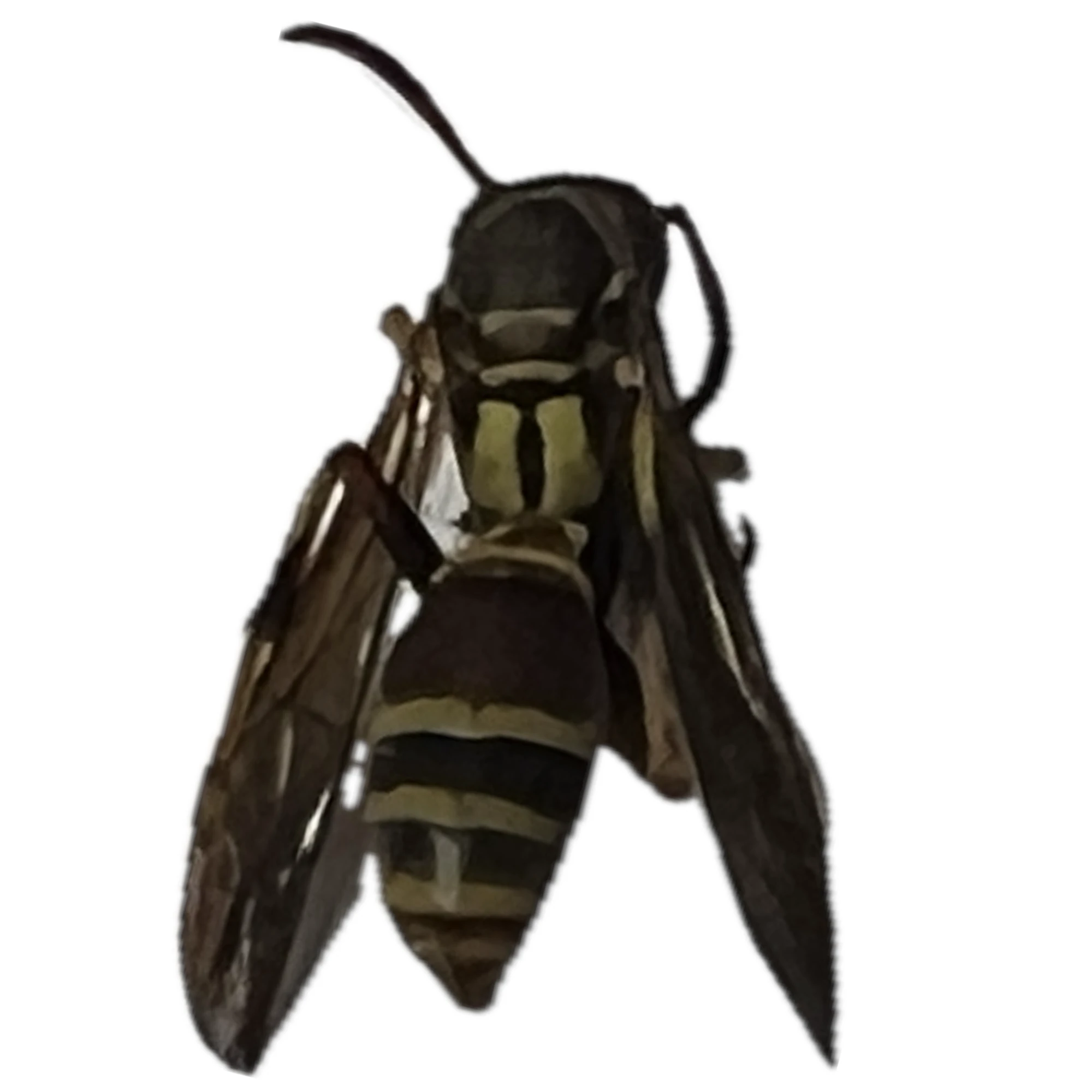
The Northern Paper Wasp reaches 15-21 mm in length. It shows hypervariable coloration, often smoky-dark with black bodies and yellow markings in females. Males feature darkened apical flagellomeres. These unique patterns enable individual face recognition among colony members.
Habitat and Range
This species nests in woodlands, savannas, and around human habitations on exposed wood. Its range covers Nova Scotia west to Saskatchewan, south to Texas and Florida. It also appears in Bermuda, Jamaica, Barbados, and has been introduced to Cape Verde Islands and Ascension Island.
Behavior
Adults sip plant nectar while hunting caterpillars and small insects for larvae. They malaxate prey to extract liquids for young larvae and solids for older ones. Social structure follows an annual cycle with a founding queen, workers, and males. Queens recognize nestmates by facial patterns.
Life Cycle
Queens emerge in spring to build nests and lay eggs. Larvae develop into workers or reproductives if well-fed. Mating occurs in fall; fertilized queens hibernate over winter. The cycle lasts about one year, with most adults dying by autumn.
Economic Impact
As a beneficial insect, the Northern Paper Wasp controls pest caterpillars and small insects, aiding natural pest management in gardens and agriculture. It poses minimal economic harm despite occasional stings near homes.
This preserved specimen highlights the hypervariable facial patterns, ideal for entomology education and collections. Check it out on BugGuide! https://bugguide.net/node/view/14227

 <—
<—