
$7.95
 <–
1 in stock
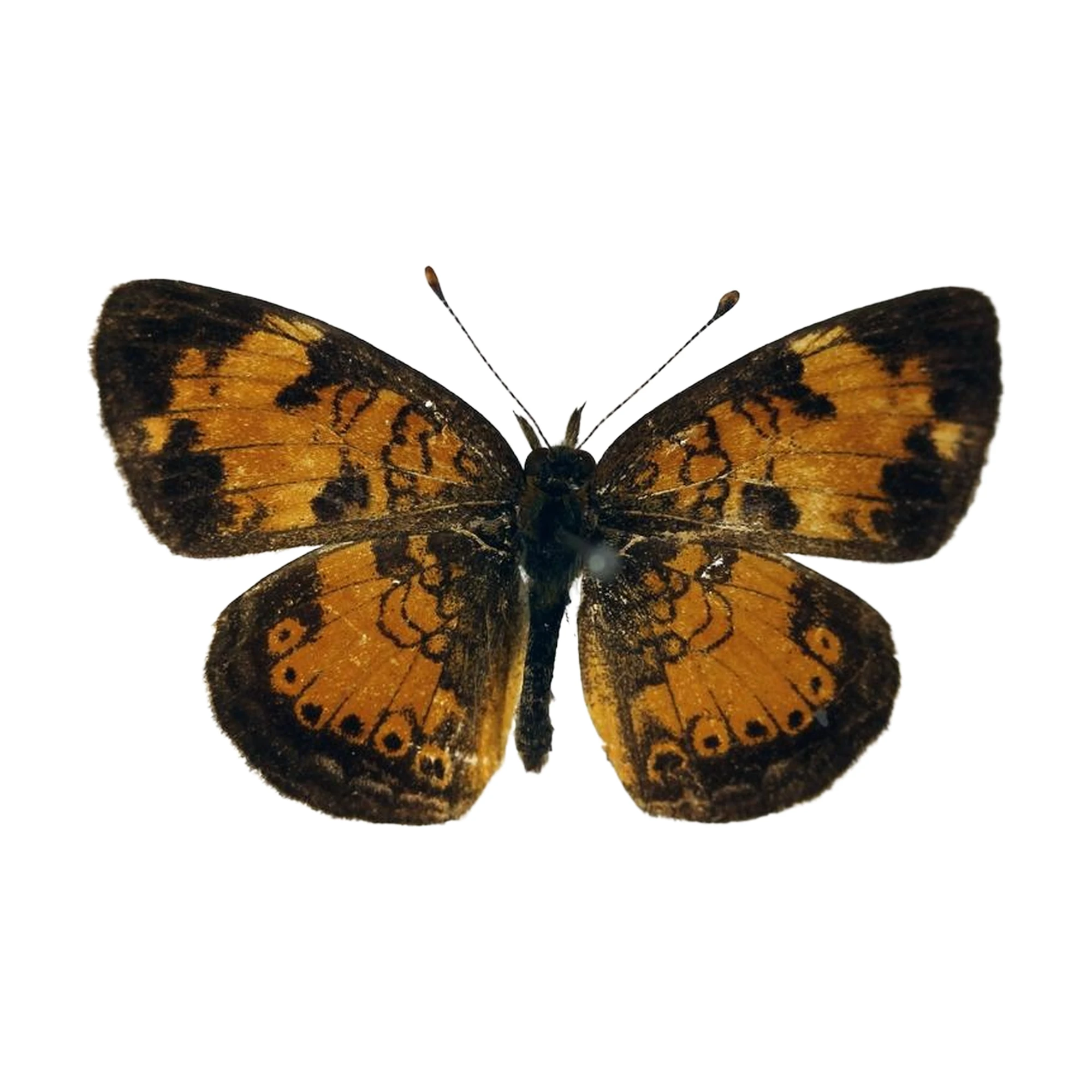
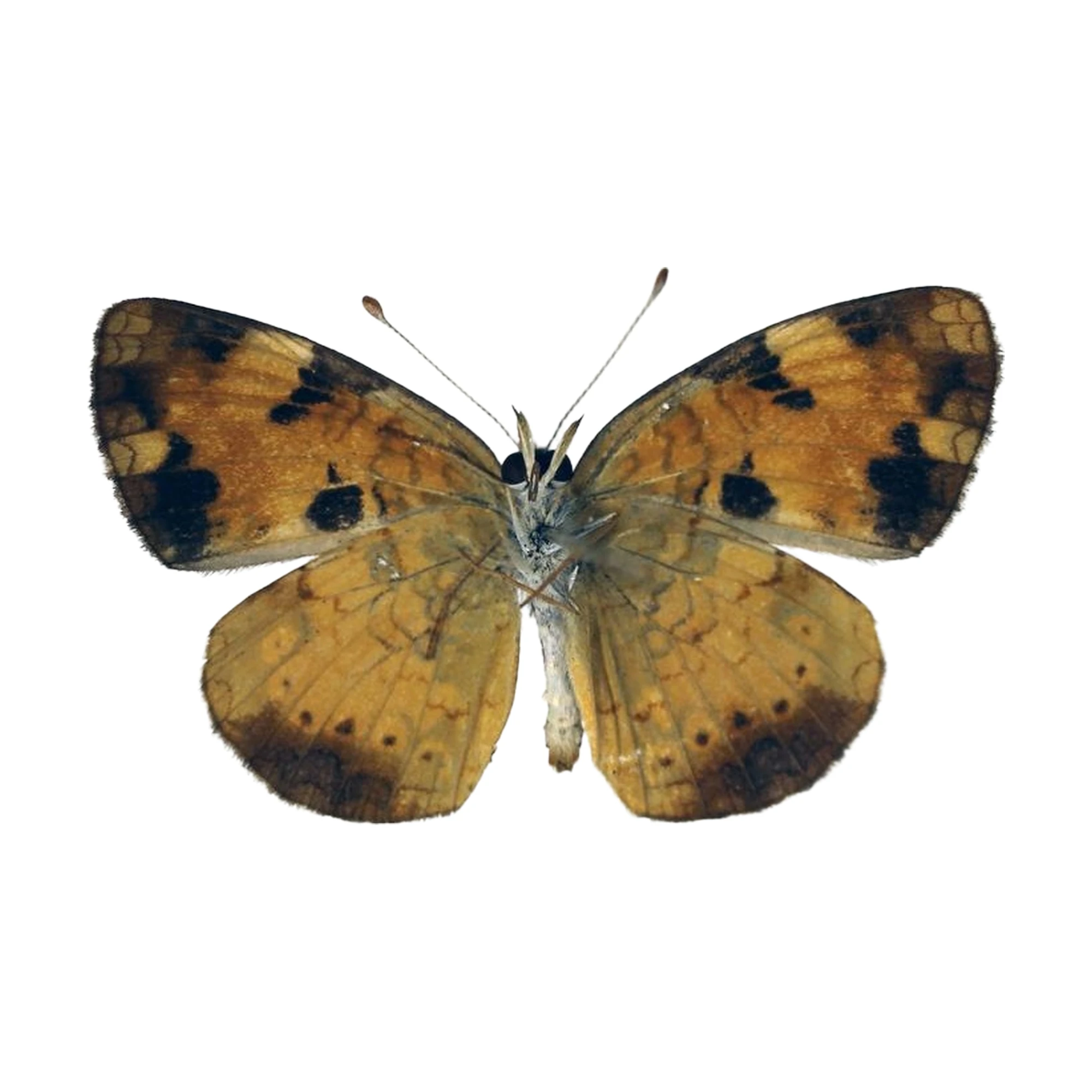
The Northern Crescent, Phyciodes cocyta, is a small orange butterfly with a wingspan of 32 to 48 mm (about 1 1/4 to 1 7/8 inches). The dorsal wings are orange-brown with dark borders, and the dorsal hindwing usually has a broad open orange area. Males have orange tips on the antennal clubs. The ventral hindwing is orange, fading to tan, with a rusty brown patch around a pale crescent on the outer margin. Females have a more developed dark pattern than males, and their ventral hindwing is paler with more distinct dark lines. It looks very much like the Pearl Crescent, Phyciodes tharos, but the Pearl Crescent is usually smaller, with more black on the dorsal wings and wider dark borders. Our photos show spread museum specimens of the same species, dorsal and ventral.
The Northern Crescent lives in moist, open, sunny places where asters grow, including mountain meadows, marsh edges, wooded streams, rocky openings, and weedy city lots. It ranges from Newfoundland and Nunavut to the Yukon Territory, south through the western mountains to Utah and the southern Rockies, and south through the Appalachians to Pennsylvania, Virginia, and West Virginia.
Adults visit flowers for nectar. Males patrol sunny openings looking for females.
Complete metamorphosis (egg, larva, pupa, adult). Females lay eggs in clusters of about 40 on the underside of leaves of the host plant, and the young caterpillars live and feed together. Adults fly in spring or early summer, mostly from June to mid-July, with a possible partial second brood in early September in some regions. The third-stage caterpillars overwinter. The caterpillars eat the leaves of asters.
Not known as a pest. The caterpillars eat only wild asters, and we found no record of damage to crops or gardens. The adults are pollinators that visit many wildflowers for nectar.
Our specimen was collected near Hot Springs, South Dakota.
This preserved specimen shows the orange dorsal wings and the tan ventral hindwing with its pale marginal crescent, ideal for butterfly education and displays. Check it out on BugGuide! https://bugguide.net/node/view/25729/bgimage
Photos: Yale Peabody Museum (YPM ENT 859145), photo by Lawrence F. Gall, CC0, via iDigBio. Cropped, background removed. Photos are representative examples, not the exact insect you will receive.
Only logged in customers who have purchased this product may leave a review.
Reviews
There are no reviews yet.