
$3.00
 <—
1 in stock
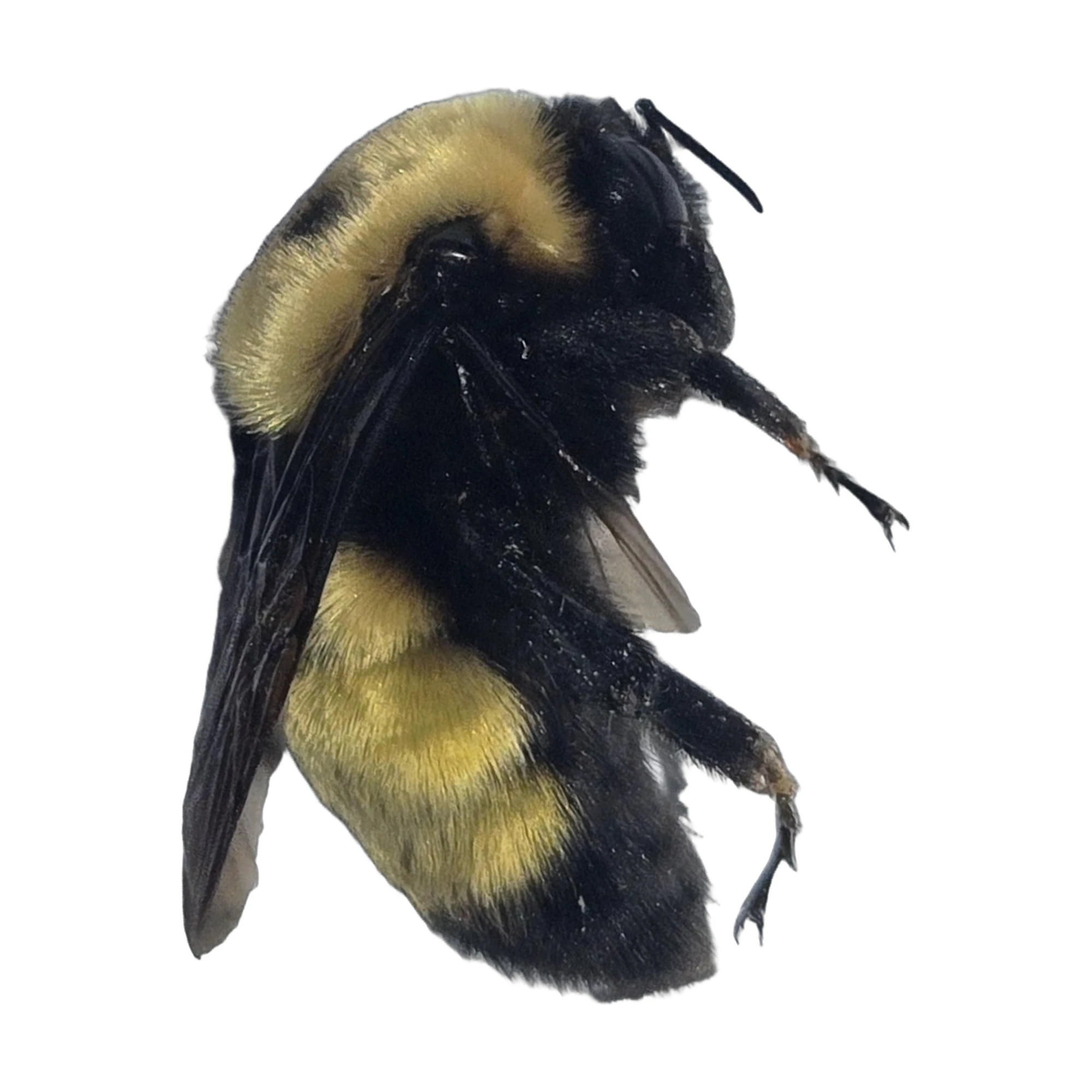
Bombus nevadensis is one of the largest bumble bees in western North America. Queens are about 22 to 27 mm long, workers about 13 to 22 mm and males about 15 to 20 mm. The hair is short and even. The thorax is mostly yellow with a small black patch or narrow band between the wings, the first three abdominal segments are yellow and the rest of the abdomen is black. The head is fairly long with dark hair on the face.
It ranges across western North America from Alaska and western Canada south through the Rocky Mountains, the Great Basin and the Great Plains into northern Mexico, reaching east to the Dakotas and Nebraska. This specimen was collected in Hot Springs, South Dakota. It favors open grasslands, prairies, sagebrush country, meadows and mountain clearings.
Nevada bumble bees live in social colonies and usually nest underground, often in old rodent burrows. They belong to the subgenus Bombias, and their long tongue lets them feed on deep flowers such as vetch, clover, beebalm, thistle, lupine and penstemon. Queens come out later in spring than many other bumble bees.
A mated queen leaves hibernation in late spring, finds a nest site and stocks wax cells with pollen and nectar before laying eggs. The young go through complete metamorphosis (egg, larva, pupa, adult). Workers forage through the summer, new queens and males appear in late summer, and only the mated queens survive the winter.
Nevada bumble bees are beneficial native pollinators of wildflowers and crops such as clover and alfalfa in rangeland and farm country. Like many bumble bees, they are affected by habitat loss and pesticides, which makes them a valuable species for pollinator conservation.
This preserved specimen educates on western native bumble bees and their role as pollinators, suitable for displays or studies. Check it out on BugGuide! https://www.bugguide.net/node/view/23327
Only logged in customers who have purchased this product may leave a review.
Reviews
There are no reviews yet.