
$3.00

15 in stock
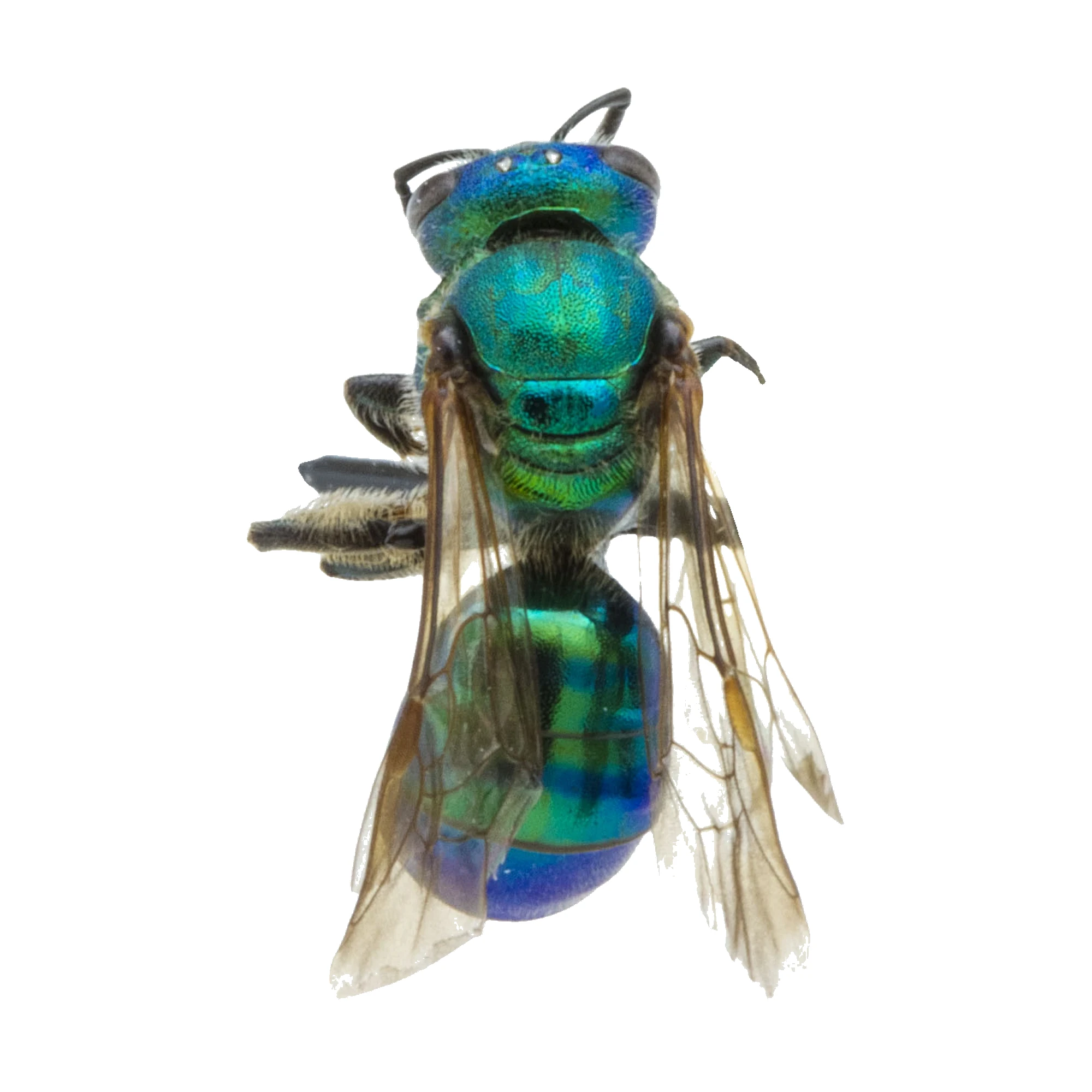
Sweat Bees in the genus Augochlora are small bees, about 5 to 11 mm long, that shine a brilliant metallic green, sometimes with blue or coppery highlights. The body is slender with fairly sparse hair, and the head, thorax and abdomen are all metallic. Females carry pollen on hairs of the hind legs rather than in a pollen basket. In North America the best known species is Augochlora pura, the Pure Green Sweat Bee. These are real, US-collected specimens from Wisconsin, including Douglas County.
The genus is found throughout the Americas, with the greatest number of species in the tropics. In the United States and Canada, Augochlora pura ranges across the eastern half of the continent, including Wisconsin. These bees live in woodlands, forest edges, gardens, parks and meadows near trees.
Augochlora pura is solitary and, unusually for sweat bees, nests in rotting logs and stumps instead of digging in soil. Females visit a wide range of flowers for pollen and nectar. Like other sweat bees they are sometimes drawn to the salt in human sweat, and they rarely sting unless pressed against the skin.
A female builds small cells in soft, decaying wood, stocks each with a ball of pollen and nectar and lays one egg on it. The young go through complete metamorphosis (egg, larva, pupa, adult). In the north there are usually one or two generations a year, and mated females spend the winter sheltered in wood before nesting again in spring. A July specimen from northern Wisconsin fits the summer nesting season.
These bees are beneficial native pollinators of wildflowers, garden plants and some crops. They are not pests and do not damage sound wood, since they only nest in wood that is already rotting.
This preserved specimen educates on native sweat bees and their role as pollinators, suitable for displays or studies. Check it out on BugGuide! https://bugguide.net/node/view/79291
| Weight | 0.01 lbs |
|---|
Only logged in customers who have purchased this product may leave a review.
Reviews
There are no reviews yet.