
$7.95
 <–
1 in stock
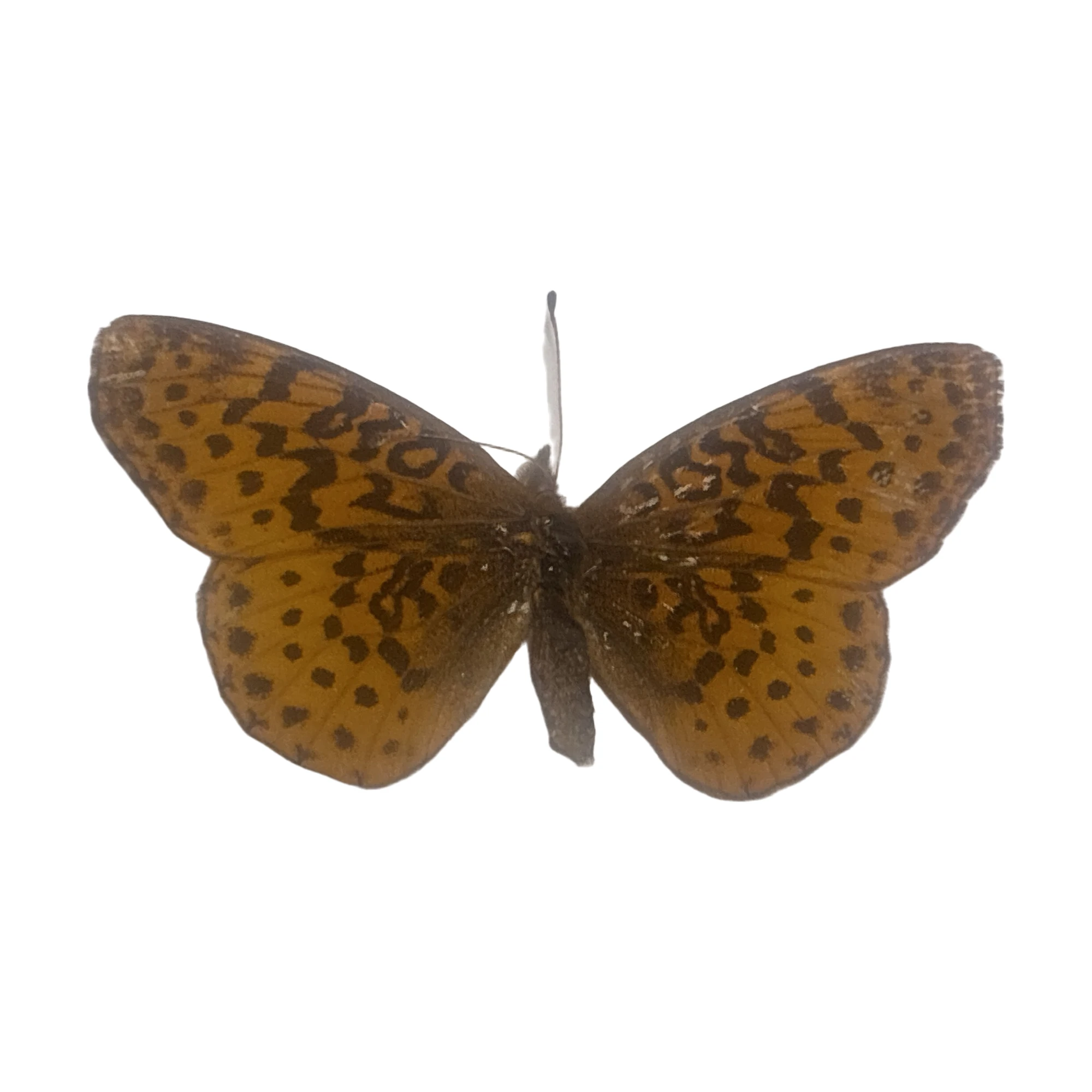
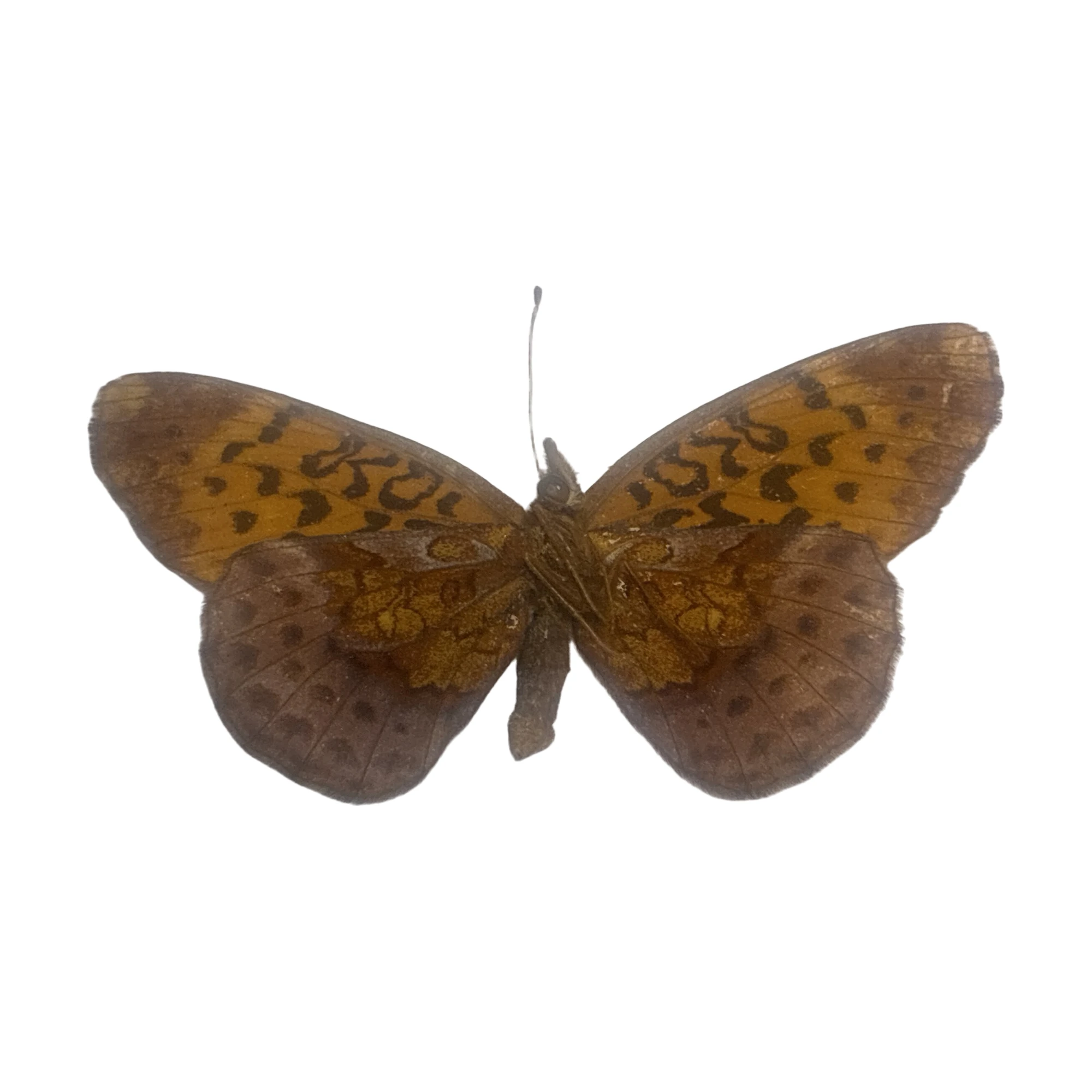
The Meadow Fritillary, Boloria bellona, is a small orange butterfly with a wingspan of 35 to 51 mm (about 1 3/8 to 2 inches), averaging about 40 mm. The dorsal wings are orange with black dots and wavy black lines, and the trailing edge of the hindwing usually lacks a dark border. The marginal black spots never form inward-pointing chevrons. The forewing is long and narrow with a squared-off, chopped-looking tip, which is a good field mark. The ventral hindwing is orange to purplish brown with no silver or white spots, which separates it from the silver-spotted greater fritillaries and from the Silver-bordered Fritillary. Our photos show the dorsal and ventral views of the actual specimen.
The Meadow Fritillary lives in moist meadows and has adapted to hayfields, ditches, and other disturbed places. It ranges across most of Canada and through the northern and eastern United States, south to North Carolina. The eastern form is lighter in color than the western forms.
Adults visit many flowers for nectar and will also take minerals from damp ground.
Complete metamorphosis (egg, larva, pupa, adult). In the north and at high elevations there is one brood, flying mostly in June. At the lowest elevations and farther south, adults fly from April to October with two or perhaps three broods. The caterpillars eat violets (Viola) and overwinter as young larvae.
Not known as a pest. The caterpillars eat only violets, and we found no record of damage to crops or gardens. The adults are pollinators that visit many wildflowers for nectar.
Our specimen was collected by Don Barnhart in Douglas County, Wisconsin.
This preserved specimen shows the orange dorsal wings, squared-off forewing tip, and spotless purplish-brown ventral hindwing of a small lesser fritillary, ideal for butterfly education and displays. Check it out on BugGuide! https://bugguide.net/node/view/23126/bgimage