
$3.00
 <–
36 in stock
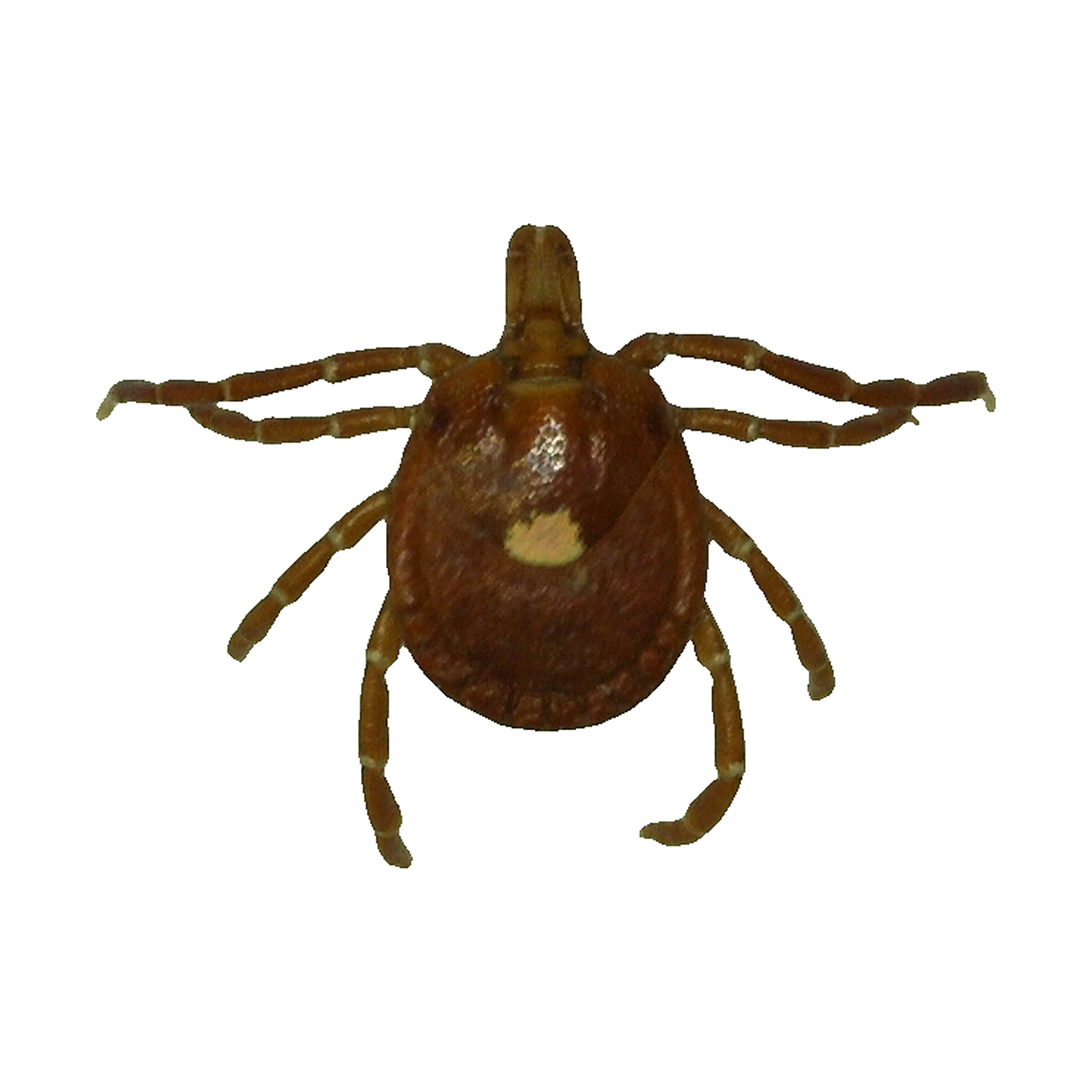
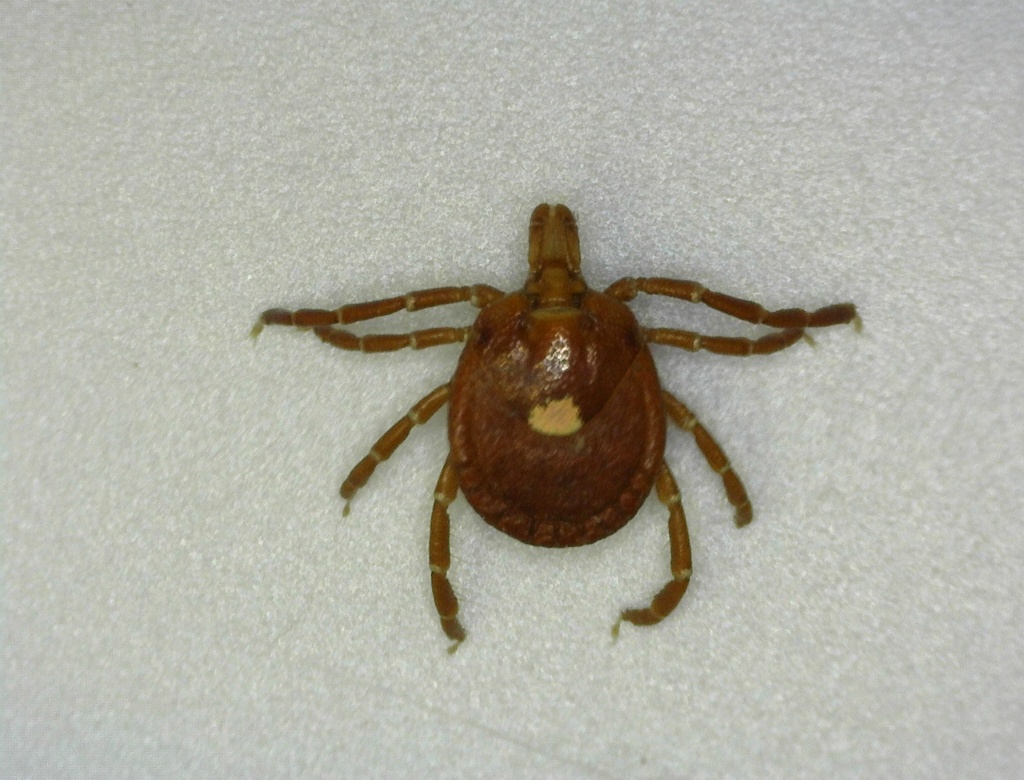
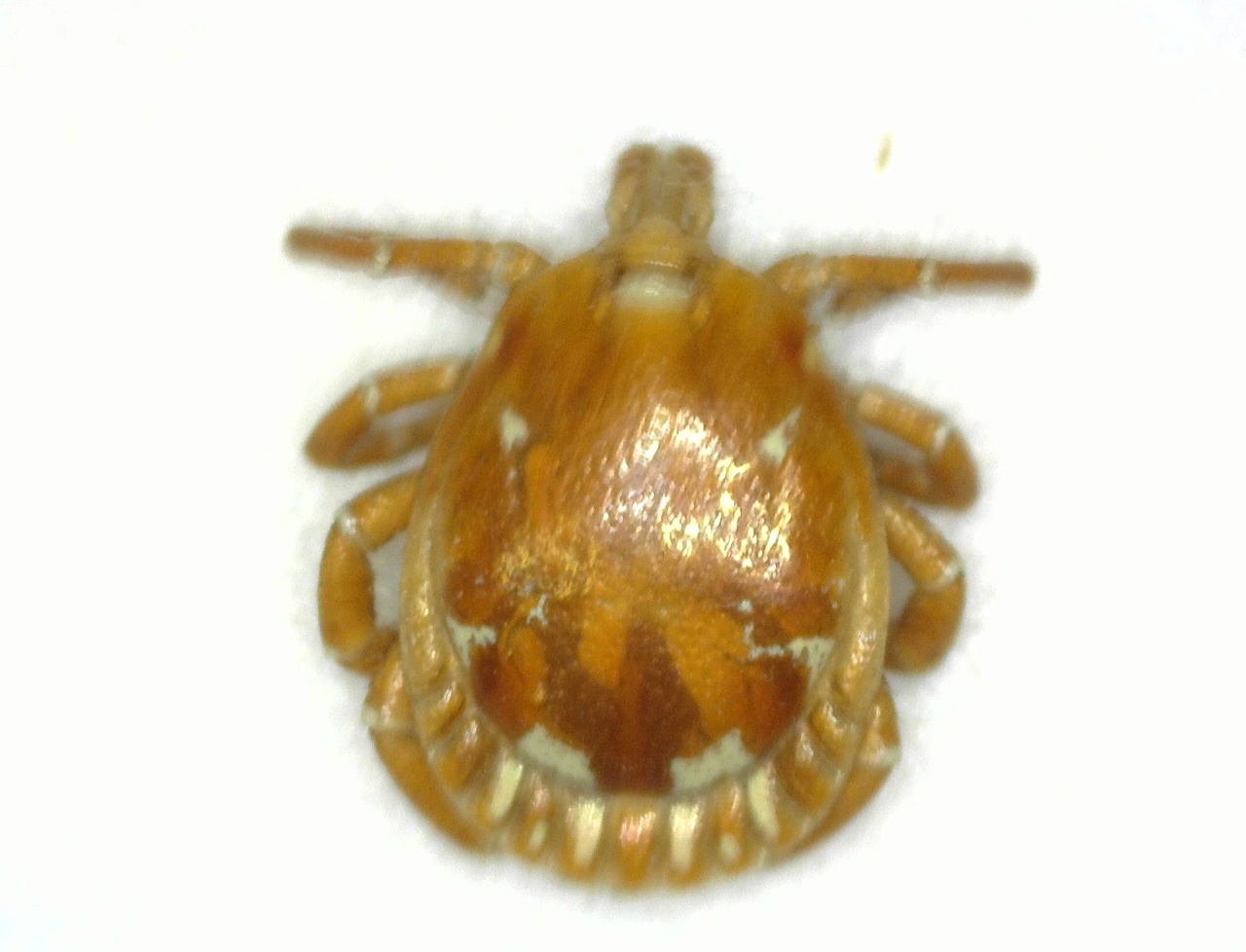
The Lone Star Tick, Amblyomma americanum, is a hard tick in the family Ixodidae. It is an arachnid, not an insect, and adults have eight legs. Unfed adults are about 3 to 4 mm long, flat, oval, and reddish brown, with long mouthparts that stick forward from the front of the body. The pale banded legs are easy to see under magnification. Females carry a single white or cream spot in the center of the shield (scutum) on the back, which gives the species its name. Males lack the single spot and instead have faint pale streaks or spots around the rear edge of the body. Females swell to more than 10 mm after a full blood meal. The specimen in the photo is an adult female.
This tick is most common in wooded areas with thick underbrush, forest edges, and overgrown fields. Its range covers much of the eastern and central United States, from Texas and Florida north to Maine and west to Nebraska, and it continues to spread north and east. It is one of the most abundant ticks in the southern and central states, including Missouri. Our specimens were collected in Phelps County, Missouri.
Lone Star Ticks are aggressive and fast moving. Instead of only waiting on vegetation, adults will actively crawl toward a host, drawn by carbon dioxide and body heat. All active stages feed on blood and bite people readily. Large numbers of the tiny larvae, often called seed ticks, can be picked up at once when walking through brush.
The Lone Star Tick is a three-host tick with egg, larva, nymph, and adult stages. Each active stage feeds once on a different host and then drops to the ground to molt or lay eggs. Larvae and nymphs feed on a wide range of small to large mammals and ground-feeding birds, while adults feed on medium and large mammals such as deer, cattle, dogs, and people. White-tailed deer are a key host that supports large populations. A fed female lays several thousand eggs on the ground and then dies. The life cycle usually takes one to two years.
Because of its aggressive, non-specific feeding and high population densities, the Lone Star Tick is one of the most annoying and economically important ticks in the United States. It transmits the bacteria that cause human ehrlichiosis, a flu-like illness that can be severe, and it is linked to tularemia, Heartland virus, and the rash illness called STARI. Bites from this tick are also linked to alpha-gal syndrome, a delayed allergic reaction to red meat and other mammal products. It does not transmit Lyme disease. Heavy infestations stress cattle, deer, and other livestock and wildlife.
This preserved specimen is useful for teaching tick identification, public health displays, and arachnid collections.
Check it out on BugGuide! https://bugguide.net/node/view/21258/bgimage
Only logged in customers who have purchased this product may leave a review.
Reviews
There are no reviews yet.