
$3.00
1 in stock
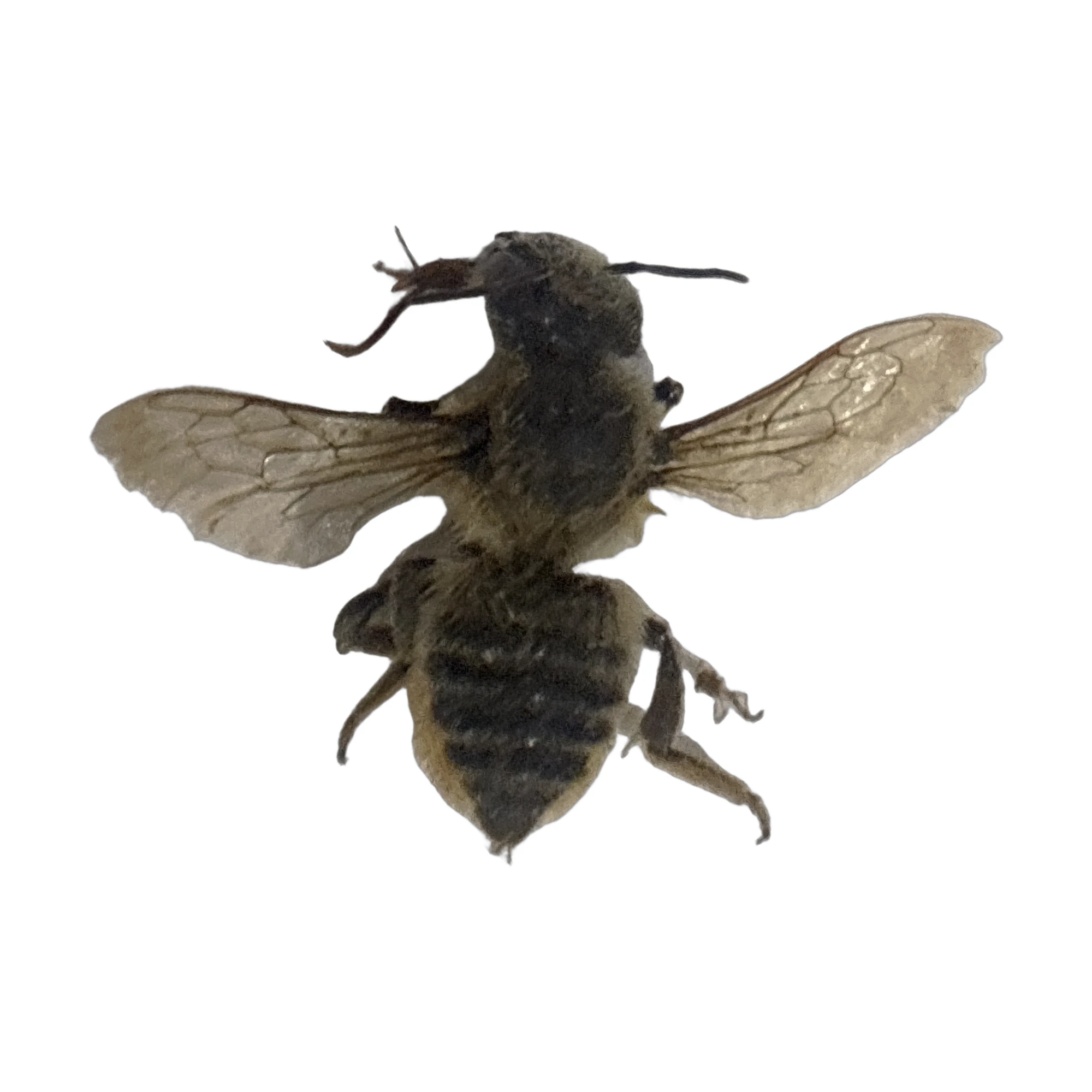
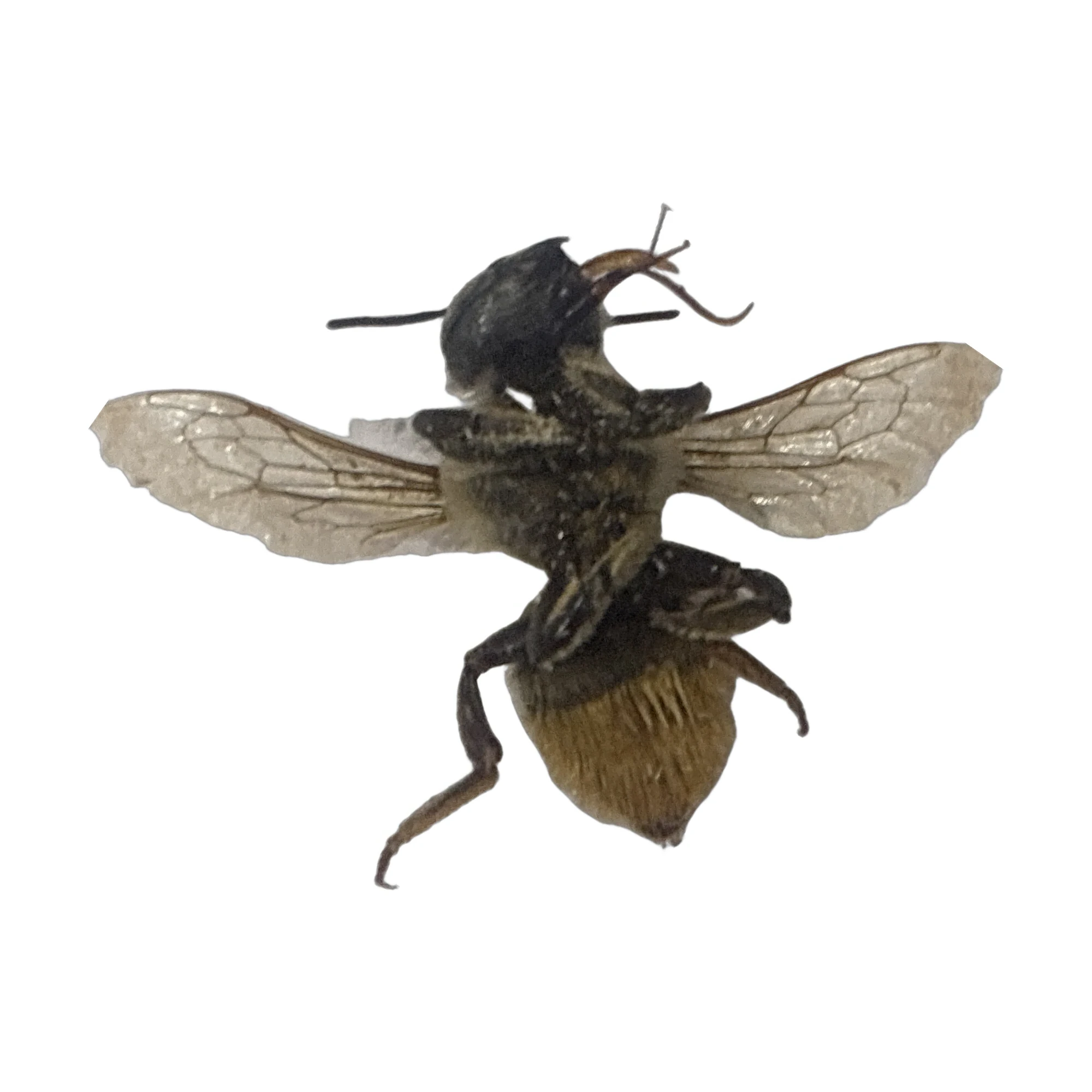
Leafcutter bees in the genus Megachile are stout, dark bees about 10 to 16 mm long, with a broad head and strong mandibles for cutting leaves. Pale hair bands cross the abdomen. Females carry pollen on a dense brush of hairs under the abdomen (on this specimen it is golden orange) instead of on their legs like honey bees.
Megachile is found worldwide, and North America has more than 100 species. They live in gardens, meadows, prairies, field edges and woodland borders, anywhere there are flowers and soft-leaved plants like roses, redbud and lilac.
They are solitary bees, so each female builds and stocks her own nest with no hive or queen. She cuts neat round and oval pieces from leaves or petals, flies them back rolled under her body, and uses them to line tunnels in dead wood, hollow stems or the ground. They rarely sting and do so only when handled.
The female builds a row of leaf-lined cells. She puts a ball of pollen and nectar in each one, lays a single egg on it and seals it with more leaf pieces. The larva eats the provision, spins a cocoon and spends the winter as a mature larva. It pupates in spring and comes out as an adult in late spring or summer, a complete metamorphosis (egg, larva, pupa, adult).
Leafcutter bees are beneficial pollinators. They pollinate wildflowers, garden plants and crops, and one species, the alfalfa leafcutter bee, is raised commercially to pollinate alfalfa grown for seed. The round holes they cut in leaves look odd but do little real harm to plants.
This preserved specimen educates on solitary bees and native pollinators, suitable for displays or studies. Check it out on BugGuide! https://www.bugguide.net/node/view/7751
Only logged in customers who have purchased this product may leave a review.
Reviews
There are no reviews yet.