Dragonflies have nearly 30,000 lenses per eye for all-around vision, snagging prey mid-flight like fighter pilots on steroids. They are the top guns of the bug world!
<h4 dir=”auto”>Appearance</h4>
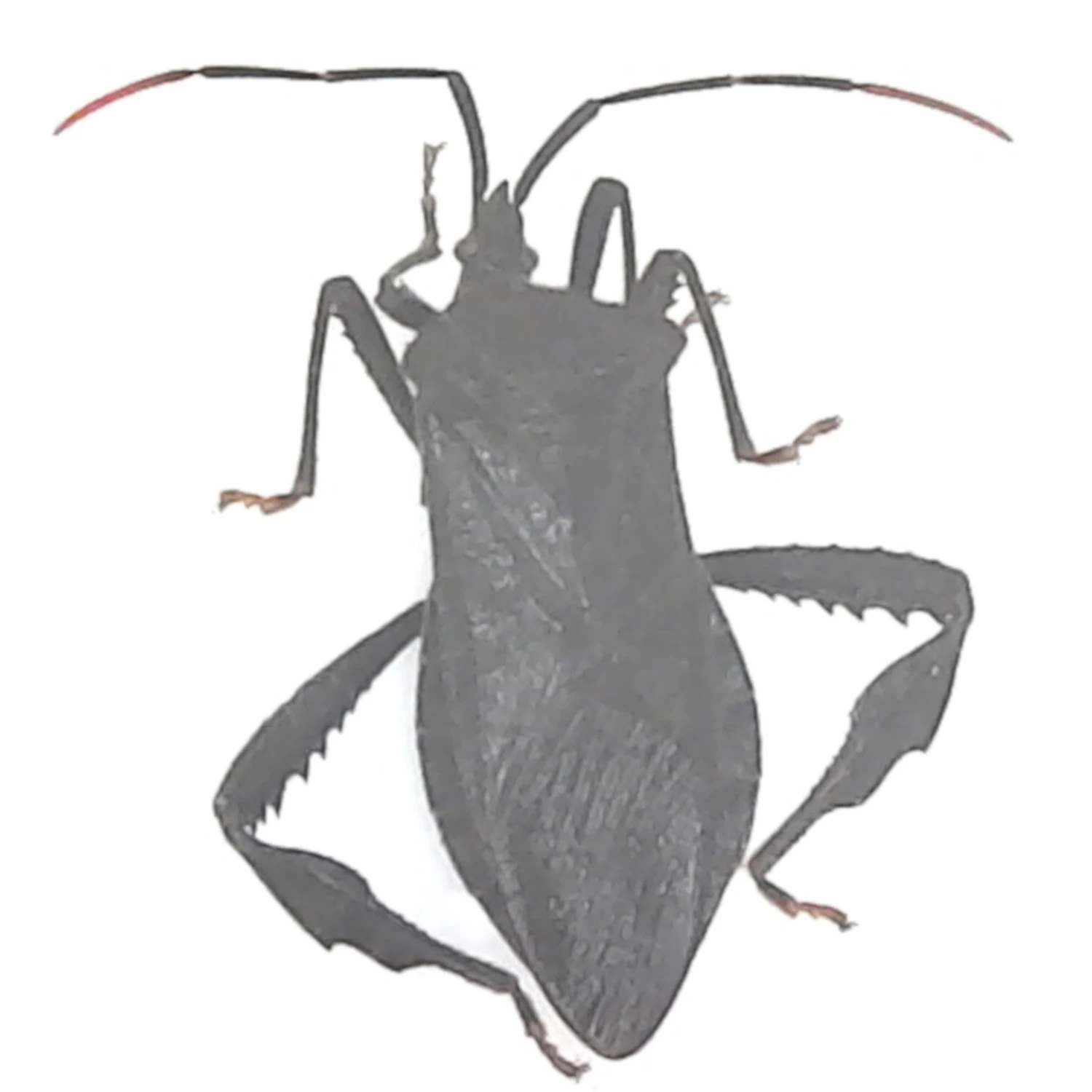
<p dir=”auto”>Leaf-footed Bugs in genus Acanthocephala reach 18-35 mm in length. They feature distinctive hind tibiae flattened and expanded into leaf-like shapes. Bodies appear robust, often orange-brown to black with yellow markings underneath. Antennae stay segmented and prominent. Nymphs show bright orange abdomens with black legs, aggregating in groups for protection.</p>
<h4 dir=”auto”>Habitat and Range</h4>
<p dir=”auto”>These bugs inhabit woodlands, fields, gardens, and orchards across eastern and central North America. The range extends from Quebec south to Florida, west to Texas and Minnesota. They favor areas with host plants like composites, oaks, and fruits. Adults and nymphs perch openly on leaves or stems.</p>
<h4 dir=”auto”>Behavior</h4>
<p dir=”auto”>Adults and nymphs pierce plant tissues to suck sap, sometimes causing minor damage to foliage or fruits. They emit a strong odor when disturbed as defense. Nymphs cluster gregariously on host plants. Adults fly readily when threatened. The species overwinters as adults in protected spots.</p>
<h4 dir=”auto”>Life Cycle</h4>
<p dir=”auto”>Females lay eggs in rows on leaf undersides during summer. Nymphs hatch and molt through five instars, feeding together early on. Adults emerge by late summer, mating and laying eggs for the next generation. One generation completes per year in northern areas, possibly more southward.</p>
<h4 dir=”auto”>Economic Impact</h4>
<p dir=”auto”>Occasional minor pest status occurs as feeding damages fruits like tomatoes or ornamentals, causing cat-facing or stains. Impacts remain localized without broad agricultural threats. Overall neutral, with limited economic harm in most regions.</p>
<p dir=”auto”>This preserved specimen highlights the unique leaf-like hind legs, ideal for coreid bug education and displays. Check it out on BugGuide! <a href=”https://bugguide.net/node/view/2718?referrer=grok.com” target=”_blank” rel=”noopener noreferrer nofollow”>https://bugguide.net/node/view/2718</a></p>

 <—
<—