Search for a bug

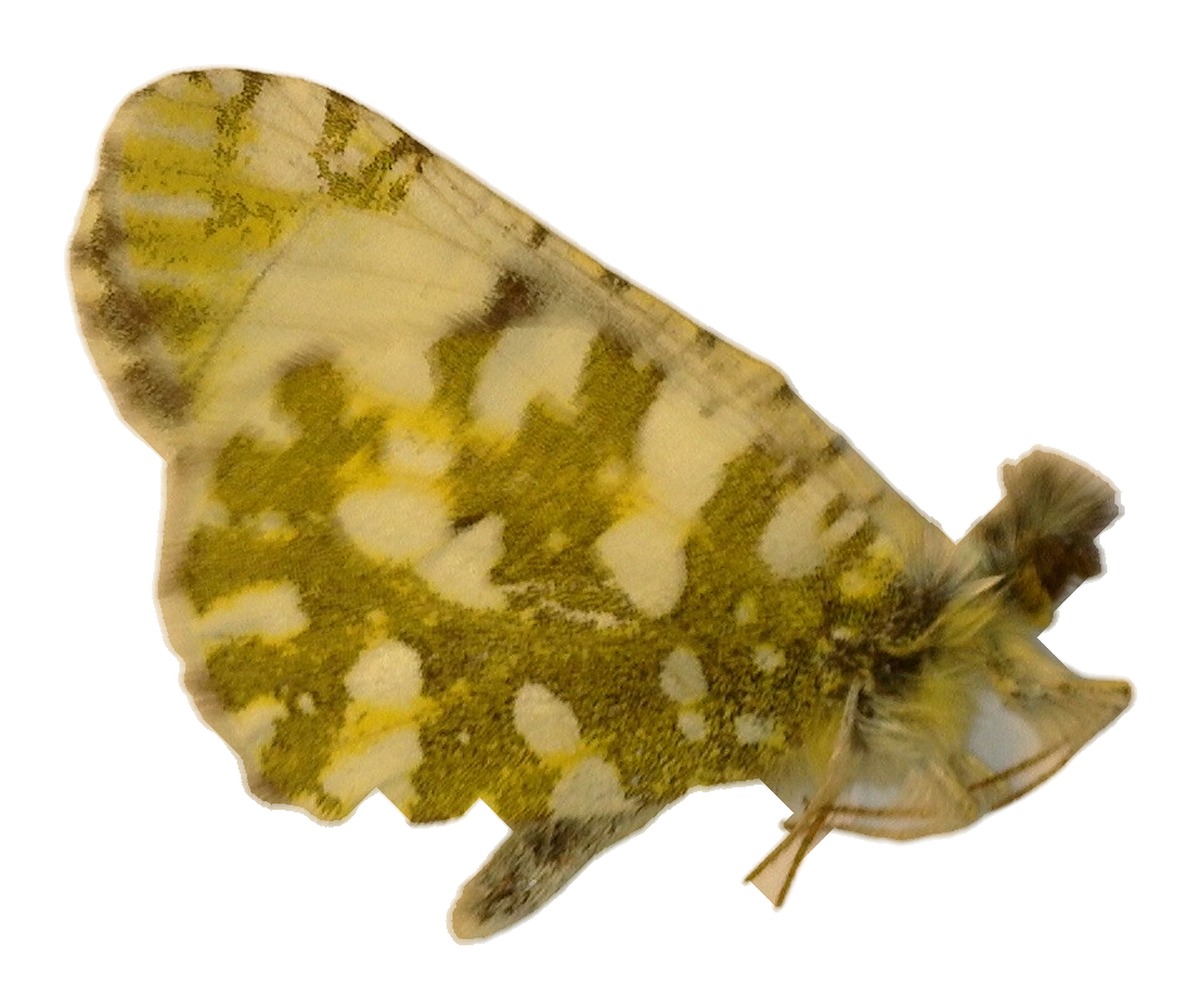
Large Marble (Euchloe ausonides) Damaged

$5.95

  • bugguide info... <–
    See it in BugGuide
  • Euchloe ausonides
  • size wingspan 38-51 mm
  • ALL OUR INSECTS ARE DEAD UNMOUNTED SPECIMENS
  • A.K.A. Creamy Marblewing
  • Damaged specimen: may have a detached or missing antenna, a smudge or chip in a wing, or similar flaws.

1 in stock

Appearance

The Large Marble, Euchloe ausonides, is a medium-sized white butterfly with a wingspan of about 38 to 51 mm (1 1/2 to 2 inches). The upperside is white with a black bar in the forewing cell that has scattered white scales, and a black pattern at the forewing tip. The underside, which is the view in our photo, has dense yellow-green marbling covering the hindwing, with yellowish veins. The similar Olympia Marble has much looser marbling with more white space.

Habitat and Range

The Large Marble lives in open, sunny places such as valleys, hillsides, meadows, grasslands, sagebrush, streamsides, and mountain slopes. It is found from Alaska south to central California and northern New Mexico, and east to southwest Manitoba, including western South Dakota and the Black Hills.

Behavior

Males patrol valleys and hillsides looking for females. Adults take nectar from mustards and other flowers. In the north there is one generation a year, flying from May to July.

Life Cycle

Complete metamorphosis (egg, larva, pupa, adult). Females lay single eggs on unopened flower buds of mustards such as rock cress and hedge mustard. The caterpillars eat the flowers and seedpods, and the chrysalis spends the winter before the adult emerges in spring.

Economic Impact

Not an economic pest. The species is secure overall, but the Island Marble subspecies of Washington is critically imperiled.

Our specimen was collected near Custer, South Dakota.

Description

Appearance

The Large Marble, Euchloe ausonides, is a medium-sized white butterfly with a wingspan of about 38 to 51 mm (1 1/2 to 2 inches). The upperside is white with a black bar in the forewing cell that has scattered white scales, and a black pattern at the forewing tip. The underside, which is the view in our photo, has dense yellow-green marbling covering the hindwing, with yellowish veins. The similar Olympia Marble has much looser marbling with more white space.

Habitat and Range

The Large Marble lives in open, sunny places such as valleys, hillsides, meadows, grasslands, sagebrush, streamsides, and mountain slopes. It is found from Alaska south to central California and northern New Mexico, and east to southwest Manitoba, including western South Dakota and the Black Hills.

Behavior

Males patrol valleys and hillsides looking for females. Adults take nectar from mustards and other flowers. In the north there is one generation a year, flying from May to July.

Life Cycle

Complete metamorphosis (egg, larva, pupa, adult). Females lay single eggs on unopened flower buds of mustards such as rock cress and hedge mustard. The caterpillars eat the flowers and seedpods, and the chrysalis spends the winter before the adult emerges in spring.

Economic Impact

Not an economic pest. The species is secure overall, but the Island Marble subspecies of Washington is critically imperiled.

Our specimen was collected near Custer, South Dakota.