Appearance
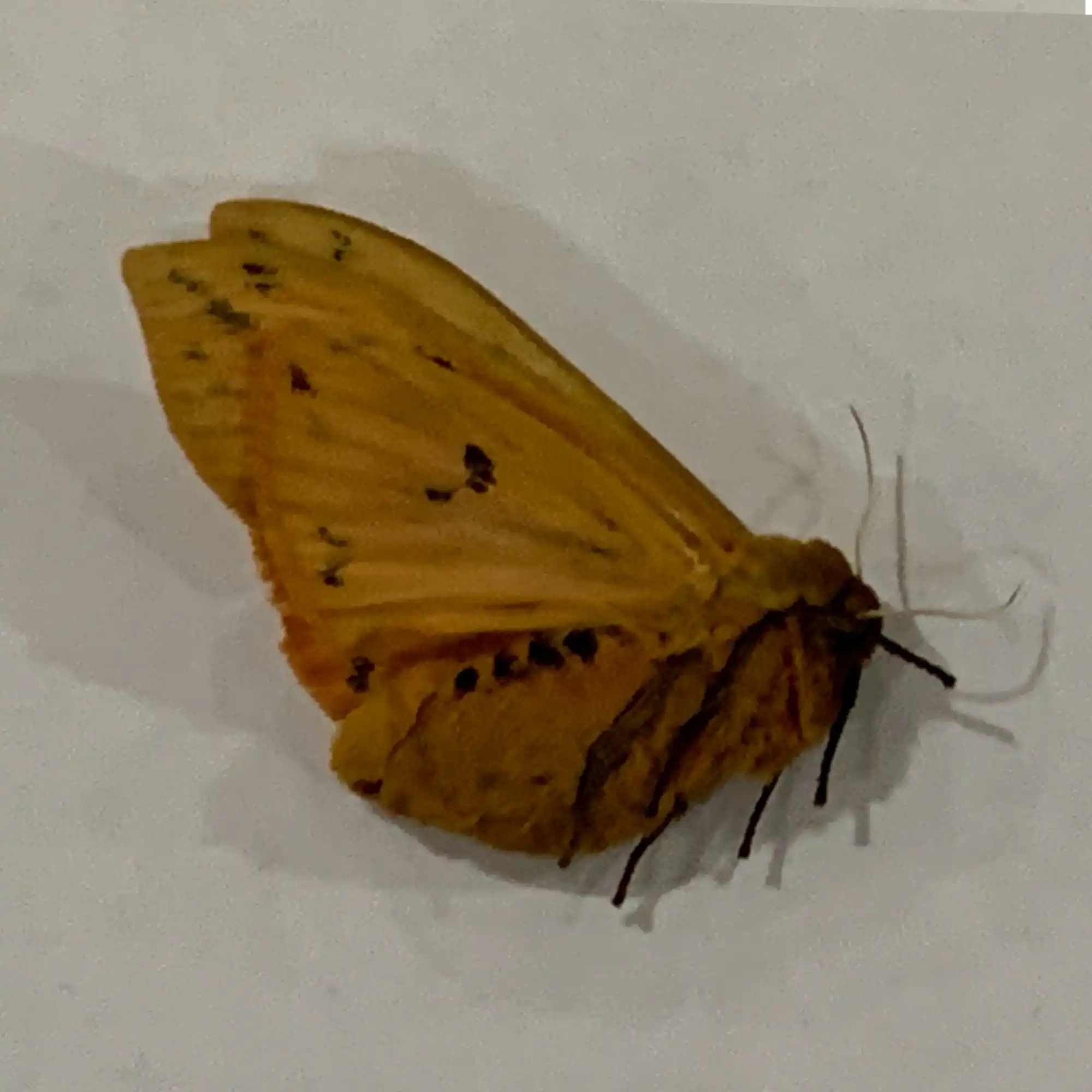
The Isabella Tiger Moth adult spans 45-65 mm in wingspan. Forewings appear orange-brown with faint gray lines and black spots. Males have pale orange hindwings, while females show rosy tones. The body is fuzzy orange. Larvae, known as banded woolly bear caterpillars, grow to 57 mm long. They feature black bands at both ends and a rusty red middle, with the red band lengthening as they mature. These fuzzy caterpillars curl into a ball when threatened.
Habitat and Range
This species occurs throughout North America from Canada to Mexico. It thrives in diverse habitats like fields, gardens, meadows, and woodlands. Larvae feed on a wide variety of plants including grasses, asters, birches, clover, corn, elms, maples, milkweed, and sunflowers. Adults fly from March to November, peaking in summer.
Behavior
Adults visit flowers for nectar and fly both day and night. Larvae feed voraciously on foliage and may resort to cannibalism if food is scarce. The caterpillars wander widely in fall seeking overwintering sites under logs or bark. Folklore claims their band lengths predict winter severity, though this depends on age and weather, not forecasting.
Life Cycle
Two broods occur yearly. Females lay eggs on host plants in spring and summer. Larvae hatch and feed through several instars. The first brood pupates in summer; the second overwinters as caterpillars, freezing solid in protected spots. They thaw and pupate in spring, emerging as adults. The cycle repeats seasonally.
Economic Impact
Neutral overall, with minor pest potential as larvae occasionally defoliate crops like corn or clover. Damage remains sporadic and limited. Adults aid pollination. No significant economic harm or benefits noted in agriculture.
This preserved specimen highlights the banded woolly bear caterpillar’s fuzzy form, ideal for folklore and entomology education. Check it out on BugGuide! https://bugguide.net/node/view/539

 <—
<—