
$3.00

13 in stock
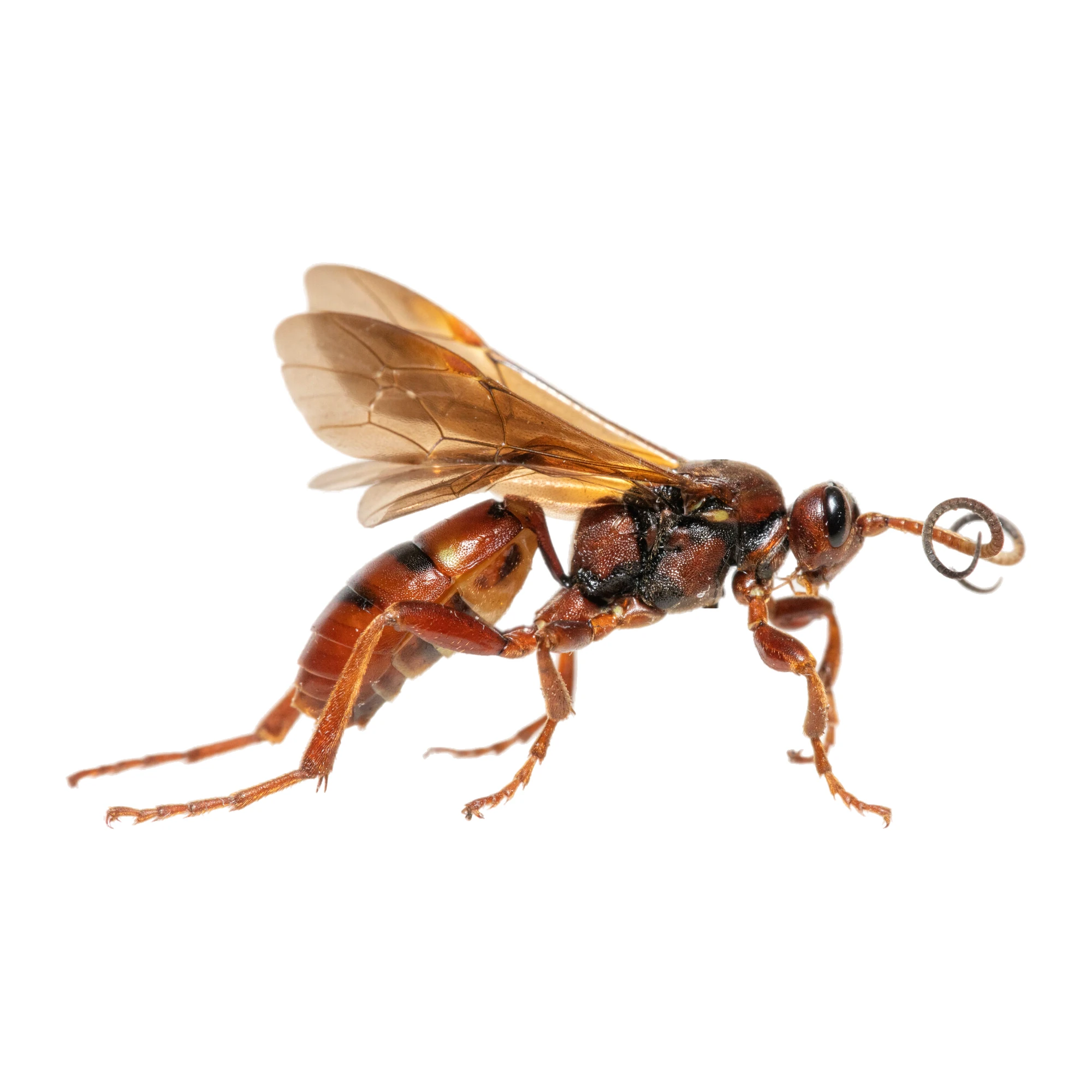
Wasps in the genus Eutanyacra are medium-sized parasitoid wasps with long, thread-like antennae, a narrow waist and a fairly broad, slightly flattened abdomen. Many North American species are orange or reddish brown with black markings. This specimen has a dark head, an orange and black thorax with a yellow scutellum (the small shield behind the wings), an orange abdomen with black bands at the joints between segments, orange legs, amber-tinted wings and long dark antennae. The antennae of dried specimens often curl, as they do here. Many species look very much alike, so this one is identified to genus only. This is a real, US-collected specimen from Hot Springs, Fall River County, South Dakota.
Eutanyacra belongs to the subfamily Ichneumoninae, tribe Ichneumonini. The genus is found across the Northern Hemisphere and in parts of Asia, and most of its species live in North America, where about 25 species have been named. These wasps are found in fields, prairies, meadows, gardens and forest edges wherever their moth hosts live.
Adults are active during the day and are often seen walking on plants and the ground, tapping surfaces with their antennae as they search for hosts. Adults visit flowers for nectar. They are not aggressive toward people.
Eutanyacra wasps are parasitoids of moths, especially cutworms and related caterpillars in the family Noctuidae. The female lays an egg inside a caterpillar or pupa, and the wasp larva feeds and grows inside the host. The host goes on to form its pupa, usually in the soil, and the adult wasp later chews its way out of the host’s pupal case. In most members of this group, mated females survive the winter as adults in sheltered spots and become active again in spring.
Eutanyacra wasps are beneficial natural enemies of cutworms, which can cut down and destroy young crop and garden plants. In studies of cutworms on the Canadian Prairies, Eutanyacra suturalis was one of the parasitoids reared from pest cutworms. These wasps do not damage plants, homes or stored food.
This preserved specimen educates on parasitoid wasps and their role in controlling cutworms, suitable for displays or studies. Check it out on BugGuide! https://bugguide.net/node/view/367589
| Weight | 0.01 lbs |
|---|