
$3.00
 <–
1 in stock
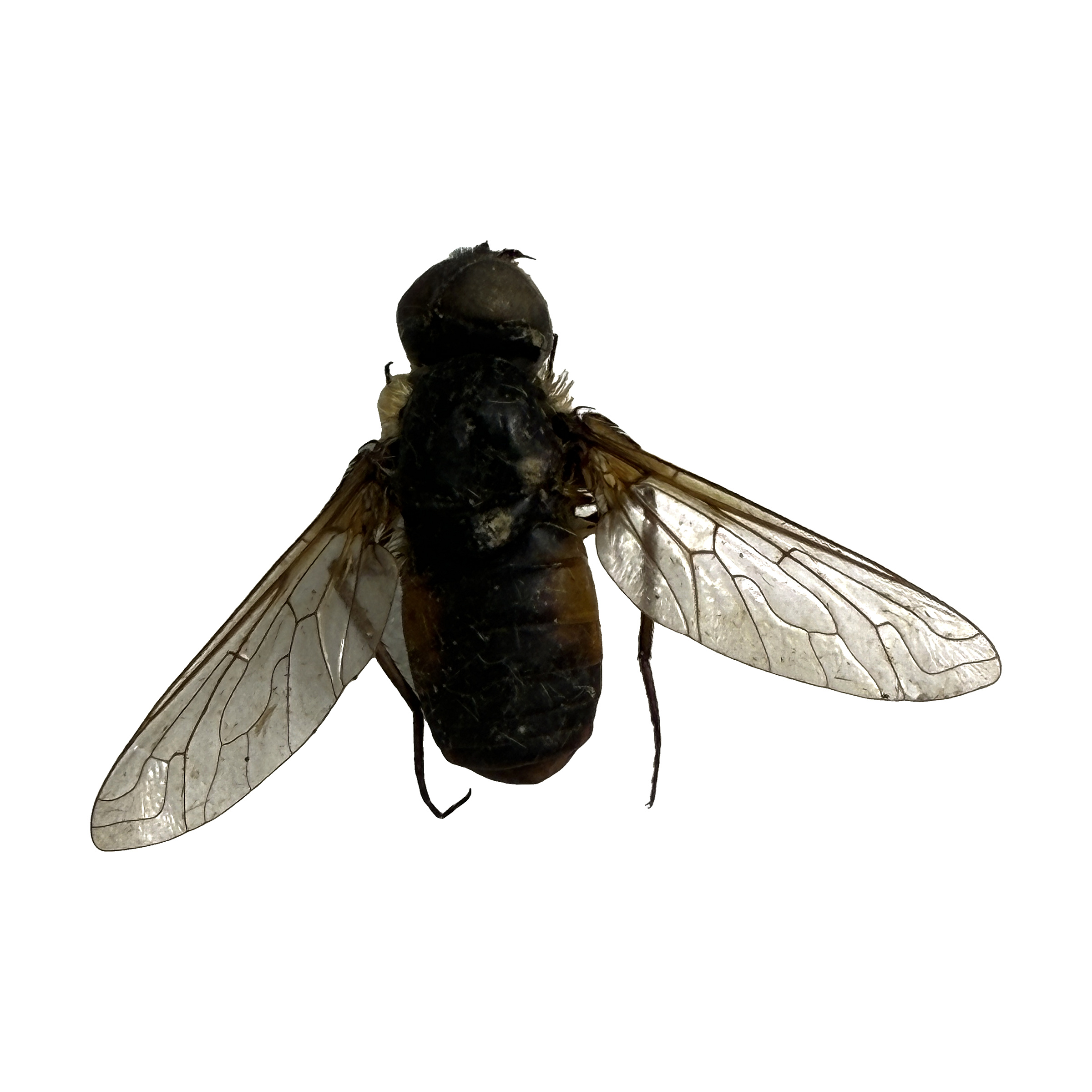
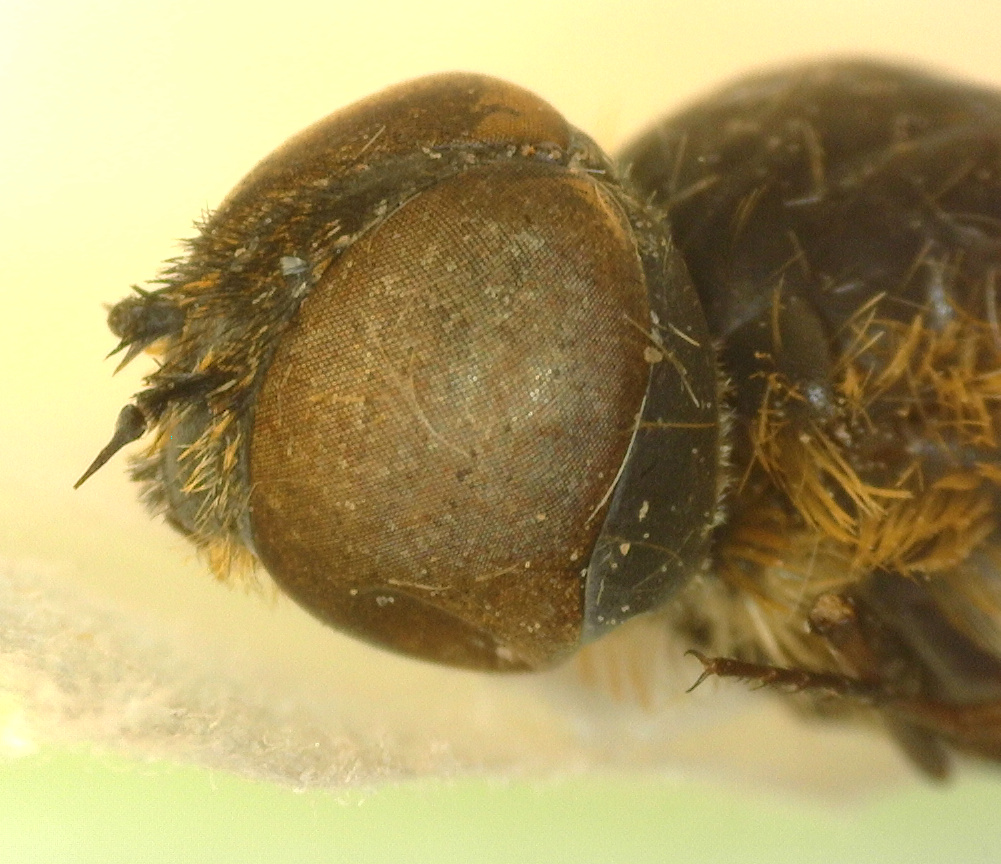
The Hover Fly belongs to the family Syrphidae, the hover flies, also called flower flies or syrphid flies. Adults in this family are typically about 10 to 20 mm long, though the family ranges from about 1 to 35 mm. Many are bee mimics or wasp mimics, with hair, body marks, and hovering flight that add to the resemblance. A useful family mark is a false vein in the wing, the spurious vein, and a false margin formed where some of the outer veins bend back and run alongside the wing edge. The specimen in stock is about 12 mm long, measured from the head to the tip of the abdomen. It is a dark, hairy, bee-mimic type. The abdomen has an orange-brown band. The face is hairy and fairly flat. The eyes are mostly bare, and they meet on top of the head, so this specimen is a male. The wings show the family false margin, and vein R4+5 dips into the cell below it. A sure genus identification often requires several close views of the face, the eyes, and the wing veins, so this specimen is listed at the family level as Syrphidae sp.
The family occurs worldwide and throughout North America. Adults are usually found at flowers. The larvae have several ways of life. Many are predators of aphids and other soft-bodied insects. Others live in decaying vegetation, wet wood, or organically rich water, and a few live in ant nests. Some of our specimens were collected in South Dakota.
Adults visit flowers and feed on nectar and pollen. They do not bite or sting. Many are Batesian mimics of bees or wasps: the hair, the body marks, and their hovering flight all add to the resemblance. They can hold a steady hover in midair, which is how they get the name hover fly.
Like other true flies, hover flies have complete metamorphosis: egg, larva, pupa, and adult. Larval habits vary by group. Many larvae prey on aphids. Some are aquatic rat-tailed maggots, with a long breathing tube at the rear, and live in organically rich water. Others develop in decaying wood or plant material. Adults are usually seen in spring through fall, and year-round in some warm areas.
Hover flies are not pests and are harmless to people. They do not bite or sting. The adults visit flowers and may help with pollination. Many of the larvae eat aphids and other soft-bodied plant pests, so they are useful in gardens and crops. The preserved specimens are used in teaching and collections, and they are a good example of bee and wasp mimicry in flies.
Syrphidae Latreille, 1802 belongs to the order Diptera (true flies). There are about 813 species in about 100 genera in North America, and more than 6,000 species in about 210 genera worldwide. The family is often recognized by the spurious vein in the wing and by the false margin along the wing edge. A sure genus or species identification often requires several close views of the face, the eyes, and the wing veins, so this specimen is listed at the family level as Syrphidae sp.
This preserved specimen educates on hover flies and the family Syrphidae, suitable for displays or studies.
Check it out on BugGuide! https://bugguide.net/node/view/196/bgimage