
$3.00
 <–
1 in stock
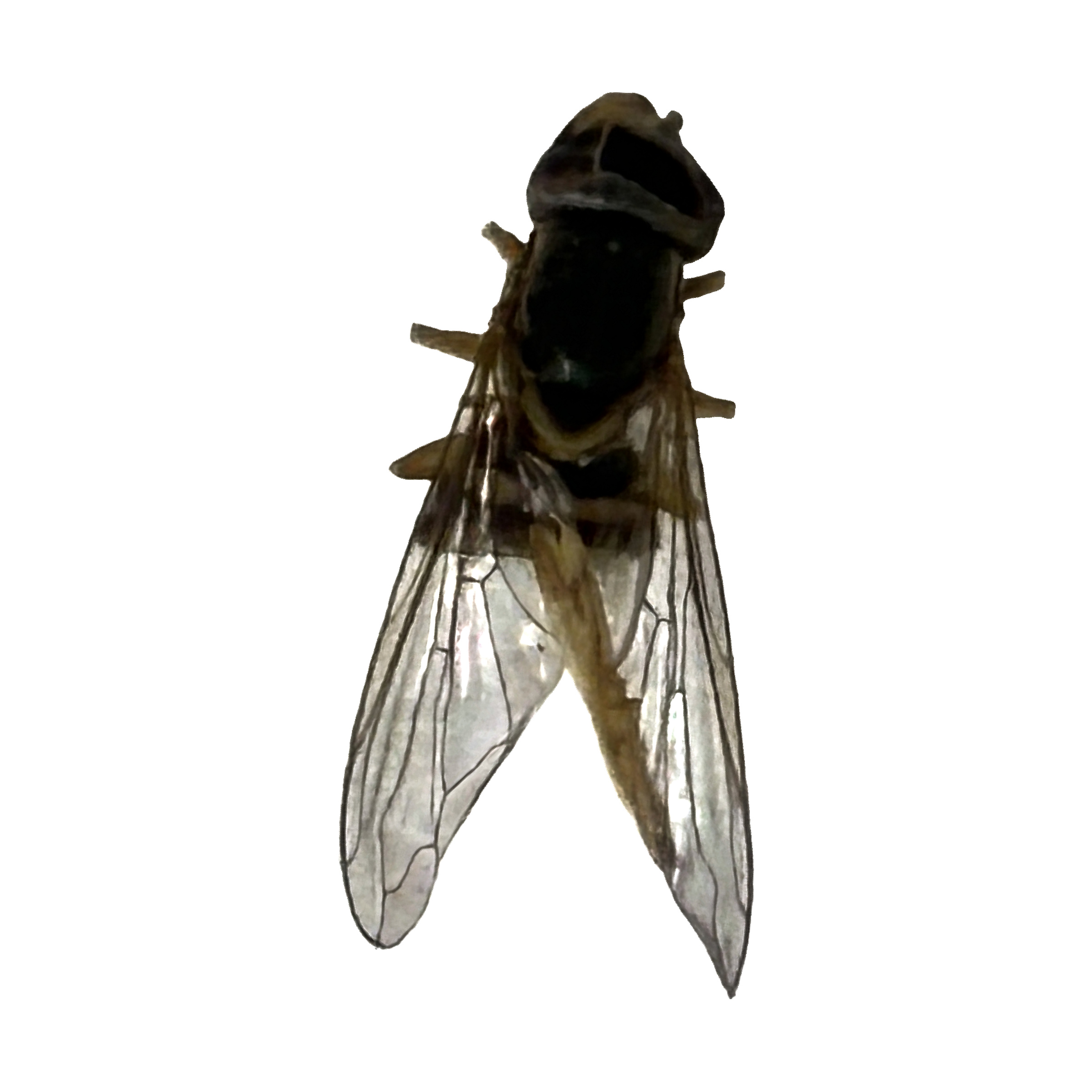
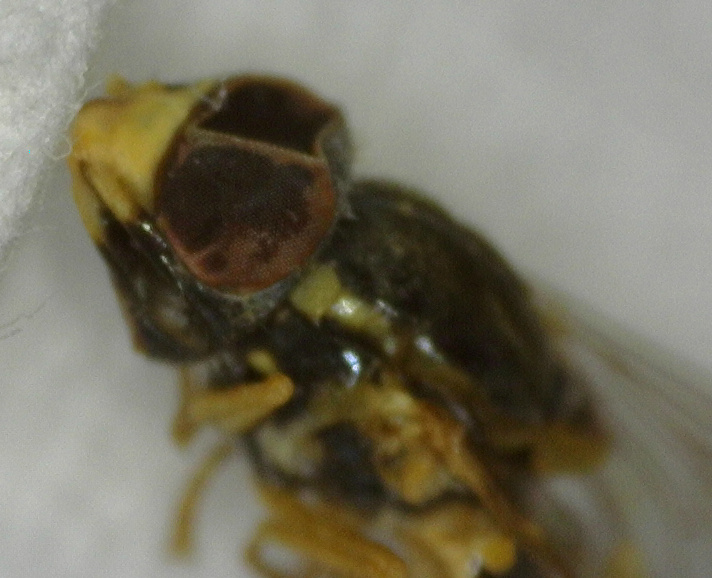
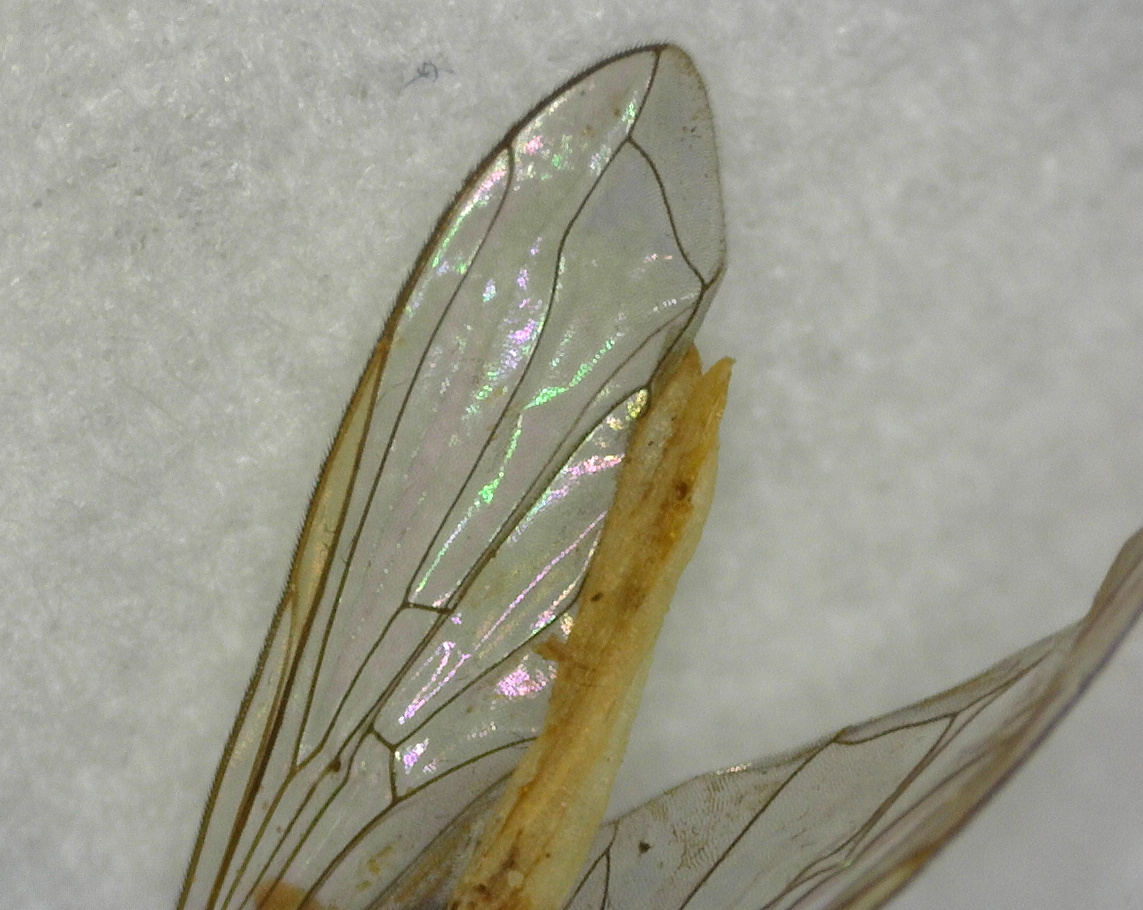
The Hover Fly in this listing belongs to the genus Paragus in the family Syrphidae, the hover flies, also called flower flies. This specimen is about 3 to 4 mm long, a very small hover fly. It is a male: the eyes meet at the top of the head (holoptic). The face is pale yellow. The thorax is shiny black, with yellow markings on the sides. The abdomen is dark, with faint pale bands. The legs are orange yellow. The wings are clear. The identification is at the genus level and is tentative. Species in this genus are often separated only by a closer look, including the male genitalia, so this specimen is listed as Paragus sp.
The genus is found nearly worldwide, including most of North America. Adults are often found on low vegetation and seem to favor open, sunny areas. Some of our specimens were collected in Missouri.
Adults visit flowers and feed on nectar and pollen. They do not bite or sting. They hover in the manner typical of hover flies. The larvae prey on aphids.
Like other true flies, these hover flies have complete metamorphosis: egg, larva, pupa, and adult. The larvae are predators of aphids. There are probably several generations each year.
These hover flies are not pests and are harmless to people. They do not bite or sting. The adults visit flowers and may help with pollination. The larvae prey on aphids, including species that damage plants, so they are considered beneficial. The preserved specimens are used in teaching and collections, and they are a good example of a very small syrphine hover fly.
Paragus Latreille, 1804 belongs to the family Syrphidae (hover flies or flower flies), the subfamily Syrphinae, the tribe Syrphini, and the order Diptera (true flies). There are 9 named species in 2 subgenera in North America. A sure species identification often requires a closer look than a photo can provide, including the male genitalia, and this identification is tentative at the genus level, so this specimen is listed as Paragus sp.
This preserved specimen educates on hover flies and the genus Paragus, suitable for displays or studies.
Check it out on BugGuide! https://bugguide.net/node/view/7392/bgimage