Appearance
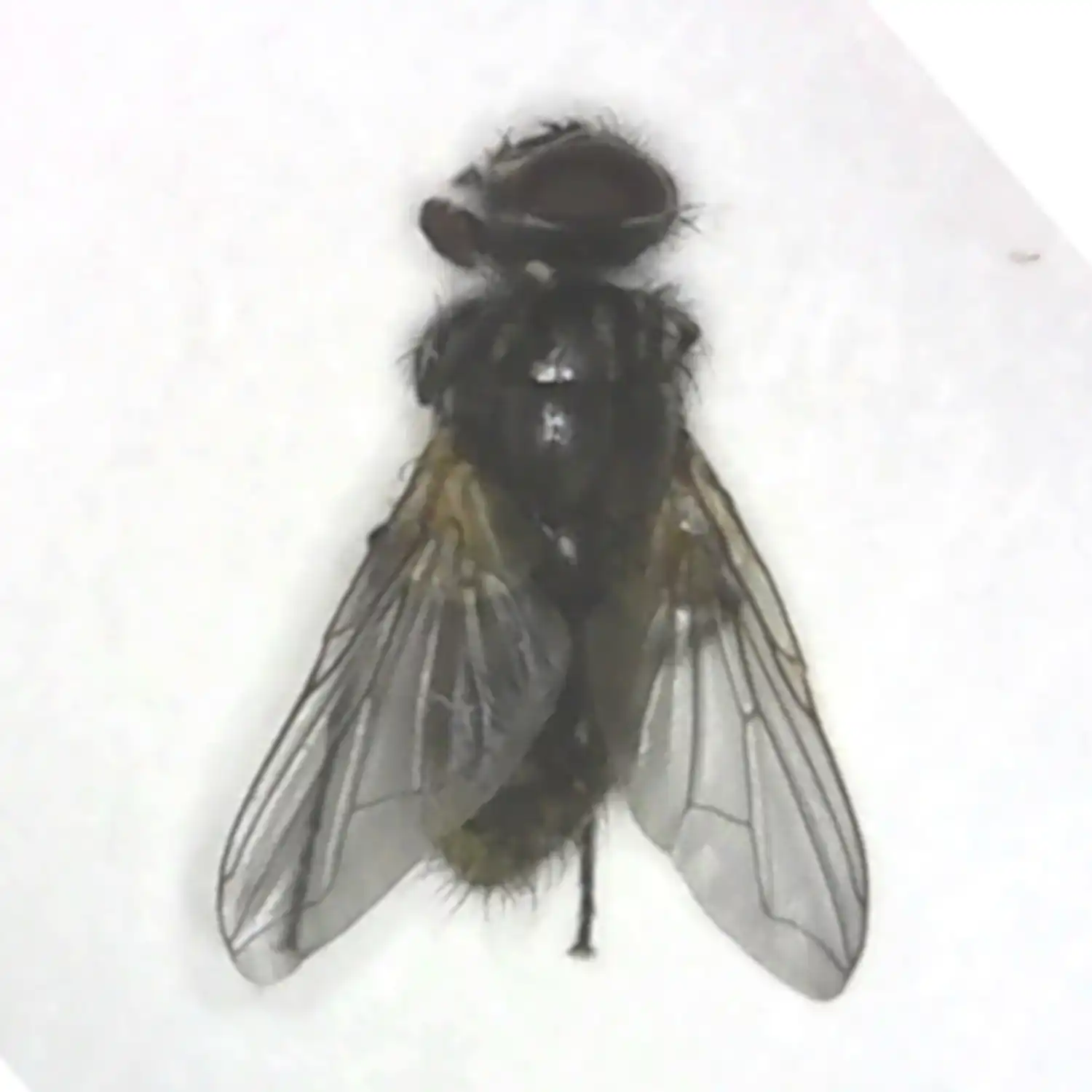
The House Fly, Musca domestica, is a small dipteran with a body length of 6 to 7 mm, where females tend to be slightly larger than males. Its grayish thorax features four longitudinal dark lines, while the abdomen shows a yellowish underside with darker dorsal bands. Compound eyes are reddish and holoptic in males, more separated in females. Wings are clear with a slight iridescence, and the halteres are reddish. Larvae appear as creamy white maggots, 3 to 12 mm long, legless and tapered. Pupae form in reddish-brown cases up to 8 mm. These traits aid quick identification from similar flies like face flies.
Habitat and Range
As a cosmopolitan species of Eurasian origin, the House Fly inhabits human-associated sites worldwide, from homes and farms to garbage dumps. It favors warm, humid environments with rotting plant or animal matter, such as manure piles or sewage. Adults rest on ceilings indoors or vegetation outdoors at night. Active from spring through fall, it thrives in temperate to tropical climates but can persist year-round in heated buildings.
Behavior
House Flies are active diurnals, feeding on liquids from fresh or fermenting foods by regurgitating saliva to liquefy solids. They transmit over 100 pathogens via contaminated legs, mouthparts, or feces, posing health risks. Females lay up to 500 eggs in moist organic debris, often in batches of 75 to 150 that pile into masses. Larvae burrow into substrates like garbage or manure for feeding. Adults buzz persistently and aggregate in sunny spots, drawn by odors.
Life Cycle
The rapid life cycle completes in 7 to 10 days during summer, allowing up to 12 generations annually. Eggs hatch in 8 to 20 hours into first-instar larvae, which progress through three instars over days. Mature larvae migrate to dry, cool sites up to 15 meters away to pupate for 3 to 6 days. Adults emerge and live 15 to 25 days, overwintering as larvae or pupae in protected manure or soil. This efficiency fuels population booms in ideal conditions.
This preserved specimen highlights urban pest biology, perfect for entomology education. Check it out on BugGuide! https://bugguide.net/node/view/39559

 <—
<—