
$3.00
 <–
4 in stock
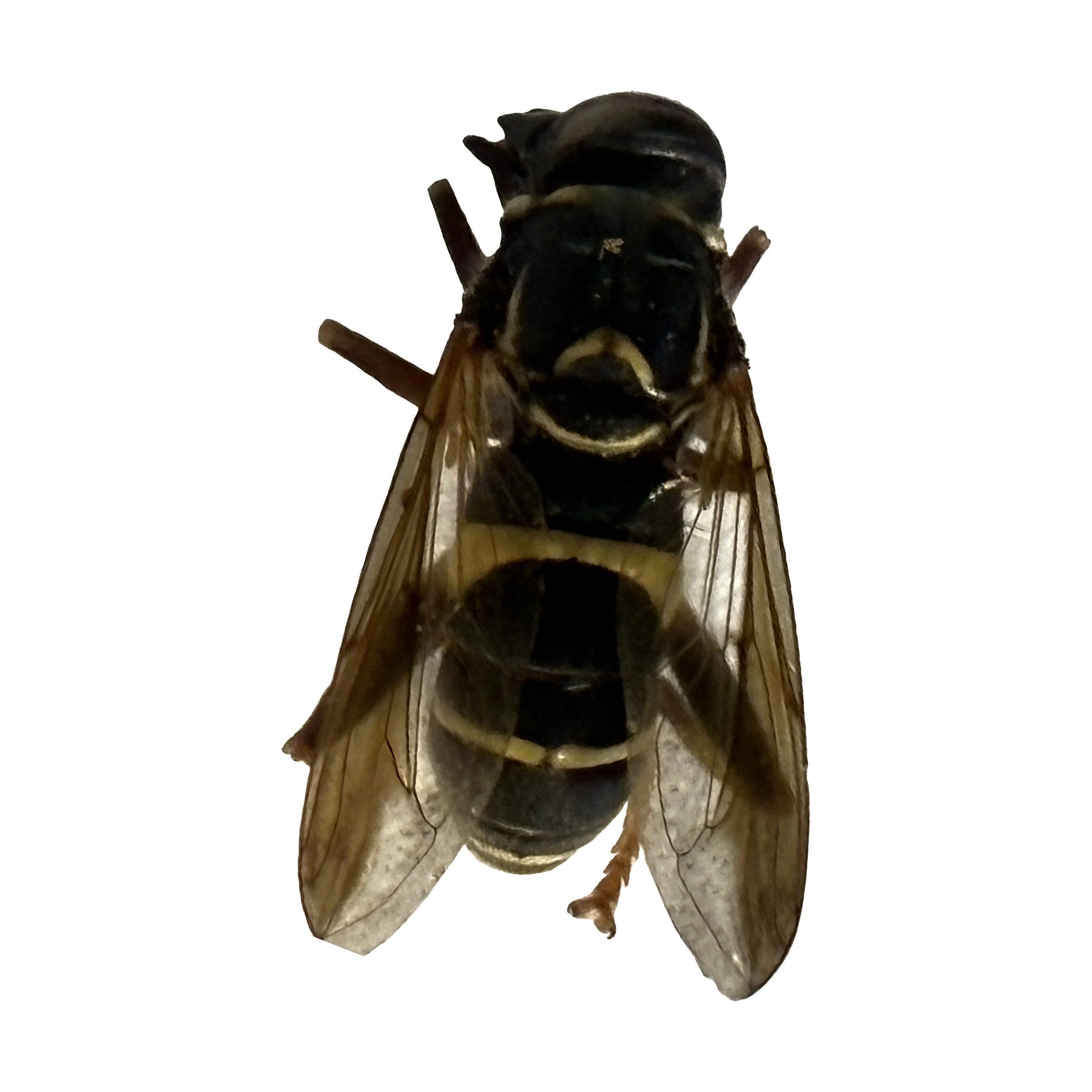
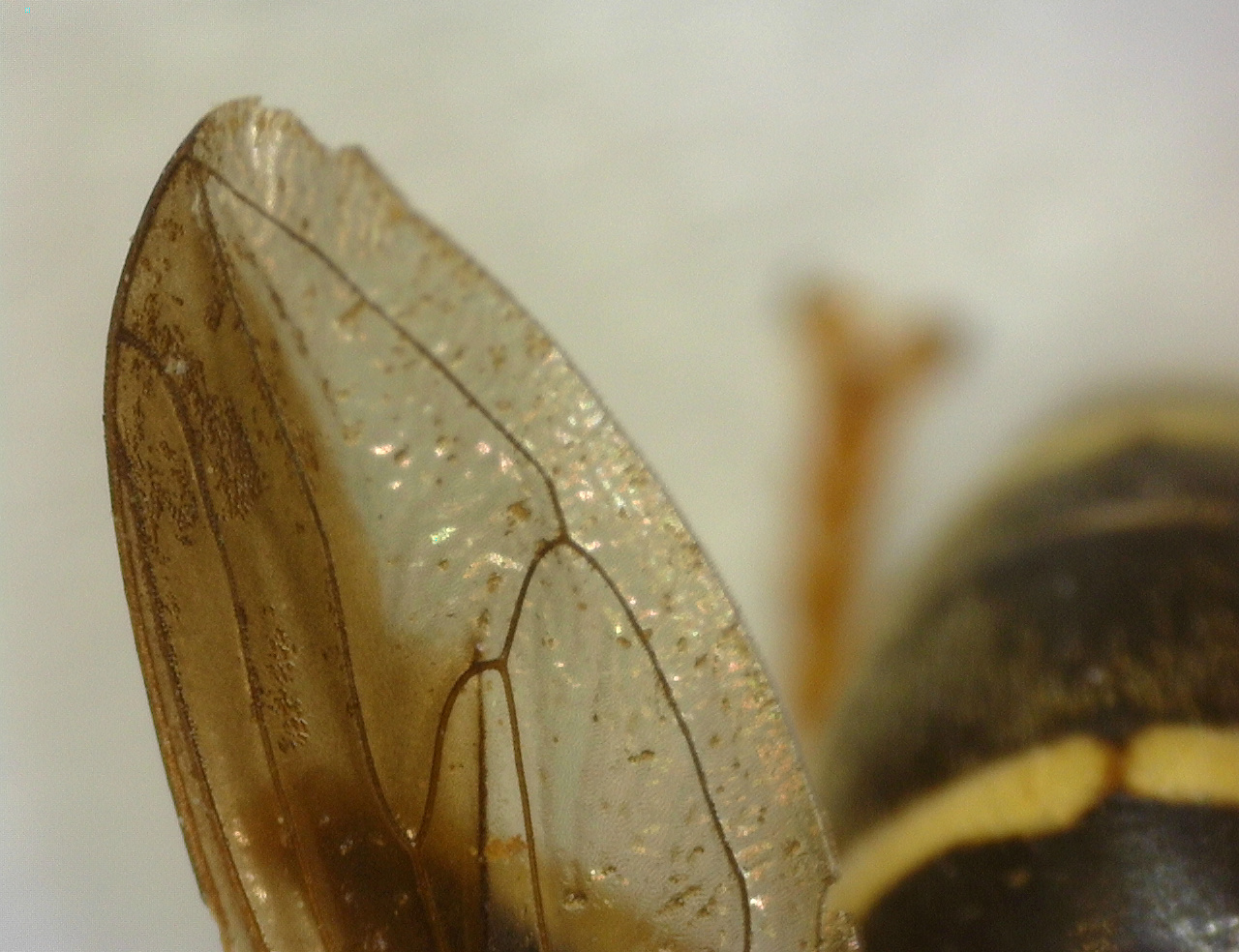
The Hornet Fly belongs to the genus Spilomyia in the family Syrphidae, the hover flies, also called flower flies. Adults in this genus are typically about 12 to 17 mm long. They are convincing mimics of social wasps, such as yellowjackets and hornets. The body is usually black with yellow or cream marks. The thorax often has yellow spots at the shoulders and a V-shaped yellow mark. The abdomen has narrow yellow bands. The wings are often amber or brown along the front edge, which adds to the wasp-like look. The antennae are short. A useful genus mark is the vein near the wing tip, vein R4+5, which is nearly straight or only gently curved, not deeply looped as in Meromacrus or Eristalis. The specimens in stock are about 12 mm long, measured from the head to the tip of the abdomen. They have a black body with yellow thoracic marks, narrow yellow bands on the abdomen, amber-tinted wings with a darker front margin, and brownish legs.
The genus occurs in the New World and in Eurasia. In North America it is widespread, with some species in the East, some in the West, and a few in the Southwest. It is less often recorded in the southeastern United States. Adults are usually found in or near woods, often at flowers, in summer and fall. The larvae live in water-filled tree holes and in the damp, decaying heartwood of deciduous trees.
Adults visit flowers and feed on nectar. They do not bite or sting. They are Batesian mimics of social wasps: the body pattern, the darkened front edge of the wing, and their behavior all add to the resemblance. They may rest on the four hind legs and wave the front legs in a way that looks like a wasp moving its antennae. The front legs are often darker toward the tips.
Like other true flies, hornet flies have complete metamorphosis: egg, larva, pupa, and adult. The larvae develop in damp rotting wood, including water-filled tree holes and decaying heartwood. Adults are usually seen in summer and fall.
Hornet flies are not pests and are harmless to people. They do not bite or sting. The adults visit flowers and may help with pollination. The larvae feed in decaying wood and help break it down. The preserved specimens are used in teaching and collections, and they are a good example of wasp mimicry in hover flies.
Spilomyia Meigen, 1803 belongs to the family Syrphidae (hover flies or flower flies), the subfamily Eristalinae, the tribe Milesiini, and the order Diptera (true flies). There are about 11 species in North America, about 17 species in the New World, and more than 100 species in Eurasia. The genus is closely related to Milesia, which includes the Yellowjacket Hover Fly. It can be confused with other wasp-mimic hover flies such as Temnostoma and Meromacrus. Besides the nearly straight vein R4+5, Spilomyia often has a pattern of pale marks on the eyes and a small tooth on the hind femur. A sure species identification often requires several close views of the thorax marks, abdomen bands, and sometimes the eyes or legs, so these specimens are listed at the genus level as Spilomyia sp.
This preserved specimen educates on hornet flies and the genus Spilomyia, suitable for displays or studies.
Check it out on BugGuide! https://bugguide.net/node/view/3288/bgimage