Appearance
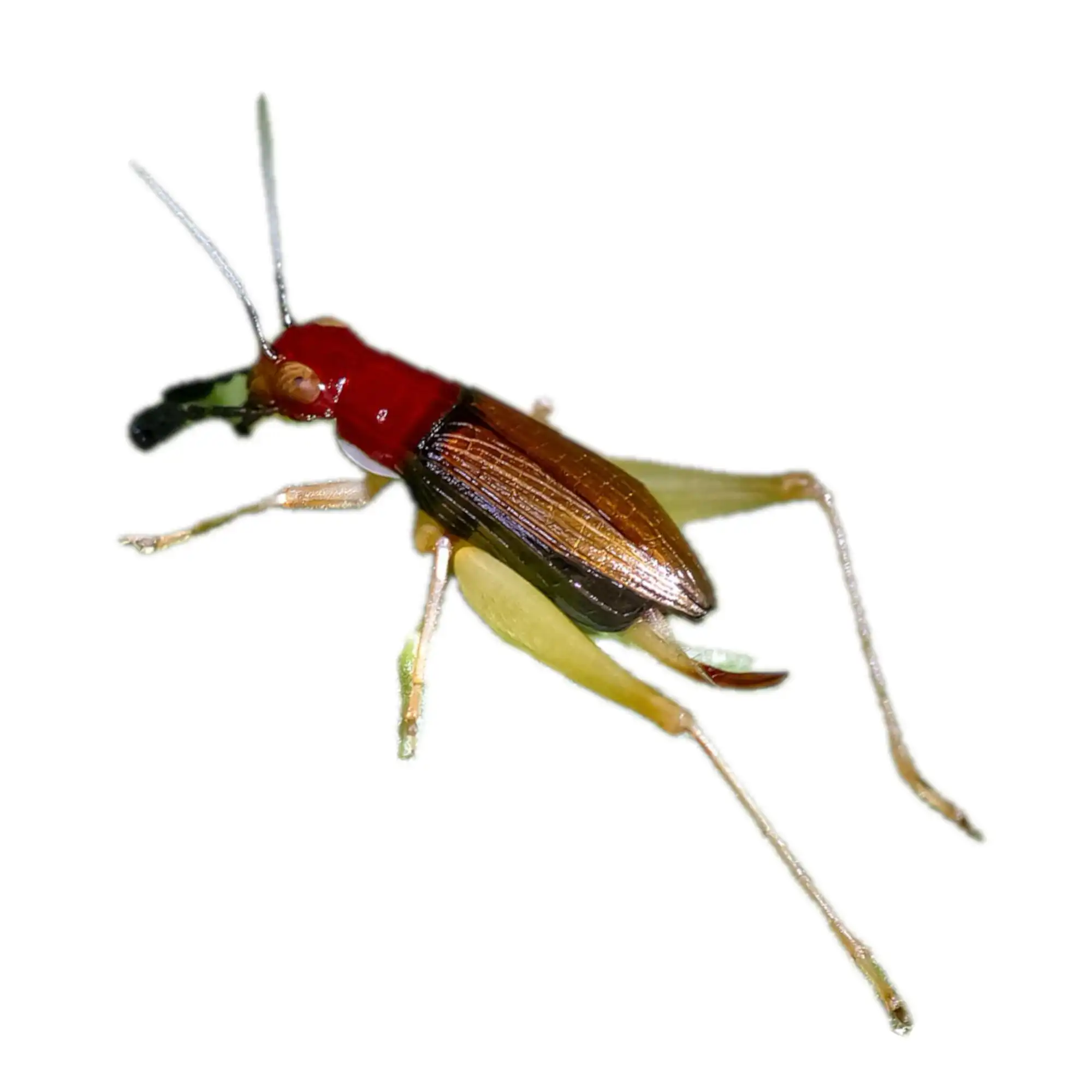
The Handsome Trig displays a vivid red body, legs, cerci, and palps that contrast sharply with jet-black wings. Males measure about 9-12 mm in body length, while females reach slightly larger sizes. The pronotum covers the head from above, and the forewings appear short and rounded. This bright coloration makes it one of the most visually striking crickets in North America.
Habitat and Range
This species inhabits deciduous forests, woodlands, and shrubby areas across eastern and central United States. The range extends from Florida north to New York and Ontario, west to Texas and Nebraska. It favors moist, leafy environments under logs, bark, or leaf litter where it hides during daylight hours.
Behavior
Nocturnal by nature, males produce a clear, melodious trill to attract females from dusk onward. Both sexes act as predators, hunting small insects and scavenging organic matter. They move deliberately on vegetation or ground, using long cerci for sensory detection. The red coloration may serve aposematic purposes, warning potential predators of distastefulness.
Life Cycle
Eggs overwinter in soil or under bark, hatching in spring. Nymphs resemble smaller adults, molting through several instars over summer while feeding actively. Adults appear by late summer, mating and calling through fall. One generation completes annually in temperate regions, with overwintering eggs ensuring survival.
Economic Impact
Neutral economically, the Handsome Trig neither damages crops nor provides significant benefits beyond natural ecosystem balance. As a predator of small insects, it contributes minimally to pest control in forests without impacting agriculture.
This preserved specimen highlights the vivid red and black contrast, ideal for orthopteran displays and education. Check it out on BugGuide! https://bugguide.net/node/view/592

 <—
<—