
$3.00
 <—
9 in stock
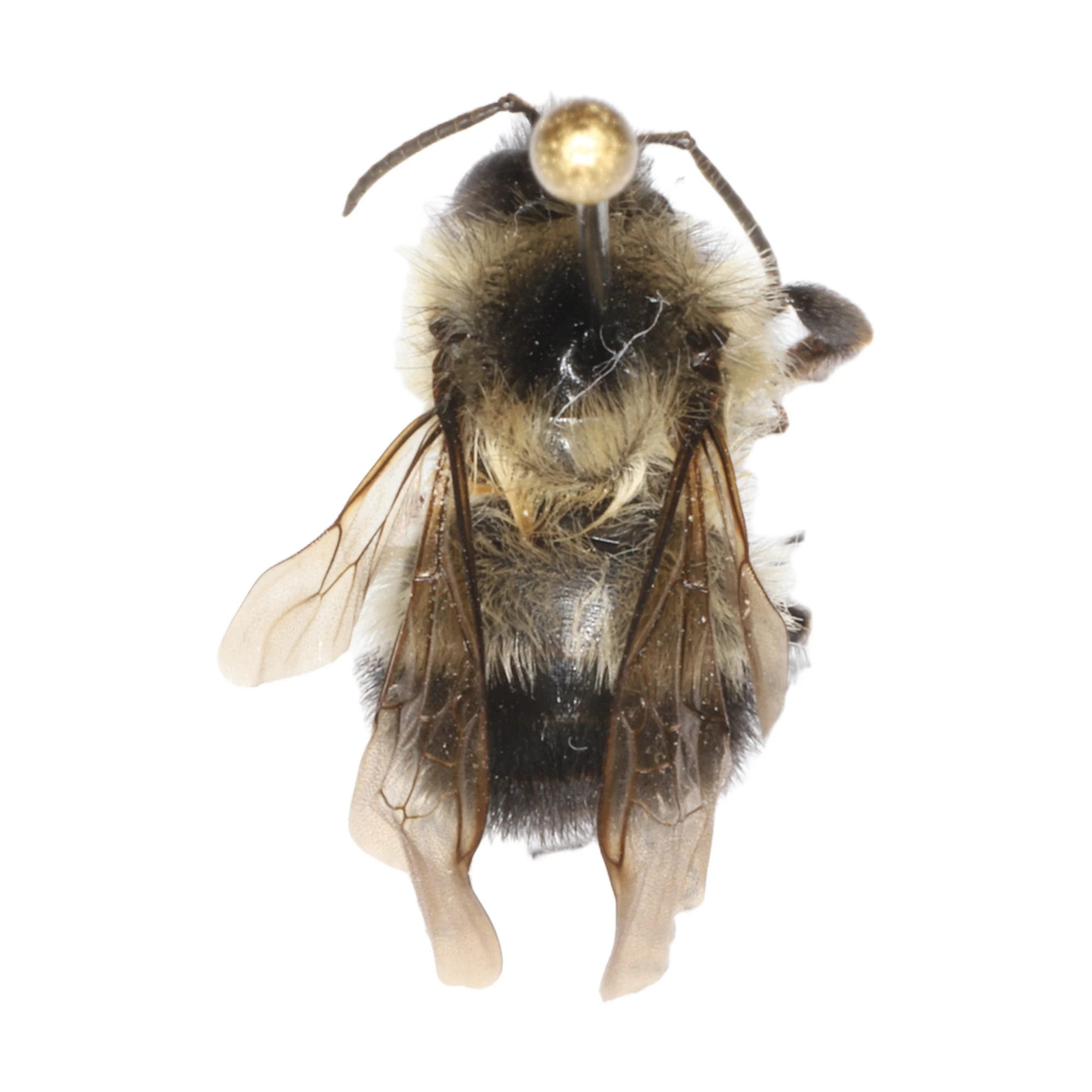
Bombus vagans is a small to medium bumble bee, with workers about 8 to 14 mm long. Its name comes from its abdomen, which is yellow on the first two segments and black on the back half. The thorax is yellow with a black spot between the wings, and the face is fairly long, which helps it reach into deep flowers.
It is found across southern Canada and the northern United States, from the Rocky Mountains east to the Atlantic coast and south through the Appalachians. It lives in meadows, open woods, forest edges, wetlands and gardens.
Half-black bumble bees live in small social colonies. With their longer tongue they favor deep flowers like clover, milkweed, bee balm, vetch, goldenrod and touch-me-not, and they can buzz-pollinate. They are gentle and sting only when handled or when the nest is disturbed.
A mated queen comes out of hibernation in spring and nests on or just under the ground, often in grass tussocks or old rodent nests. She stocks wax cells with pollen and lays eggs, and the larvae go through complete metamorphosis (egg, larva, pupa, adult). Workers take over through summer, new queens and males are raised in late summer, and only the mated queens survive the winter.
Half-black bumble bees are beneficial pollinators of wildflowers, clover, blueberries and cranberries in northern areas. It is still a fairly common species, though it has declined in some places.
This preserved specimen educates on native bumble bees and pollinators, suitable for displays or studies. Check it out on BugGuide! https://www.bugguide.net/node/view/17720
Only logged in customers who have purchased this product may leave a review.
Reviews
There are no reviews yet.