
$8.95
 <–
2 in stock
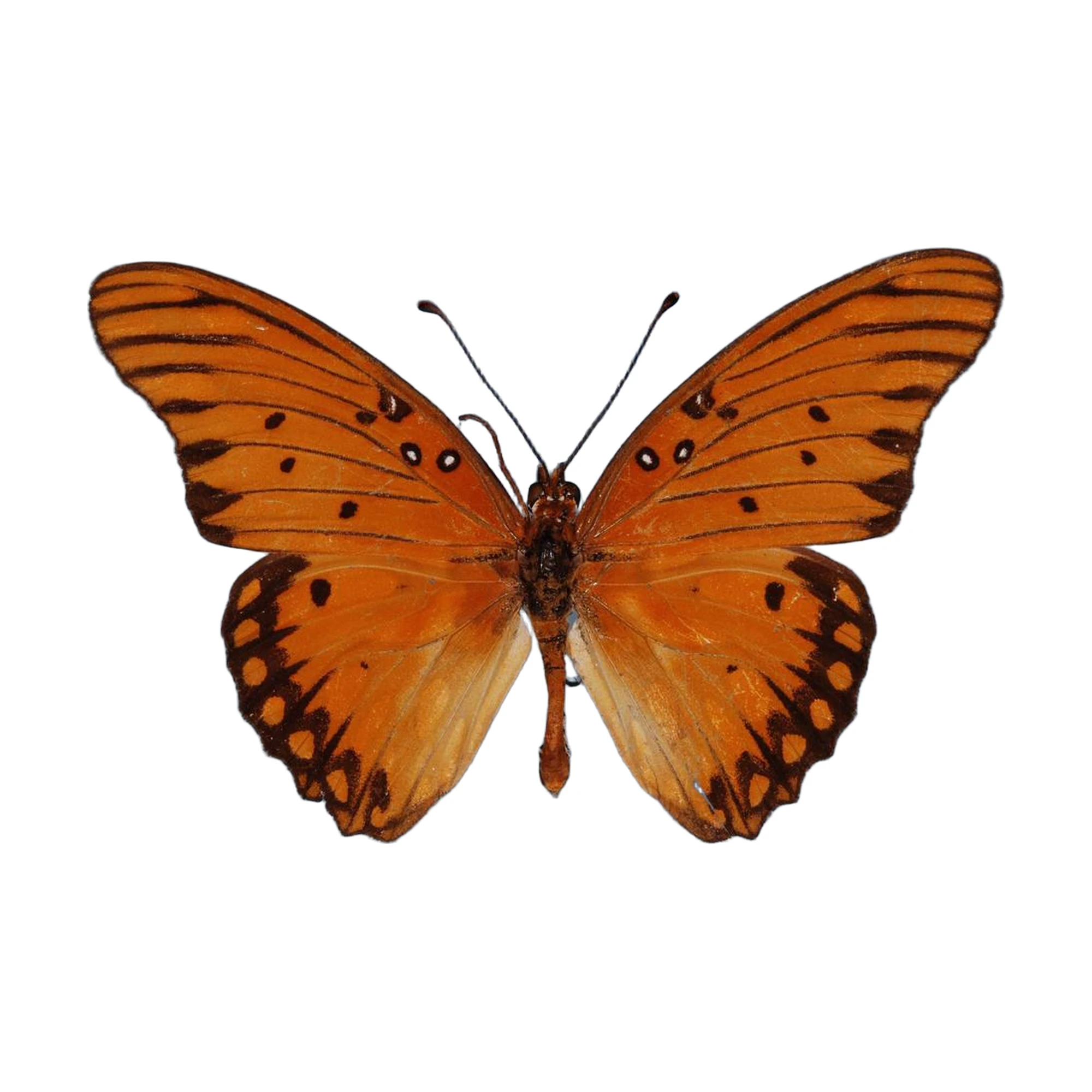
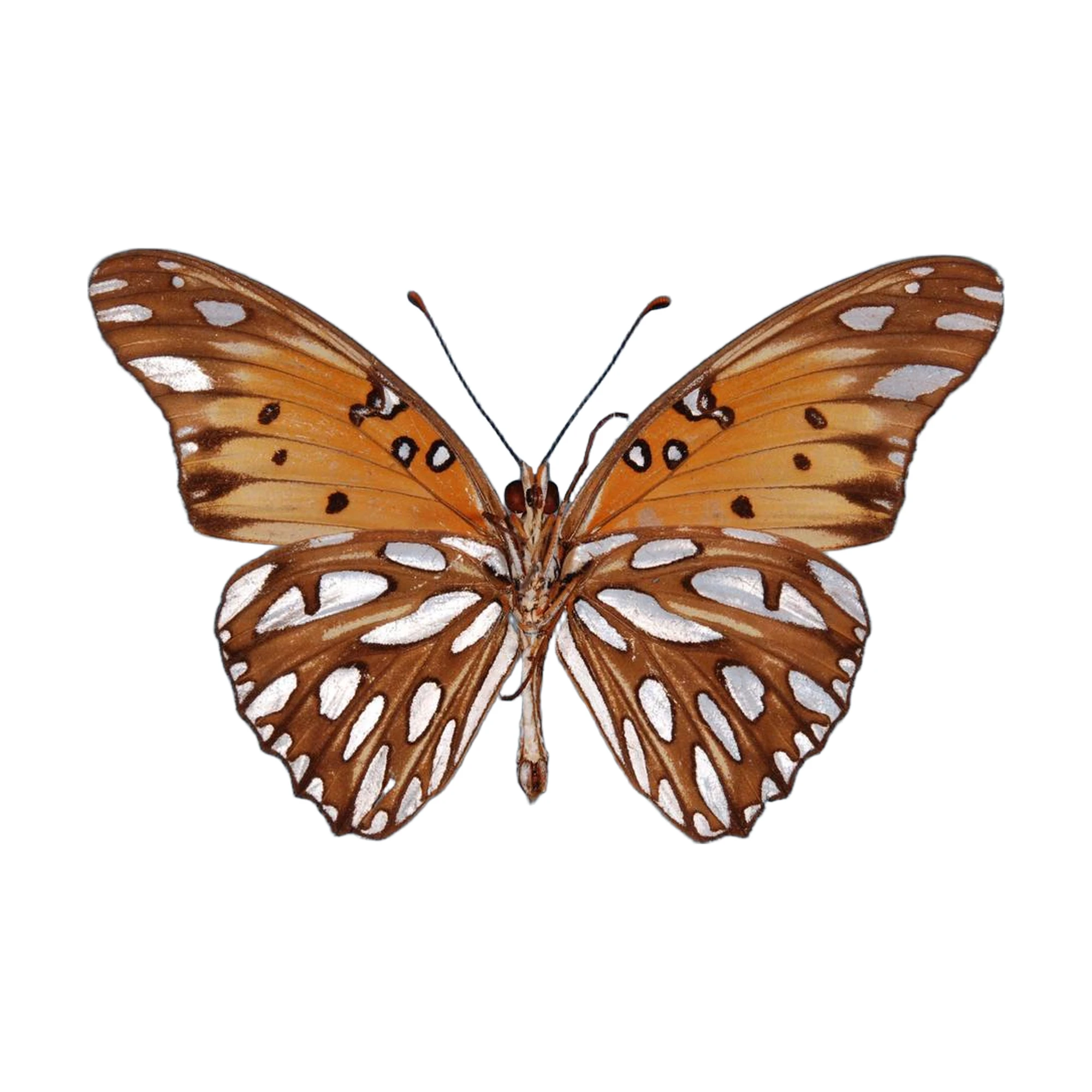
The Gulf Fritillary, Agraulis vanillae, is a medium-sized, bright orange butterfly with a wingspan of 63 to 95 mm (about 2 1/2 to 3 3/4 inches). The forewings are long and narrow. The dorsal side is orange with black markings, and each forewing has three black-rimmed white spots near the front edge. Females are somewhat darker and more heavily marked than males. The ventral side is brown and orange with long, shiny silver-white spots, which is the easiest way to know it from other orange butterflies. Our photos show spread museum specimens of the same species, dorsal and ventral. BugGuide, following a 2022 revision, lists the species in the United States as Agraulis incarnata, and some other sources use the name Dione vanillae.
The Gulf Fritillary lives in open, sunny places such as roadsides, fields, pastures, open woodland edges, yards, and parks. It is common in the southern United States and ranges south through Mexico, Central America, and the West Indies to South America. In spring, adults move north and form temporary breeding colonies across the Southeast. Single strays sometimes reach the central United States but rarely the Midwest. From late summer into fall, large numbers fly south into peninsular Florida.
Males patrol to find females. The flight is quick and erratic, but the adults readily stop to take nectar from flowers such as lantana, shepherd’s needle, and many composites (daisy family plants). They are regular visitors to butterfly gardens. Adults live only about two to four weeks after they come out of the chrysalis.
Complete metamorphosis (egg, larva, pupa, adult). The female lays small yellow eggs one at a time on or near the leaves, stems, or tendrils of passionflower vines (Passiflora), including maypop, corkystem passionflower, and yellow passionflower. The caterpillar is bright orange with black branched spines and dark stripes, and it eats all parts of the plant. The chrysalis is mottled brown, looks like a dead leaf, and hangs on a twig or other support. There are several generations a year, and adults can be found in every month in much of Florida.
Not known as a serious pest. The caterpillars can quickly strip the leaves from passionflower vines, but we found no record of crop damage.
Our specimen was collected in Oglethorpe County, Georgia.
This preserved specimen shows the orange dorsal wings with their black markings and the ventral hindwings with their long silver spots, ideal for butterfly education and displays. Check it out on BugGuide! https://bugguide.net/node/view/567/bgimage
Photos: Yale Peabody Museum (YPM ENT 423004), photo by Paul Shamble, CC0, via iDigBio. Cropped, background removed. Photos are representative examples, not the exact insect you will receive.