
$3.00
 <—
32 in stock
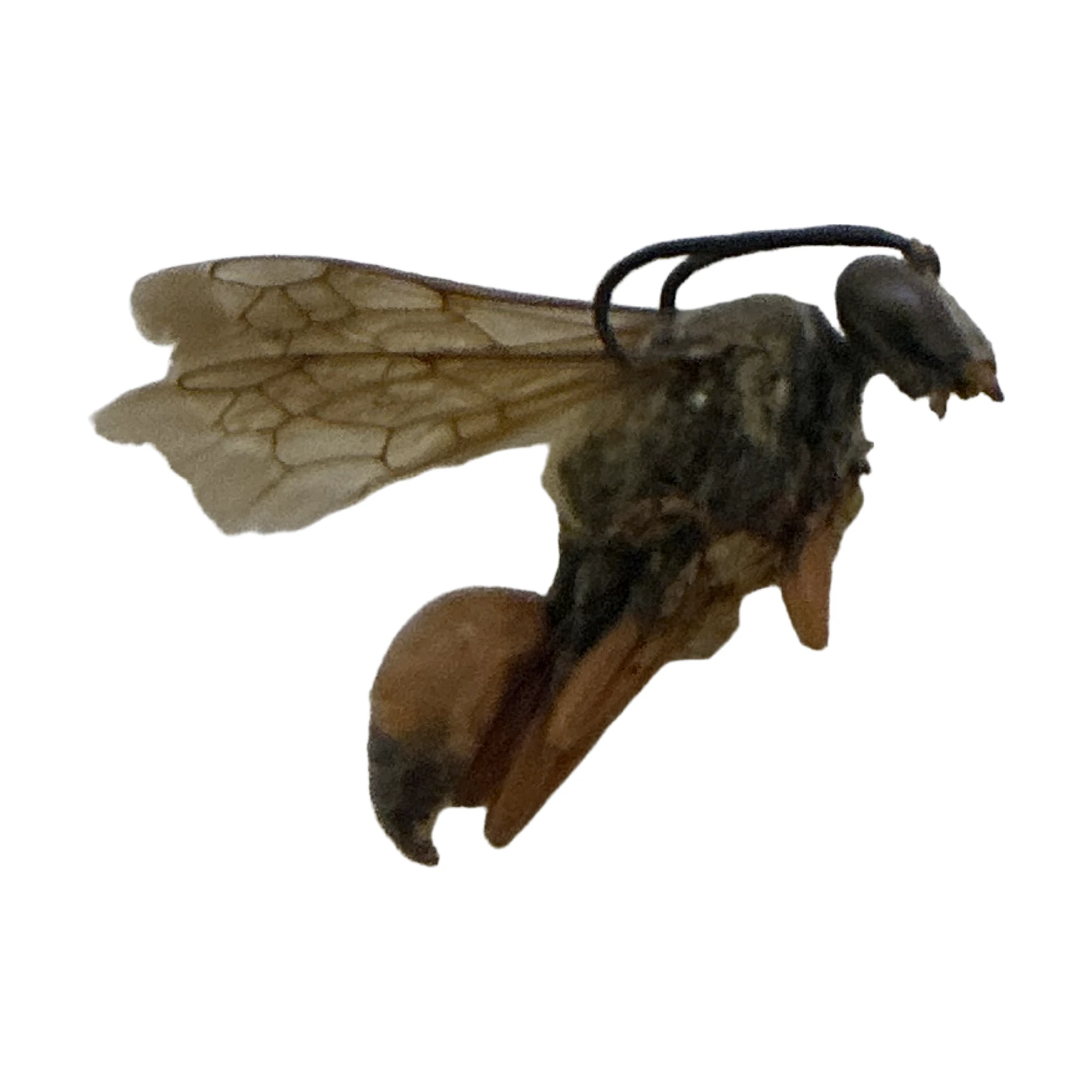
The Great Golden Digger, Sphex ichneumoneus, is a large, solitary thread-waisted wasp measuring 15 to 27 mm long. The head and thorax are covered with golden hair, which gives the wasp its name. The front of the abdomen, the first two or three segments, is orange to rusty red, and the rest of the abdomen is shiny black. Wing color varies by region: eastern specimens usually have dark wings, while western ones have clear wings.
This wasp ranges across North America, from southern Canada through all of the United States, and south through Mexico and Central America as far as Brazil and Peru. It lives in fields, meadows, prairies, and other open, grassy areas where there is sandy, gravelly, or hard-packed soil for nesting. Nests are often clustered in colonies, sometimes of a few to hundreds of females, in open, sunny spots with the right soil. Some of our specimens were collected near Hot Springs, South Dakota.
Adults are active from June to early September in the North and from April to November in the South. They are frequent flower visitors that drink nectar from milkweed, mountain mint, boneset, goldenrod, rattlesnake master, spotted beebalm, white prairie clover, and other flowers. Each female digs her own nearly vertical burrow, loosening the soil by vibrating her flight muscles while gripping the soil in her jaws, then sweeping it out with her legs. She hunts katydids, especially coneheads and meadow katydids, and sometimes crickets, paralyzes them with her sting, and hauls them home by the antennae. Before taking prey inside she often leaves it at the entrance and checks the burrow first. The wasps often flick their wings while walking about. Like other solitary wasps, it is not aggressive and stings only if handled or seriously disturbed.
Sphex ichneumoneus undergoes complete metamorphosis (egg, larva, pupa, adult). The female’s burrow goes 3 to 12 inches into the soil, with 2 to 7 cells branching off the main shaft. She stocks each cell with one to six paralyzed katydids and lays a single egg on one of them, then seals the nest by kicking soil into it and packing it down with her head. A female usually digs several nests over the summer. The egg hatches in 2 to 3 days, and the larva finishes feeding in about a week. The young spend the winter underground in the nest and emerge as adults the following summer. There is one generation per year in the North and at least two in warmer areas. Adults live about one to two months.
The Great Golden Digger is beneficial. It preys on katydids and crickets, which feed on garden and crop plants. Its digging aerates the soil and helps water soak into the ground, and the adults are busy flower visitors that help pollinate milkweed and other wildflowers. It is not a pest and is not aggressive toward people.
This preserved specimen educates on solitary digger wasps and their role as predators and pollinators, suitable for displays or studies. Check it out on BugGuide! https://bugguide.net/node/view/414