Appearance
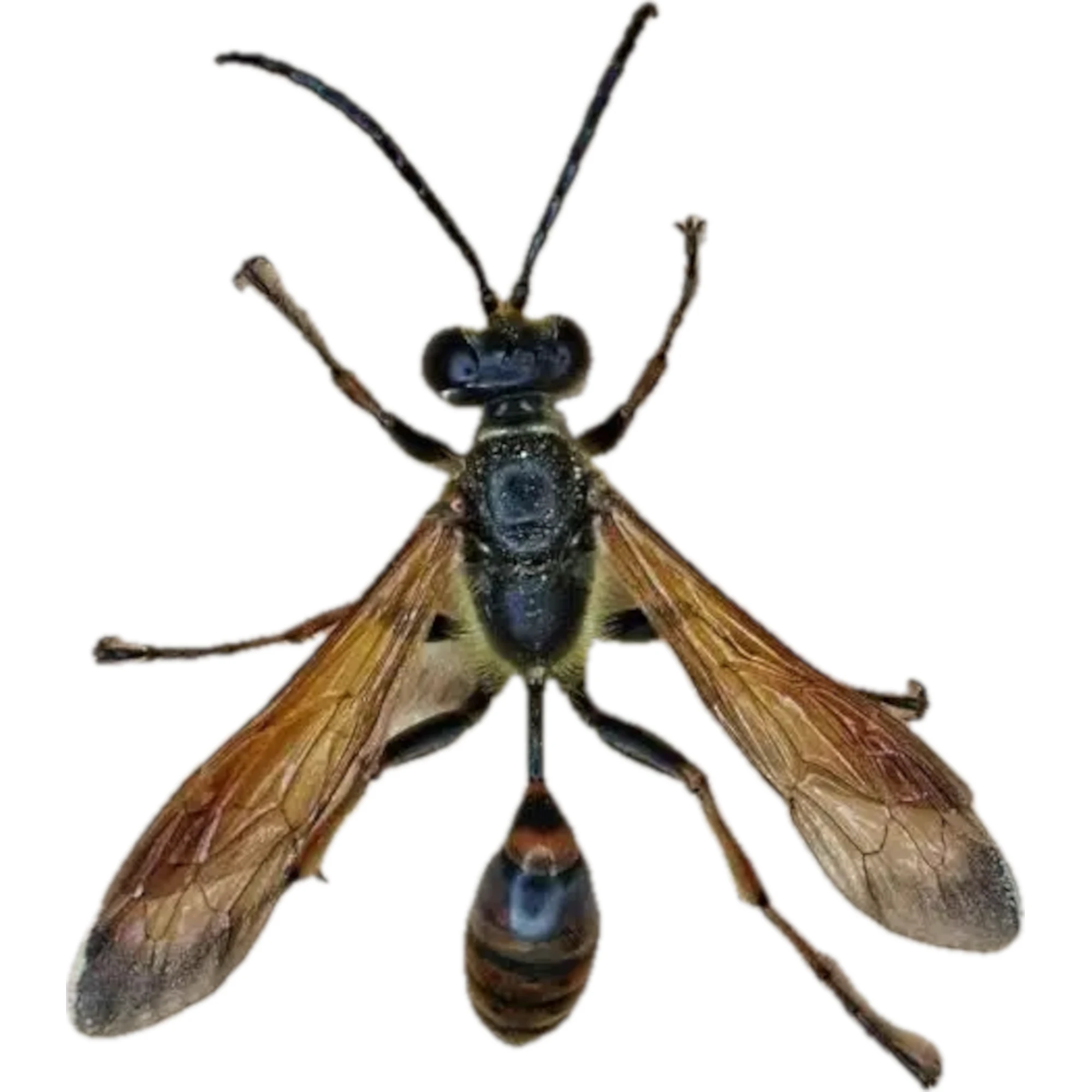
Grass-carrying Wasps range from 12 to 22 mm in length. Bodies appear mostly black with variable reddish or yellowish markings on legs and abdomen. Wings show smoky hues. The head features prominent mandibles for carrying grass. Species like I. mexicana display reddish legs and abdomen.
Habitat and Range
These wasps inhabit fields, gardens, and woodland edges across North America. They frequent areas with abundant grass and flowers for foraging. The genus spans from Canada to Mexico, with species like I. apicalis in eastern US and I. mexicana in southwest regions.
Behavior
Adults visit flowers for nectar while hunting prey like crickets and katydids to provision nests. Females excavate burrows in wood or use existing cavities, lining them with grass blades for partitions. They paralyze prey with stings before storing in cells. Solitary but may nest communally.
Life Cycle
Females lay eggs on paralyzed prey in grass-lined cells. Larvae consume the provisioned insects, pupating within cocoons. Adults emerge in spring to summer, with one or two generations per year depending on climate. Overwintering occurs as prepupae in nests.
Economic Impact
Beneficial as predators, these wasps control pest orthopterans like crickets in gardens and crops. No direct harm noted; they support natural pest management without economic costs.
This preserved specimen highlights the grass-nesting behavior, ideal for entomology studies and displays. Check it out on BugGuide! https://bugguide.net/node/view/5691

 <—
<—