
$3.00

89 in stock
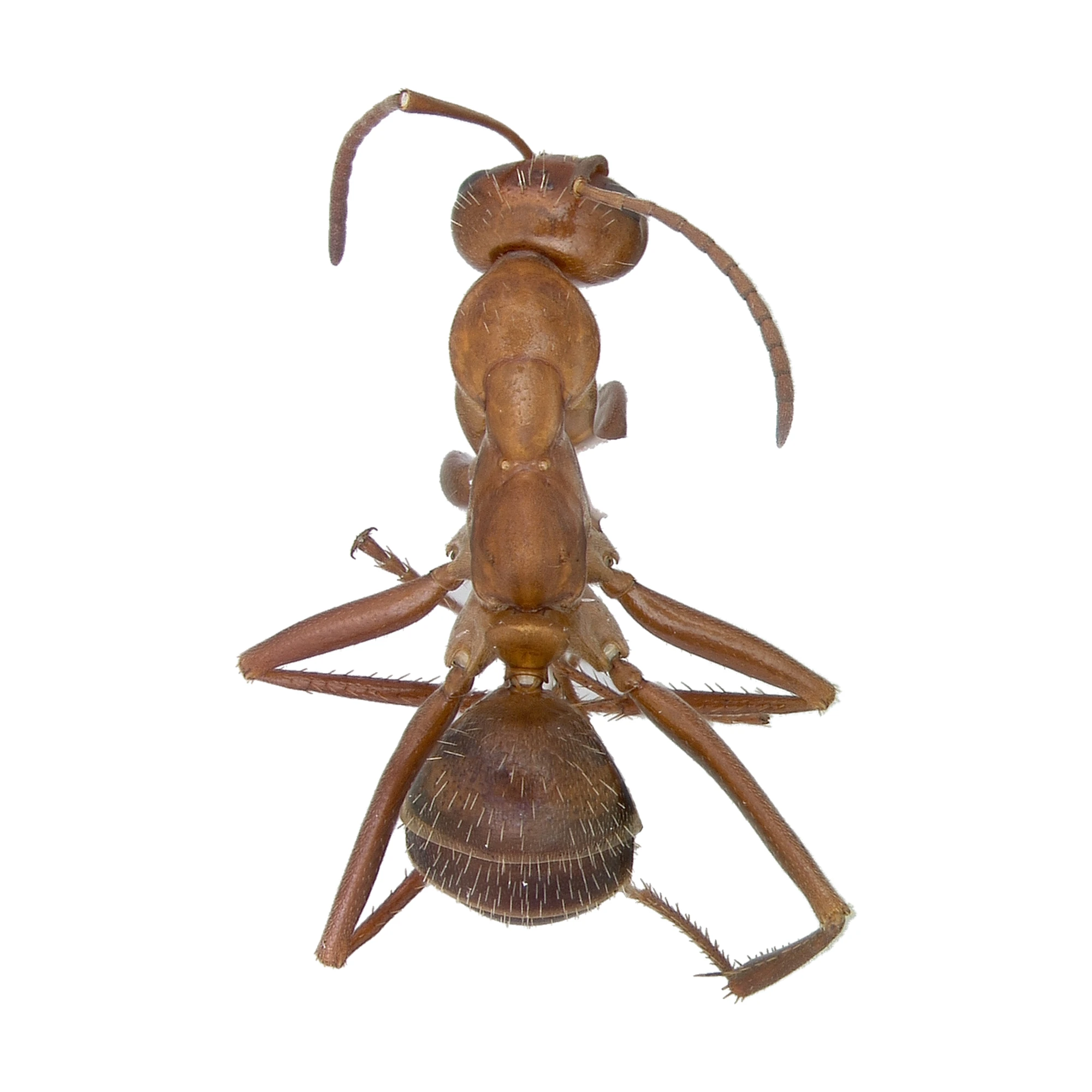
Formica ants are medium-sized ants, with workers about 4 to 8 mm long. Depending on the species they are black, gray, brown, reddish or two-toned, often with a reddish head and thorax and a darker abdomen, and many have a fine silvery or silky sheen. They have a single-segmented waist with an upright, scale-like node, 12-segmented antennae with no club, three small simple eyes (ocelli) on top of the head, and a thorax with an uneven, stair-stepped profile. Workers in some species vary in size, but they are not divided into distinct size classes. Like other ants in their subfamily, they have no working stinger. These are real, US-collected worker specimens from Missouri.
The genus Formica is found across the Northern Hemisphere, with about 100 species in the United States and Canada. These ants are known as wood ants, field ants and mound ants. Most species live in open woodlands, forest openings, fields and grasslands. They nest in soil, under stones and logs, or in rotting wood on the ground, and some species build mounds of soil or plant material. These specimens were collected under a log in the woods of Phelps County, Missouri.
Formica workers are fast-moving, sharp-eyed daytime foragers. They hunt and scavenge many kinds of insects and other small animals, and they eagerly collect honeydew from aphids and other sap-feeding insects, and nectar from plants, often climbing high into trees to find it. Instead of stinging, they defend themselves by biting and spraying formic acid from the tip of the abdomen. A few species raid the nests of other Formica ants, carry off their pupae and raise them as workers in their own colony.
Like all ants, Formica ants go through complete metamorphosis (egg, larva, pupa, adult), and their pupae are enclosed in silk cocoons. Workers are sterile females. Winged queens and males leave the nest on mating flights, mostly from late June to early August. In many species a mated queen starts a new colony on her own. In others she cannot, and instead joins an existing nest of her own species or takes over a colony of another Formica species, whose workers then raise her brood. Some species have many queens and form large networks of connected nests.
Formica ants rarely come indoors and are seldom household pests. Because they tend aphids, they can increase aphid numbers on garden plants, and a few mound-building species kill small trees and shrubs near their mounds with formic acid. They are also very beneficial. They prey on large numbers of pest insects, turn over and aerate the soil, and are an important food for birds such as flickers and for bears. Formic acid itself is named after these ants, from the Latin word formica, meaning ant.
This preserved specimen educates on the common wood and field ants of North America and their role in forest and grassland ecosystems, suitable for displays or studies. Check it out on BugGuide! https://bugguide.net/node/view/16569
| Weight | 0.01 lbs |
|---|
Only logged in customers who have purchased this product may leave a review.
Reviews
There are no reviews yet.