
$3.00
 <–
16 in stock
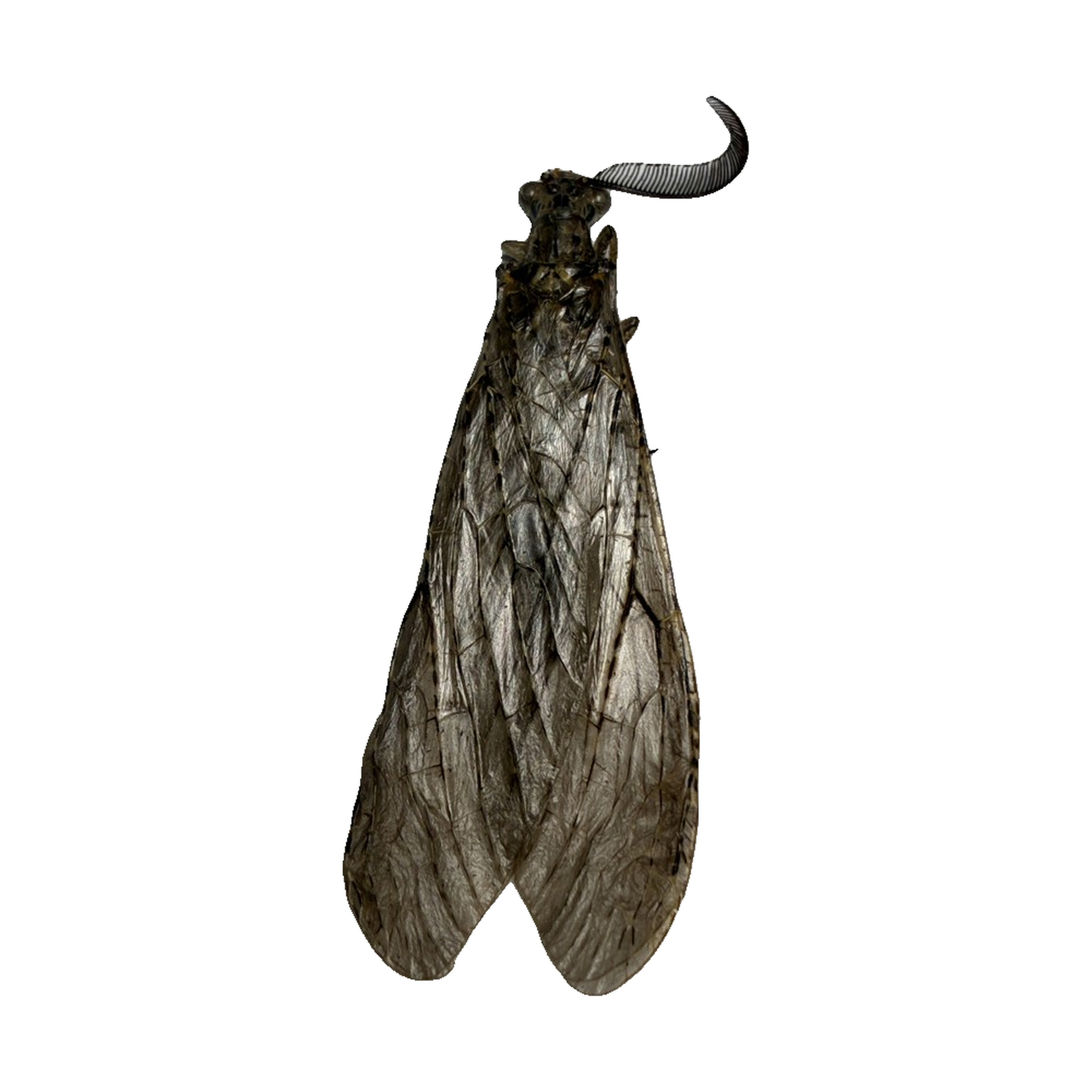
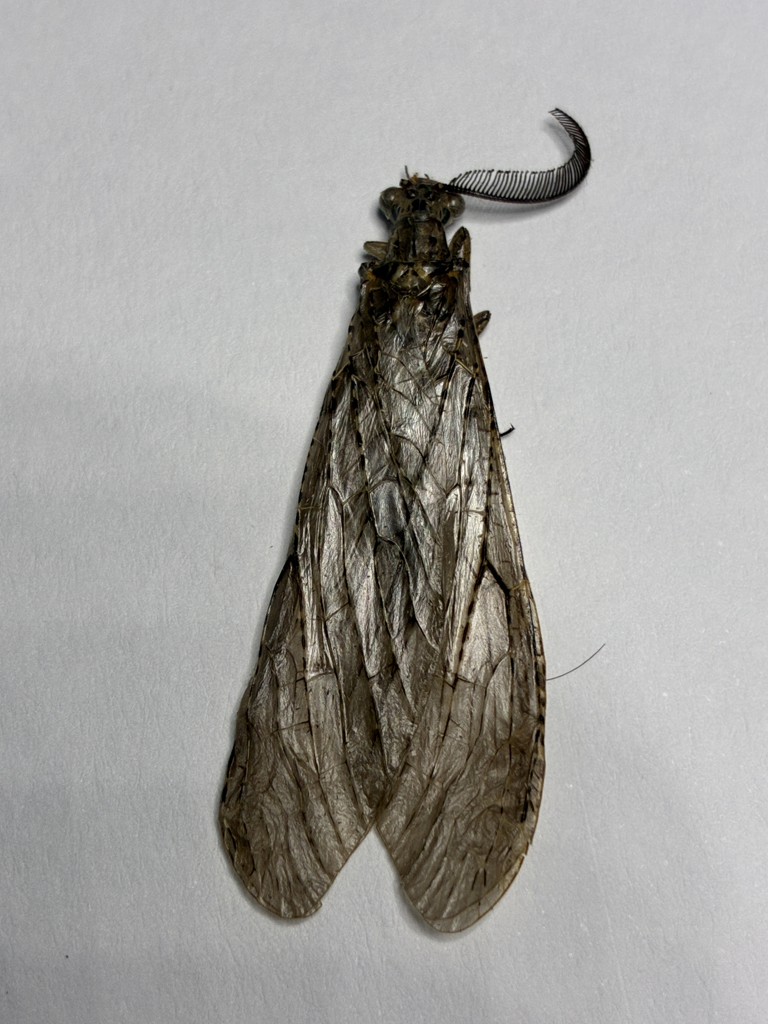
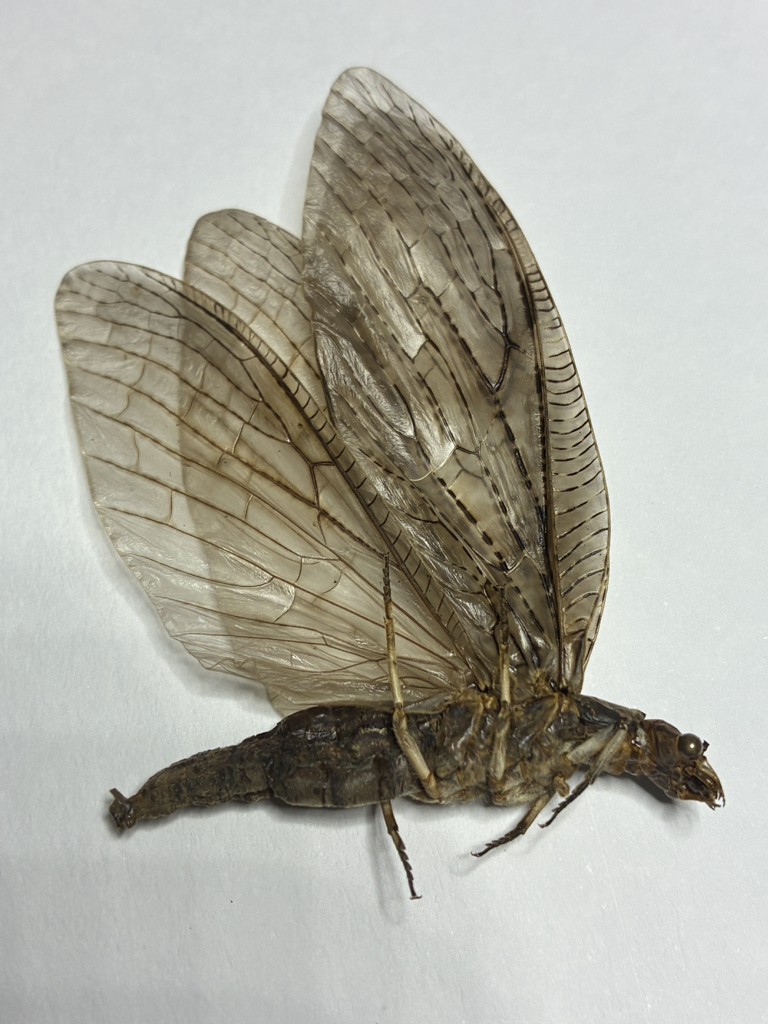
Fishflies in the genus Chauliodes are medium-sized aquatic insects, with a body about 21 to 46 mm (about 0.8 to 1.8 inches) long. Adults are soft-bodied and gray-brown to yellowish brown. The large, smoky or pale wings have a dense network of veins and are folded flat along the body at rest. They can be mistaken for a small dobsonfly, but the jaws are much shorter and less prominent, and the shape of the pronotum (the shield behind the head) is different. Males have distinctive comb-like (pectinate) antennae. This listing is for males, identified to the genus Chauliodes. Two similar species occur in eastern North America, the Spring Fishfly (Chauliodes rastricornis) and the Summer Fishfly (Chauliodes pectinicornis); these specimens are not identified to species. These are damaged specimens: one or both antennae are detached, which is typical for these soft-bodied adults.
Chauliodes fishflies live in eastern North America, and both species are widespread there. The larvae live in slow-moving waters with a lot of decaying plant material, especially rotting logs, unlike dobsonfly larvae, which live in faster, rocky streams.
Adults are mostly active at night and are often attracted to lights, which is where most people see them. They are weak fliers and live only about a week or less. Fishflies are not venomous.
Fishflies go through complete metamorphosis, with egg, larva, pupa, and adult stages. There is one generation per year. Eggs are laid in masses on vegetation near water, and the newly hatched larvae crawl to the water. The aquatic larvae are omnivorous. When fully grown, they leave the water to pupate under bark or in rotting wood. The pupal stage lasts about 10 days.
Fishflies are not pests. The larvae are part of the food web in ponds and slow waters, and their presence can be used as a sign of aquatic habitat quality. Adults do not damage crops, gardens, homes, or stored food.
Chauliodes Latreille, 1796 belongs to the dobsonfly and fishfly family Corydalidae, subfamily Chauliodinae, in the order Megaloptera (alderflies, dobsonflies, and fishflies). Two species occur in North America.
These preserved male specimens, though damaged, are a low-cost way to study fishflies and aquatic insects, suitable for displays, practice mounting, or studies.
Check it out on BugGuide! https://bugguide.net/node/view/3610/bgimage